Camden in One Day: Markets, Canals, Live Music and London’s Other Side
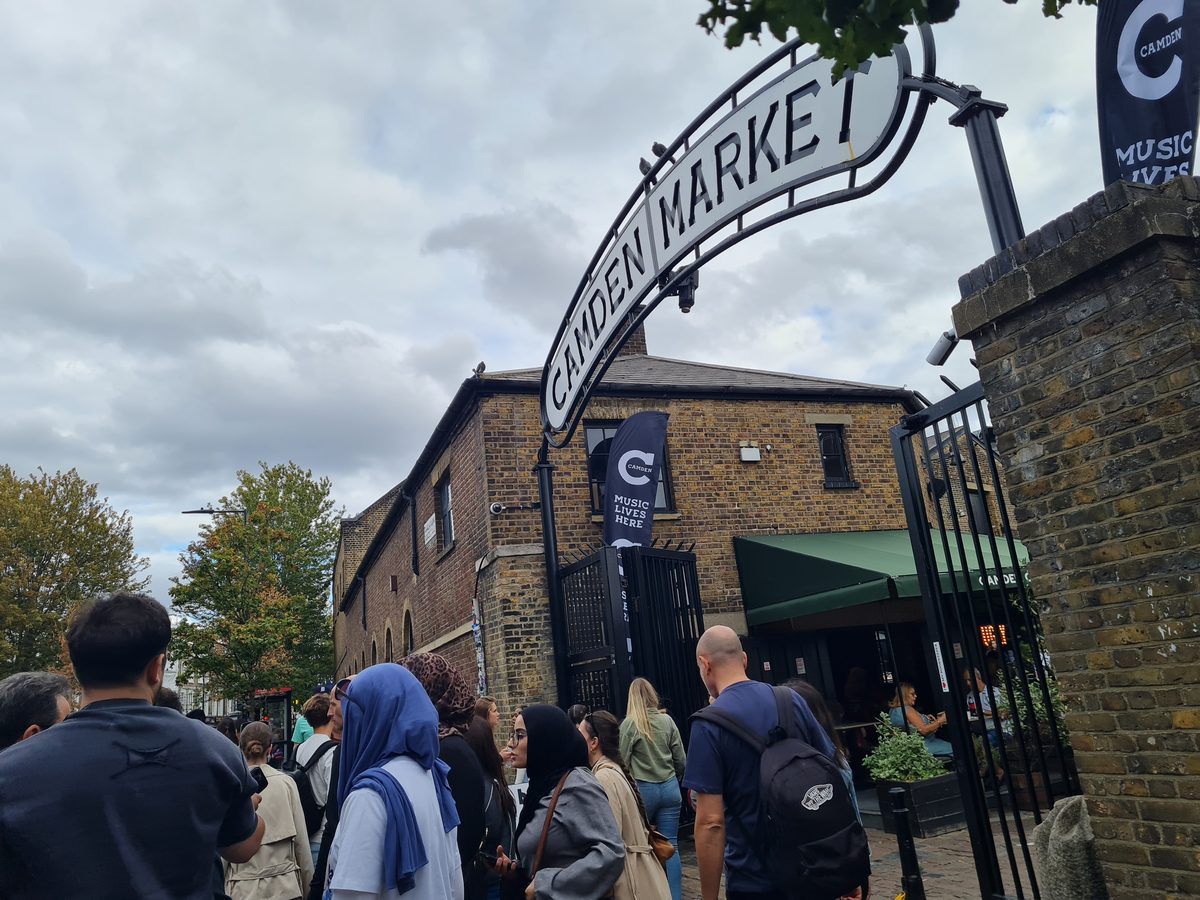
Camden is loud, crowded and a little bit mad, and it smells of eight different kitchens at once. That is not a warning. That is the whole point of the place.
Most people arrive, walk through the market for two hours, buy a T-shirt and go home again. They never find the canal, or the building where the railway horses used to sleep, or the brewery under the railway arch, or the little pub where Madness played their very first gig. All of that sits within a fifteen-minute walk of one Tube station.
So here is a whole day in Camden: where to go, what it costs, and what we would do differently next time.
Camden in one day — the short version
- Best for: markets, street food, canal walks, live music and a very long evening
- Allow: 6–10 hours. Two hours is enough to say you came. It is not enough to enjoy it.
- Budget: £10–40 each for food, plus drinks and a boat trip if you want one.
- Tube: Camden Town, Northern line, Zone 2. Chalk Farm is three minutes further and much calmer.
- Step-free: not at Camden Town. Camden Road station, eight minutes away, has lifts.
- Best escape: Primrose Hill — free, twenty-five minutes from Camden Lock, and the best view in London.
- Best for the evening: 3 Locks Brewing under the arches, then whatever band is playing nearby.
- Best photographs: Camden Lock from the bridge, the curved ramp in the Stables Market, the giant shop signs on Camden High Street, and the skyline from Primrose Hill.
- Golden rule: do the market in the morning and early afternoon. The open-air stalls close around six, though the covered food court runs to about eight. Save the canal, the hill and the music for later.
Why go to Camden at all?
If you have already seen Westminster, the Tower and the river cruise, Camden is the cure. It is the part of London that never tidied itself up, and it has no interest in starting now.
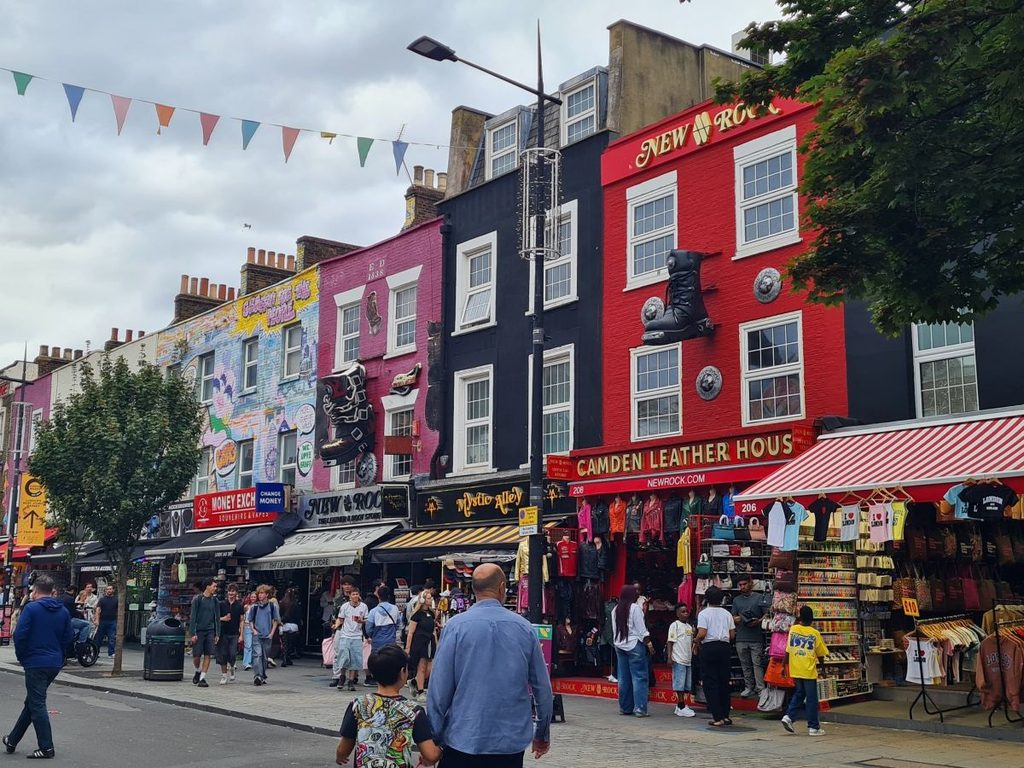
Come here for the street food, because about thirty kitchens are cooking things you would never cook at home. For the vintage shops and the records and the alternative clothes you will not find anywhere on Oxford Street. For the shop fronts, which have giant boots and dragons and an aeroplane bolted to the wall above your head, and for the painted murals that cover whole buildings.
Come for the canal, which still works, with narrowboats going through the locks all afternoon. For the live music, because there are more good small stages here than in any other corner of Britain. For two breweries you can sit and drink in, both under railway arches. And for Primrose Hill, where the view over the whole city costs you nothing at all.
Best of all, you can do all of it in one day, in one place, on foot.
One thing worth knowing before you set off: Camden Market is not one market. It is three — Camden Lock, the Stables and Hawley Wharf — and they run into one another across about sixteen acres, with more than a thousand traders between them. The owners say twenty-eight million people come through every year. On a Saturday afternoon it feels like all of them are there at once.
A short history of Camden, and why it looks so strange
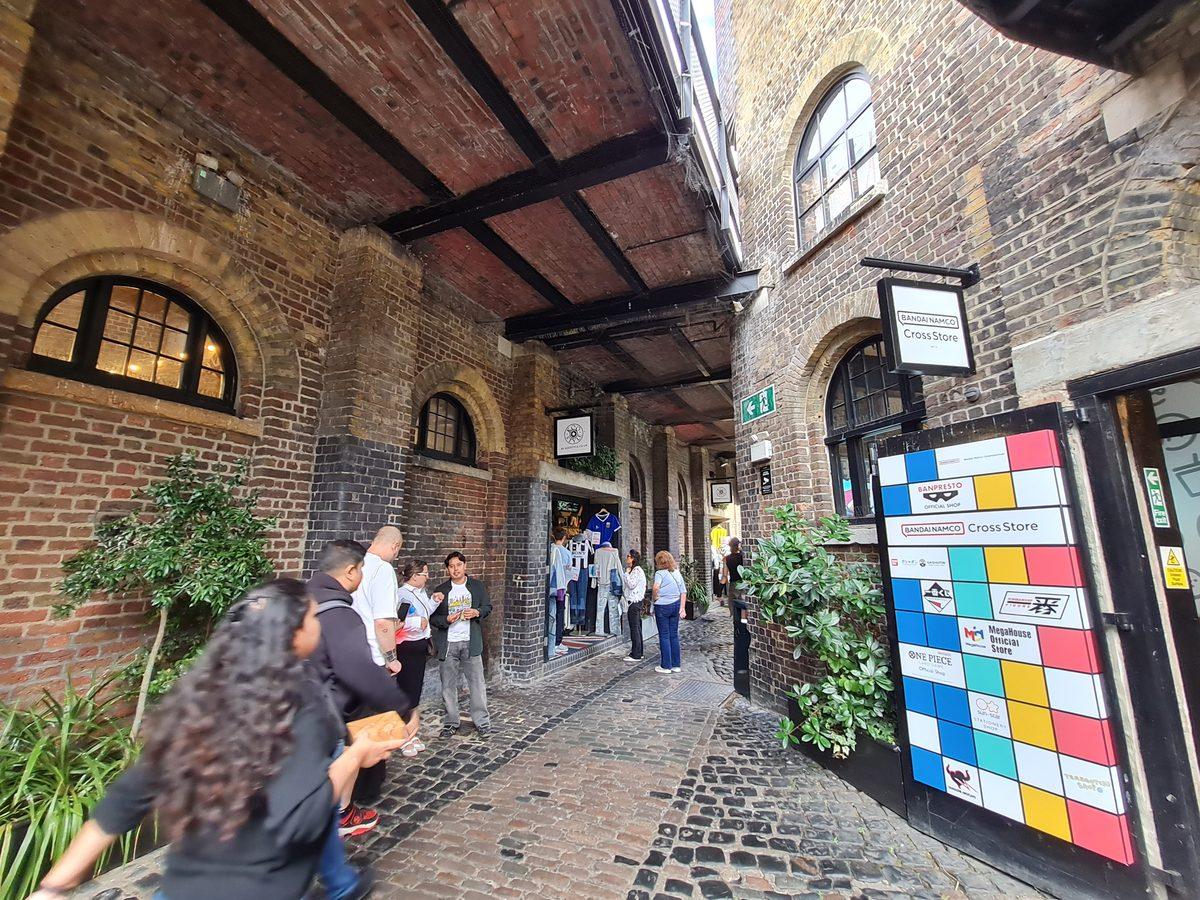
Stand anywhere in the Stables Market and look up, above the clothes rails. Brick arches going off in three directions. A ramp that curves instead of climbing. Cobbles under your feet. Iron overhead. None of it was built for shopping, and once you know what it was built for, the whole place suddenly makes sense.
First a canal, then a railway, then a thousand horses
Camden was fields until 1791, when Charles Pratt, the first Earl Camden, began letting people build houses on land he had married into. Then the Regent’s Canal opened on 1 August 1820, and with the canal came wharves, warehouses and work.
Nineteen years later the railway arrived and built straight over the top of it. In 1839 the London and Birmingham Railway finished its goods depot here, which was where everything arriving in London by train was unloaded and sorted. It worked rather like a modern delivery warehouse, except that the last part of every journey was done by horse.
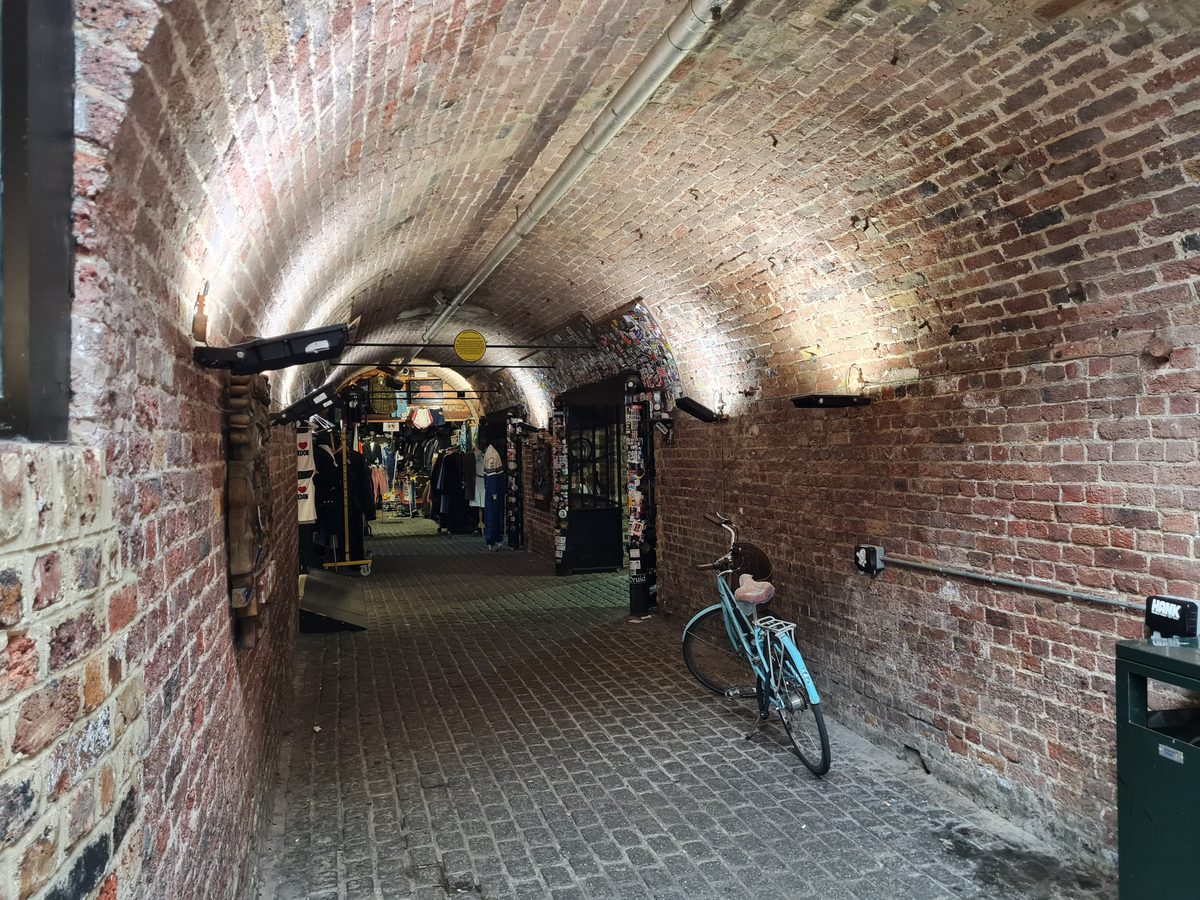
That is why the ground is at so many different heights. For a few decades the canal, the railway and the road all met on this one patch of land, each one at a different level, and the arches and tunnels were built simply to move goods from one to the next.
The Horse Hospital, and why its ramp curves
The best piece of all this is still standing. The Horse Hospital in the Stables Market was built in 1882 for the railway company, by its own engineers, and made bigger in 1897. After that it could hold 132 horses, and it was where the tired and the lame ones were sent to rest.
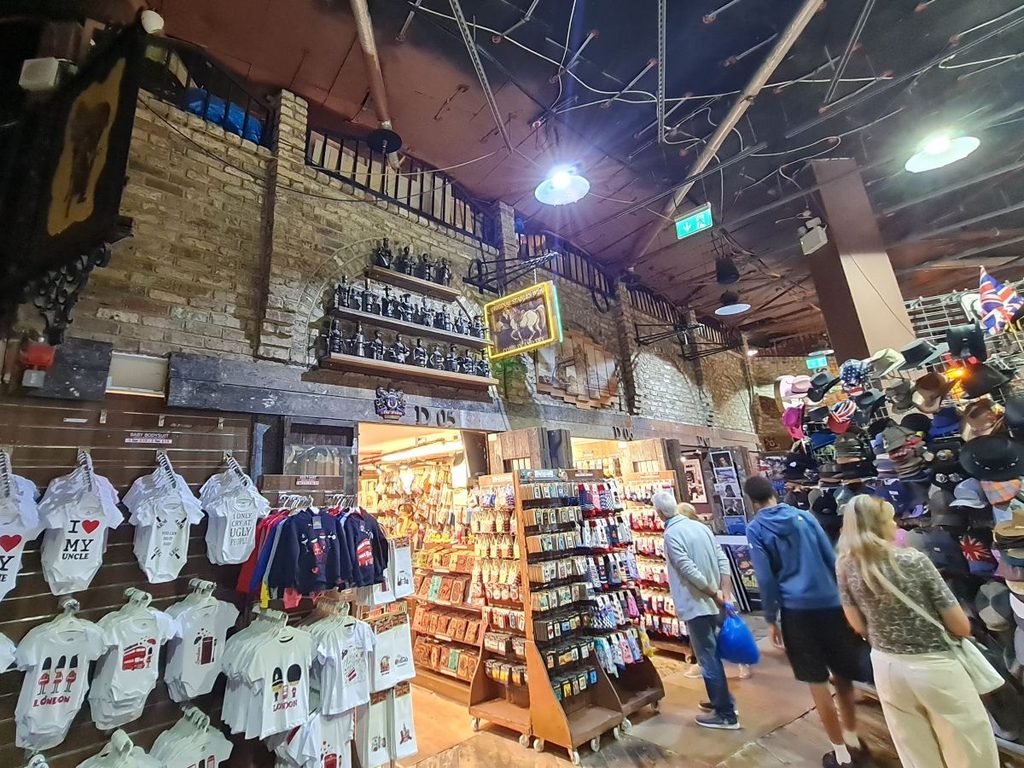
The ramp curves round instead of going straight up because a horse cannot climb stairs. Inside, some of the stalls still have their old mangers and hay racks on the walls. And those bronze horses climbing out of the brickwork outside are not decoration somebody added for the tourists. They are a label. They are telling you what this building used to be.
Gin, pianos, and the motorway that was never built
Three businesses made Camden what it was, and all three of them left.
W&A Gilbey, the gin firm, built their distillery here in 1879 and at their best owned around twenty acres of the place. They moved everything to Harlow in the early 1960s.
The yard that later became the market belonged to T. E. Dingwall, timber merchants, who from 1946 made wooden packing cases — and what they were best at was cases for pianos. When British families stopped buying pianos, the orders stopped too, and the business quietly closed around 1970.
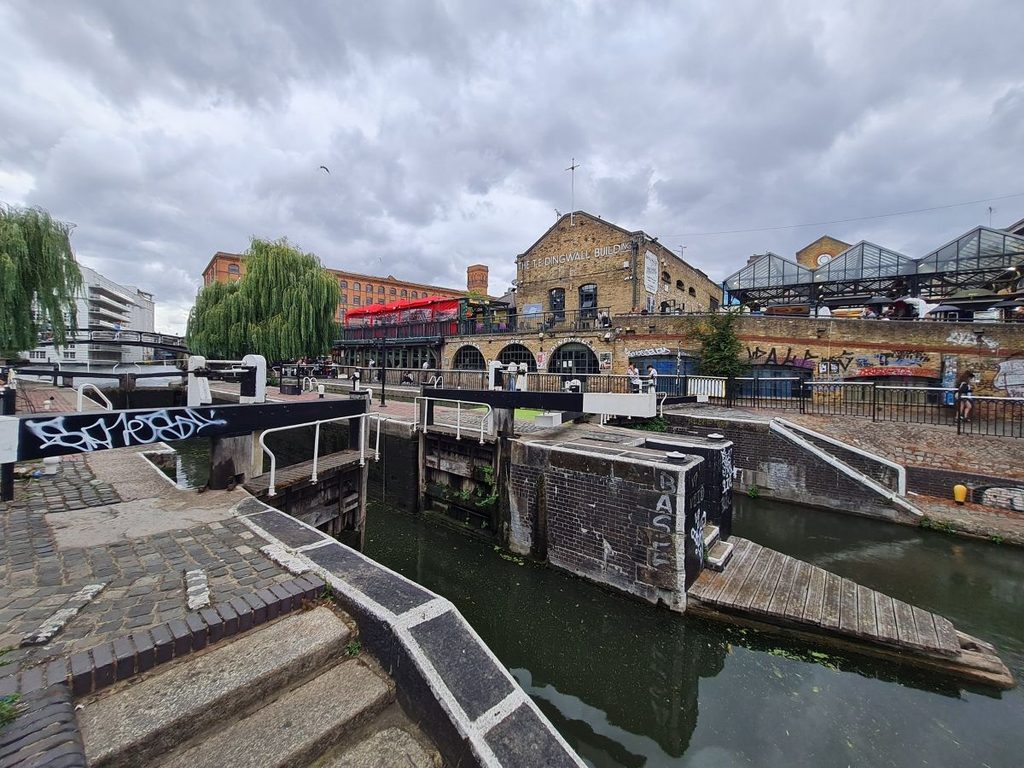
By then somebody had drawn a line on a map that made the whole area worthless. A new motorway was planned to come straight through here, with a slip road over the locks. While a plan like that is hanging over a place, nothing gets built, nobody signs a long lease and the rents fall to nothing.
Which is exactly why three men who were not property developers could afford it. In 1971 they bought the last seven years of Dingwall’s lease for £10,000. Nobody else was bidding, because the land was supposed to be knocked down for a road.
The road was dropped in 1972. The craft workshops opened in 1973 to bring in some quick money, and the market itself opened in 1974 with sixteen traders selling antiques and jewellery.
So the busiest market in north London only exists because of a motorway that was never built. If that road had gone ahead, you would be standing on a slip road instead.
And then Camden found its music
The Roundhouse at Chalk Farm was built in 1846 as a round engine shed, with a turntable in the middle to spin railway engines around. It only did that job for about ten years, and then spent fifty years as Gilbey’s gin warehouse.
It became a theatre in 1964, and in October 1966 it held the launch party for an underground newspaper, with Pink Floyd and Soft Machine playing. That single night is where Camden’s music reputation begins. Everything else followed: the Dublin Castle, Dingwalls, the Electric Ballroom, KOKO, the Jazz Cafe. Punk, then indie, then Britpop, and then whatever Camden is now.
Your one-day Camden itinerary
Roughly ten in the morning until late at night. Move it around to suit how much you like walking, and how long you can bear a crowd.
10:00 — Camden High Street, before you go near the market
Come out of Camden Town station and walk up the High Street. Do not rush straight into the market, because the street is the first thing worth seeing.
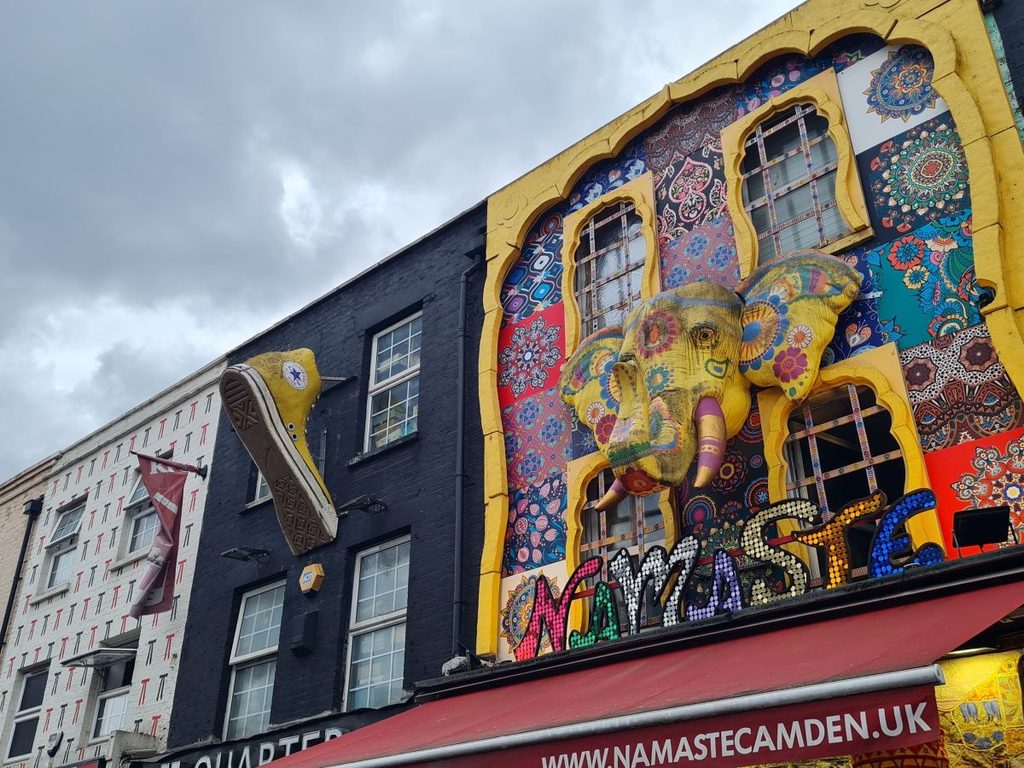
Above the shops there are huge three-dimensional signs — a boot, a dragon, an aeroplane — bolted to the front of the buildings, and under them walks a parade of people dressed far more interestingly than anyone you saw on the Tube.
Turn into Inverness Street for a couple of minutes too. It is one of the last pieces of the old Camden street market, much smaller than it used to be, selling clothes, souvenirs and food where it once sold fruit and vegetables.
10:30–13:00 — Camden Market, and lunch inside it
Camden Market opens every day from 10am to 7pm, and the only day of the year it shuts is Christmas Day. Most of the traders work from 10am to 6pm. The food halls at Hawley Wharf go on much later, until 11pm every night.
You can lose three hours in here without noticing. Instead of trying to see everything, give yourself three jobs: eat something you have never eaten before, find one thing you did not know existed, and take your photographs early, before the crowd thickens after midday.
The three parts of the market, and what each one is for:
- Camden Lock — the original 1974 market, right beside the water. Crafts, jewellery, and the most photographed corner in Camden.
- The Stables — the one with the atmosphere. Cobbles, arches, the Horse Hospital, the bronze horses and the Amy Winehouse statue.
- Hawley Wharf — the newest part, built on Dingwall’s old side of the canal. Food halls, restaurants, little independent shops, and 3 Locks brewery under the arch.
What to eat in Camden Market, and what it really costs
This is not the place for a long sit-down lunch. It is about thirty kitchens cooking things you would never order at home, and the best way to use it is to buy one dish each and swap.
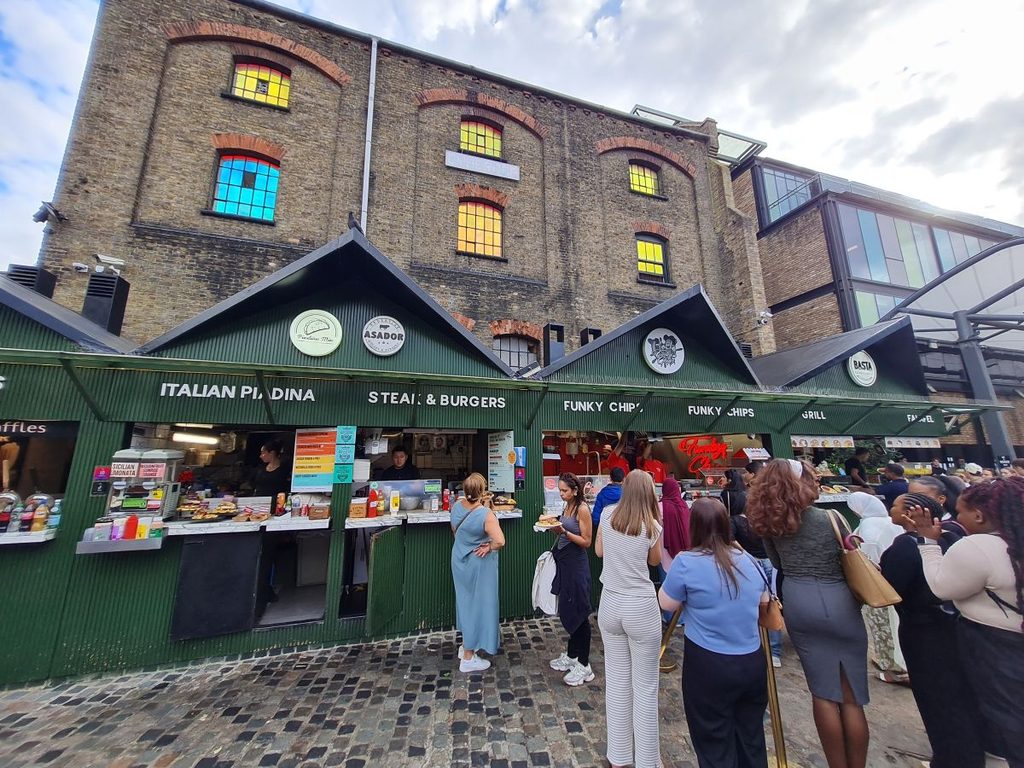
Here are real prices, read off the boards on the day.
At Three Uncles in the Hawley Wharf food hall, who do Hong Kong roast meats, a box of char siu barbecue pork with rice is £12.95, crispy pork belly or Hainan chicken £13.50, and roast duck £15.50. Pick any two meats and it is £14.95, any three and it is £16.50. Noodles are £13.95, and little plates like curry fishballs or pork and prawn siu mai are £5.75 to £7.25. A special sauce on the side costs £1, and it is worth it.
At the Malaysian stall in Asian Alley you build your own box instead: £12 for the smaller one and £14 for the larger, then you choose a base of rice or noodles and pile on as many toppings as you like — sweet and sour chicken, chilli chicken, chow mein, crispy chicken. Prawn tempura and beef rendang cost about £2 extra.
So: about £10 to £16 for a proper plate of food, and a big one will easily feed two people who plan to eat again later. That is good value for central London, and far more fun than a chain restaurant.
It also solves the family argument. Nobody has to agree on anything. You all buy something different and meet at a table.
13:00 — Camden Lock and a boat along Regent’s Canal
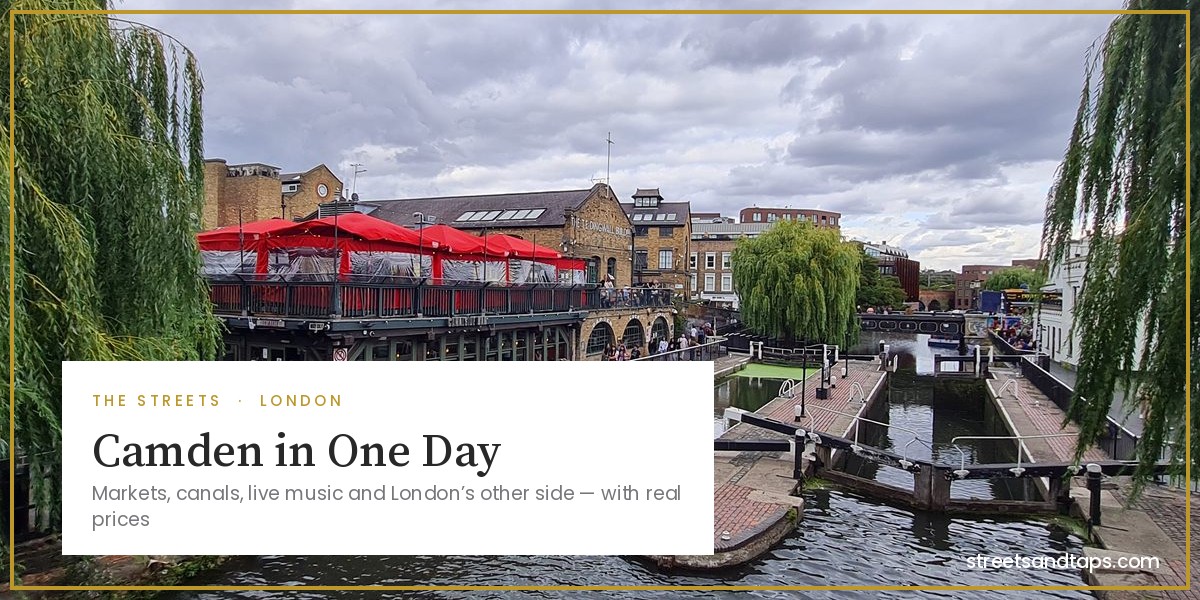
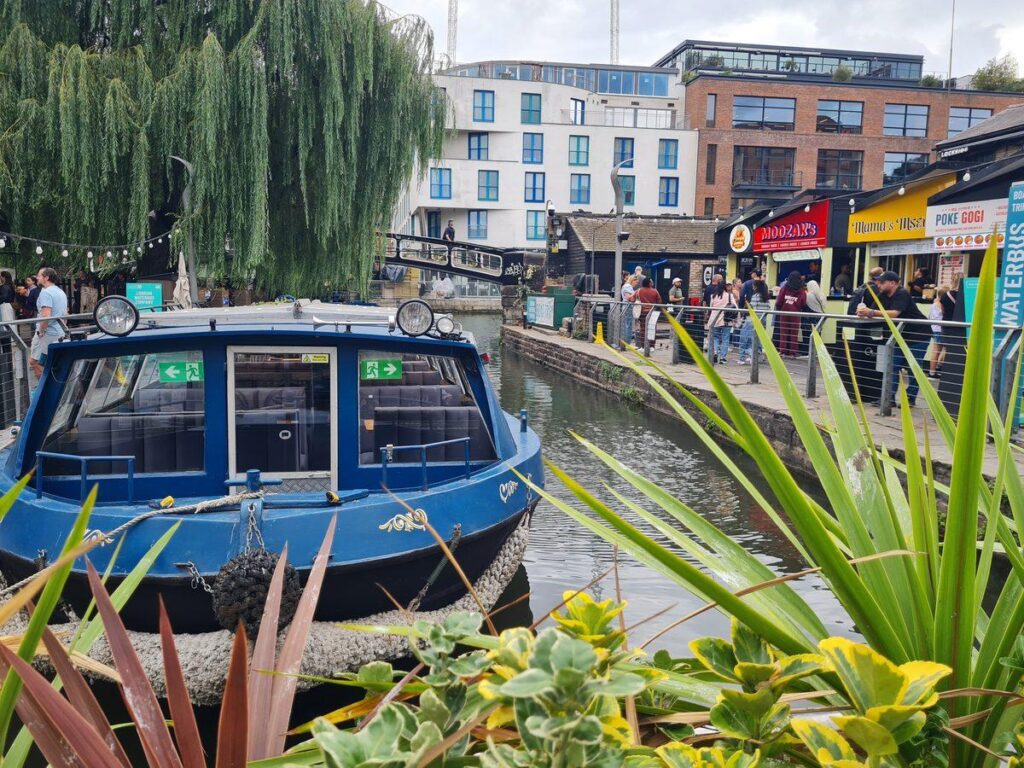
Camden Lock is not a decoration, it is a working lock, and its proper name is Hampstead Road Lock. It still lifts and drops boats by about two and a half metres, which takes a few minutes and pulls a small crowd every single time. Stand on the footbridge, wait, and you will see it happen.
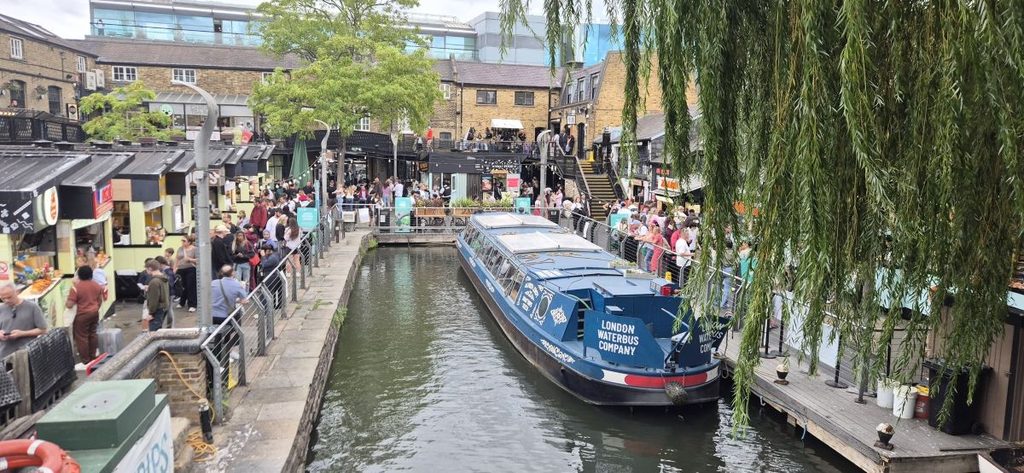
After a morning on your feet and a big plate of food, this is the right moment to sit down and let the city move past you instead. Three different boats go from the water beside the market, and they are not the same thing at all, so it helps to know what you are buying.
- London Waterbus — a one-way trip between Camden Lock and Little Venice, about 45 minutes, £17 adult and £14 for a child aged 4 to 16. It is a water bus, not a tour. You get off at the other end and walk back into a completely different part of London.
- Jason’s Trip — the same 45 minutes between Camden and Little Venice, £19 single or £25 return for an adult, £15 and £20 for under-14s and over-65s, and free for under-4s. Boats leave Camden at 11:15, 13:15 and 15:15 all year round, with an extra 17:15 on summer weekends.
- Jenny Wren at Walker’s Quay — 90 minutes, there and back, with a live commentary the whole way. £21 adult, £12 child aged 4 to 16 (maximum two children per adult) and £18 for students under 25, over-65s and disabled visitors. This is the one to pick if you want to end up where you started.
One thing worth getting straight, because plenty of older guidebooks still have it wrong: none of these boats stops at London Zoo any more, and no boat ticket includes entry to the zoo. You pass it, you see a corner of it from the water, and that is all. If you want to go inside you walk there — about fifteen minutes from Camden Lock — and you buy a zoo ticket separately.
So the choice is really about where you want to be at the end. Take the Waterbus or a Jason’s single if you want to finish somewhere new and wander Little Venice. Take the Jenny Wren if you want to sit, be told stories, and come back to Camden. And if you only want the canal itself and none of the cost, just walk the towpath east towards St Pancras — it is free, flat, and surprisingly quiet within three minutes of the market.
13:30 — your first proper Camden beer, by the water
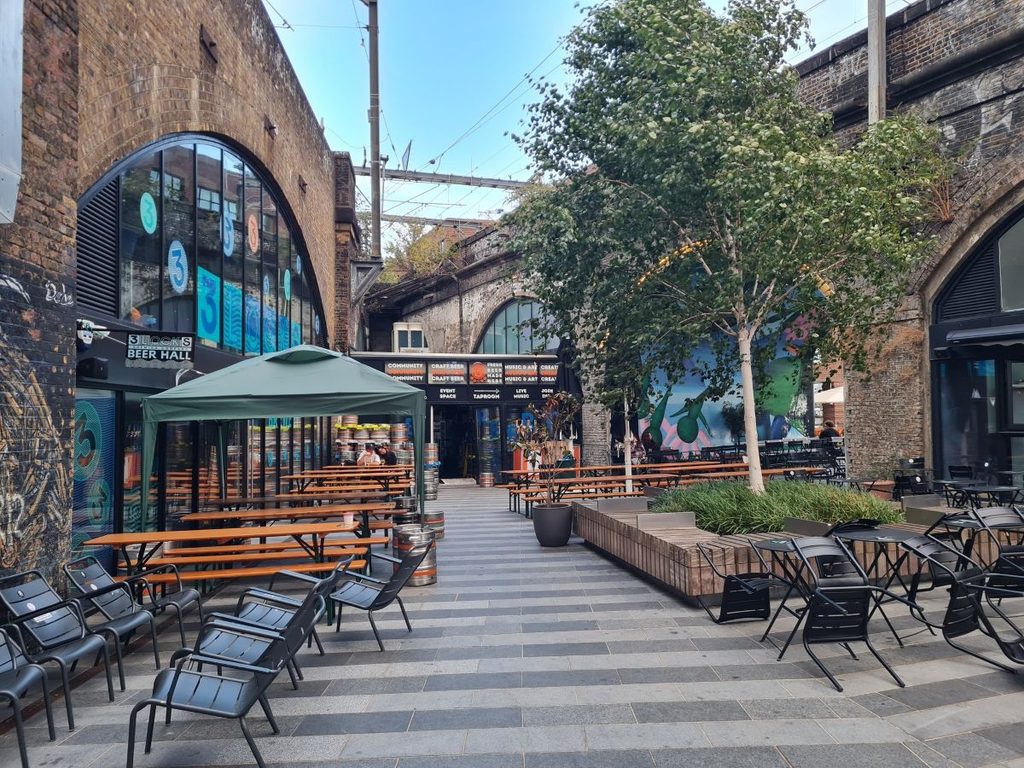
Camden is a beer town, and that is not an accident — brewing has been part of this corner of London since the Victorians, and the modern version is now back on the canal. 3 Locks Brewing Co sits at Hawley Wharf with tables outside by the water, and it brews on the premises, so what you drink has travelled about twenty metres.
It is a good first stop because it is outdoors, it is quiet compared with the market, and you can watch the boats go past. If you want to know what every pint in Camden actually costs before you commit, Ian wrote all of it down in London Craft Beer, Compared — sixteen venues, with the prices and a verdict on each.
If you have more time: five ways to split your Camden day
Camden is small, and that is its best trick. You can see the markets properly in half a day, which leaves the whole afternoon open — and what you do with it changes the day completely. Here are the five we would actually recommend, and who each one is really for.
| Option | Where you go | Who it suits |
|---|---|---|
| A — More Camden | Stay around the markets | Shopping and street photography |
| B — Escape the crowds | Primrose Hill | A quieter afternoon, and anyone tired of people |
| C — Children and animals | London Zoo | Families with children, and animal lovers |
| D — Fun day, indoors | Babylon Park | Families with children, and rainy days |
| E — Brewery crawl | 3 Locks, Camden Town Brewery, Werewolf | Beer lovers |
Option A — more Camden, if you came to shop
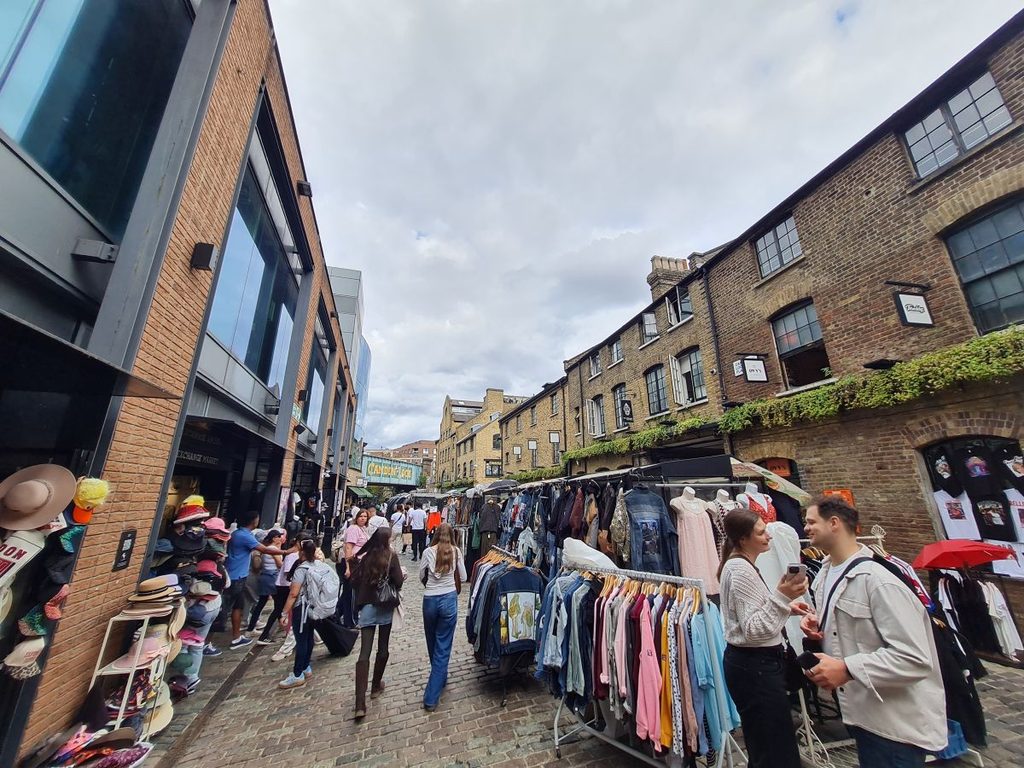
If vintage clothes, records and the kind of fashion you cannot buy at home are the reason you came, then do not leave. Stables Market is where the good hunting is, and the further in you go the better it gets — the stalls near the entrances sell souvenirs, the ones deep in the arches sell the real thing. Allow two hours, bring a little cash for the smaller sellers, and expect to haggle gently on anything second-hand.
Option B — Primrose Hill, twenty-five minutes away and no crowds at all
This is the one we would choose, and it costs nothing. Walk north-west out of Camden and the noise simply stops — it is about twenty-five minutes from Camden Lock to the top, and the last stretch is the only uphill part of your day. Primrose Hill is a grass hill about 63 metres high, and from the top you get one of London’s protected views — the BT Tower, St Paul’s, the Shard and the whole City lined up in front of you. There is a bench, there are dogs, and there are far more locals than tourists.
If you want to make a proper afternoon of it, carry on south into Regent’s Park and come back round. It is flat, it is free, and it turns a loud day into a calm one.
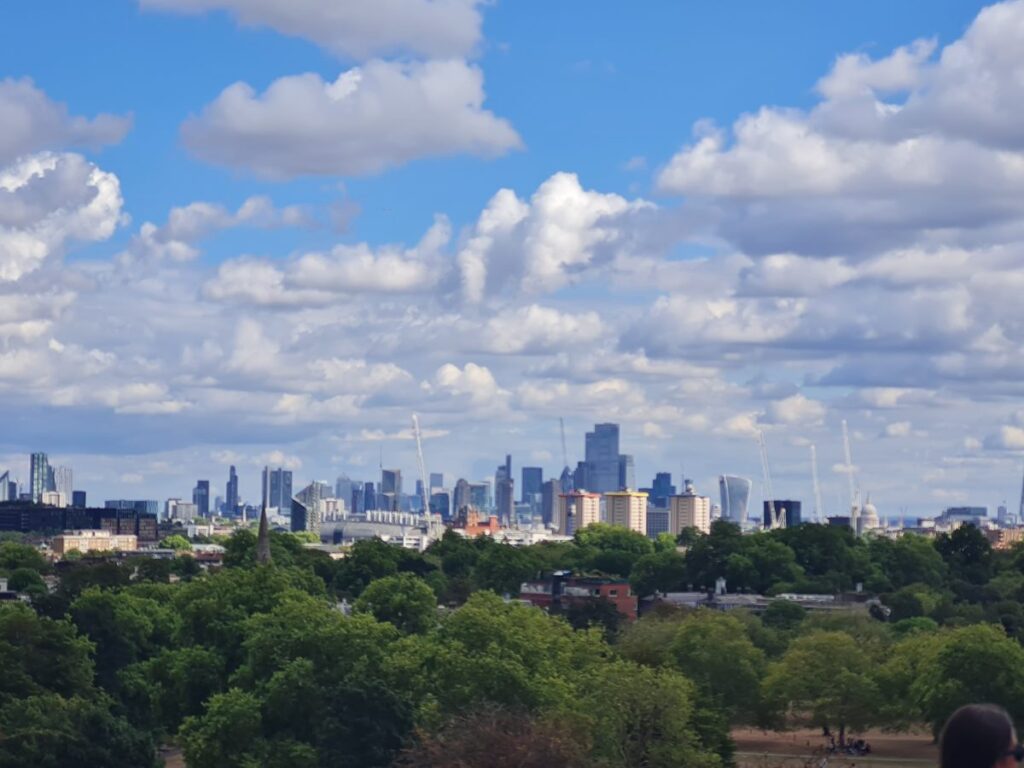
Option C — London Zoo, and the walk you have to make to get there
London Zoo is about fifteen minutes on foot from Camden Lock, through Regent’s Park, and it is a half-day on its own rather than an hour. Tickets start at around £27.70 for an adult and £19.40 for a child aged 3 to 15 when you book ahead, with £25.90 for over-65s, students and disabled visitors, and under-3s free. Prices move with the date and are higher if you turn up and pay at the gate.
And it is worth saying twice, because it catches people out every year: the canal boats no longer stop at the zoo, and no boat ticket includes entry. Walk there, and buy the zoo ticket separately.
Option D — Babylon Park, for rain and for tired children
Babylon Park is London’s first-ever underground theme park and it is packed with exciting rides, an indoor rollercoaster, bumper cars, a Ferris wheel, virtual reality and a wall of arcade machines. It’s fun for all ages! It’s located right inside Camden Market, which makes it the obvious answer when the weather turns or when the children have had enough of looking at old brick. Expect somewhere between about £25 and £30 a person for an unlimited ride wristband lasting an hour and a half — the park’s own site and the ticket sellers it links to do not always agree, so check the price on the day before you buy for a whole family. Getting in is free if you choose only pay for what you ride. You can buy coins through their app and pay as you go, between £1 and £6 a go.
Option E — a Camden brewery crawl, and when the tours actually run
Three breweries, all walkable, and all different. 3 Locks Brewing Co is on the canal at Hawley Wharf and is the easy one. Werewolf Brewing is the small American-style one, and the kind of place where you end up talking to whoever brewed it. Camden Town Brewery is the big name, about fifteen minutes’ walk away in Wilkin Street Mews.
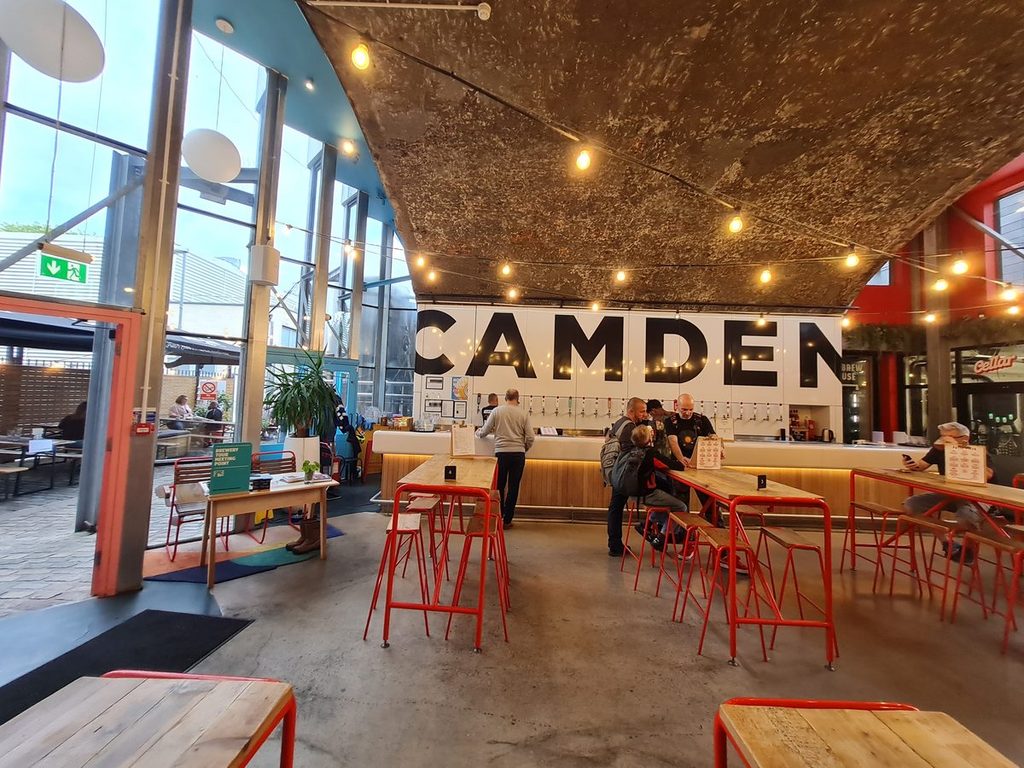
About the Camden Town Brewery tour — the brewery runs it itself, from its own site — and this matters for planning: it goes on selected dates rather than every day, has to be booked in advance, and lasts about 75 minutes. Start times are spread across the day — from 12:30 and 19:00 is the last one, depending on the date — and it costs about £25 for a daytime slot and up to £30 for an evening one, with a full tasting included. So an evening tour is possible, but only if you book it. Do not walk up at eight o’clock and expect to get on one.
Live music in Camden: what is free, what costs, and where to check
Camden’s music is the real reason the place still matters, and the rule is simpler than people make it sound. Walking past the venues costs nothing. Standing in the street looking at KOKO or the Electric Ballroom costs nothing. The moment there is a band on, you pay. That is it. So the question is not whether Camden music is free — it is which kind of evening you want.
Camden music that is free, or very nearly
Plenty of Camden pubs put bands and DJs on without charging at the door, and this is where a good night usually comes from. The Dublin Castle is the famous one — Madness played their earliest gigs in the back room, and the pub still runs new bands most nights. The front bar is free to walk into; the back room is where the ticket starts, and it is usually only a few pounds.
The Dublin Castle also tells a lovely story about itself: that it was built in the 1820s for the Irish labourers digging the canal, kept apart from the Scots and the English who drank elsewhere. It is a good story and the dates do not really hold up — but Madness genuinely did start here, and that is the better fact anyway.
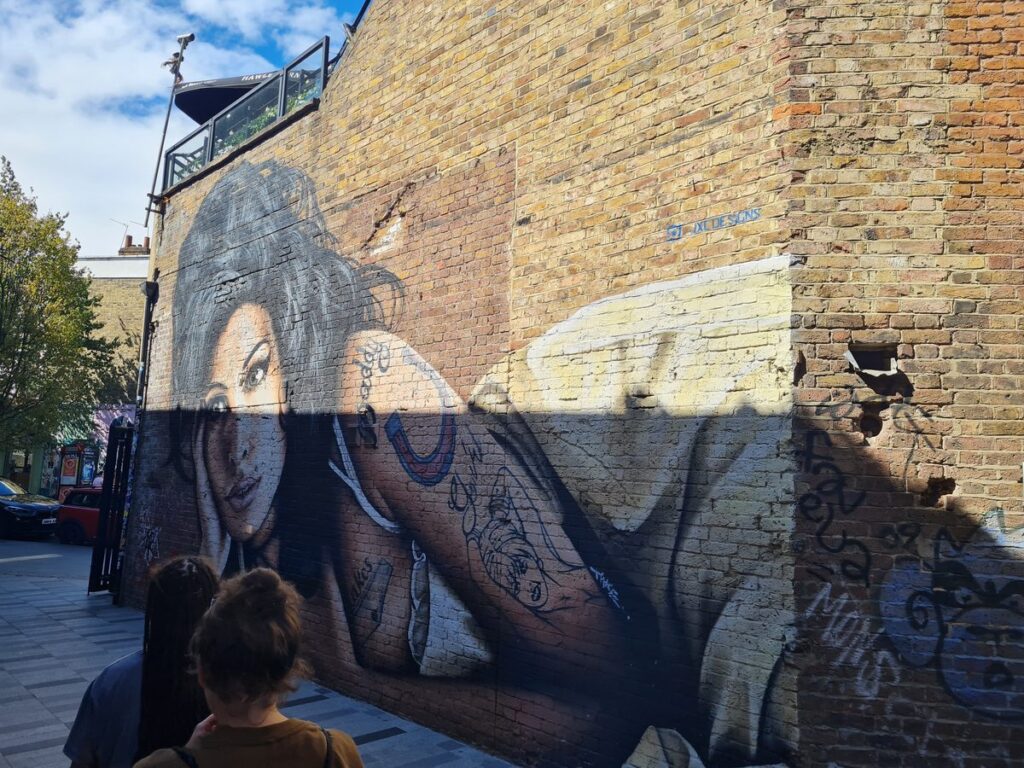
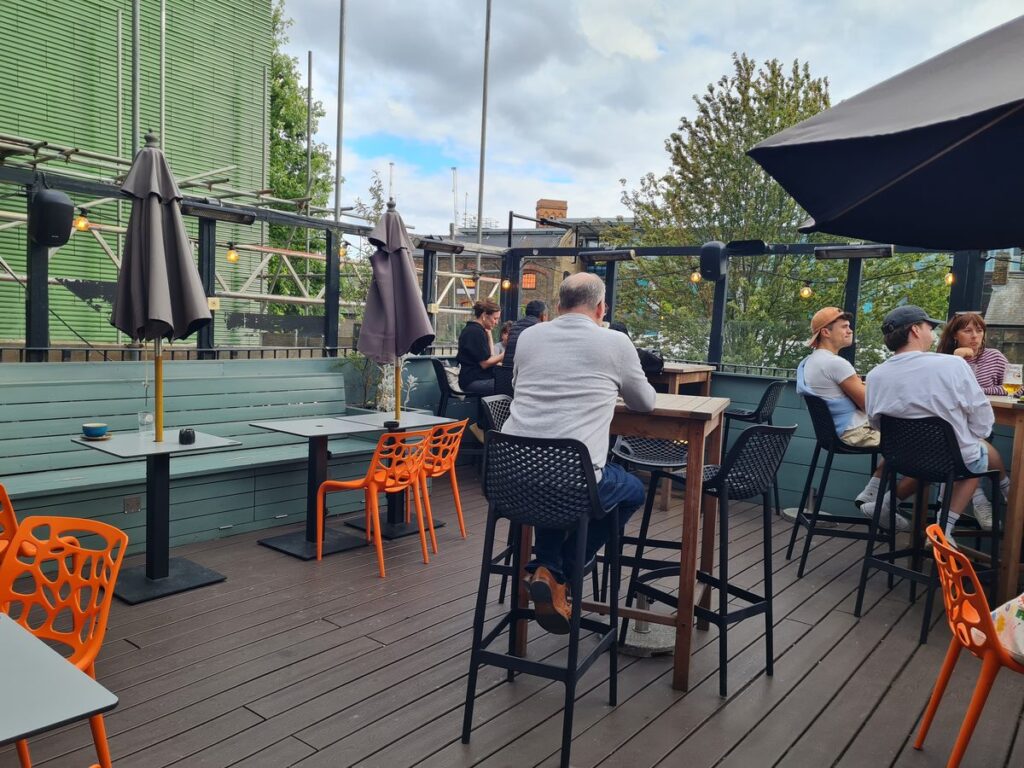
The Lock Tavern puts DJs on with no door charge and has a roof terrace, which is the best seat in Camden on a warm afternoon. The Hawley Arms was Amy Winehouse’s local and is still a proper pub rather than a shrine. And The Blues Kitchen deserves more credit than it gets — we went in for a tribute band and it was genuinely good, with no charge if you arrive before 10pm and about £5 after. It does not pretend to be a craft beer place and it is not trying to be famous. It is just a reliably good night.
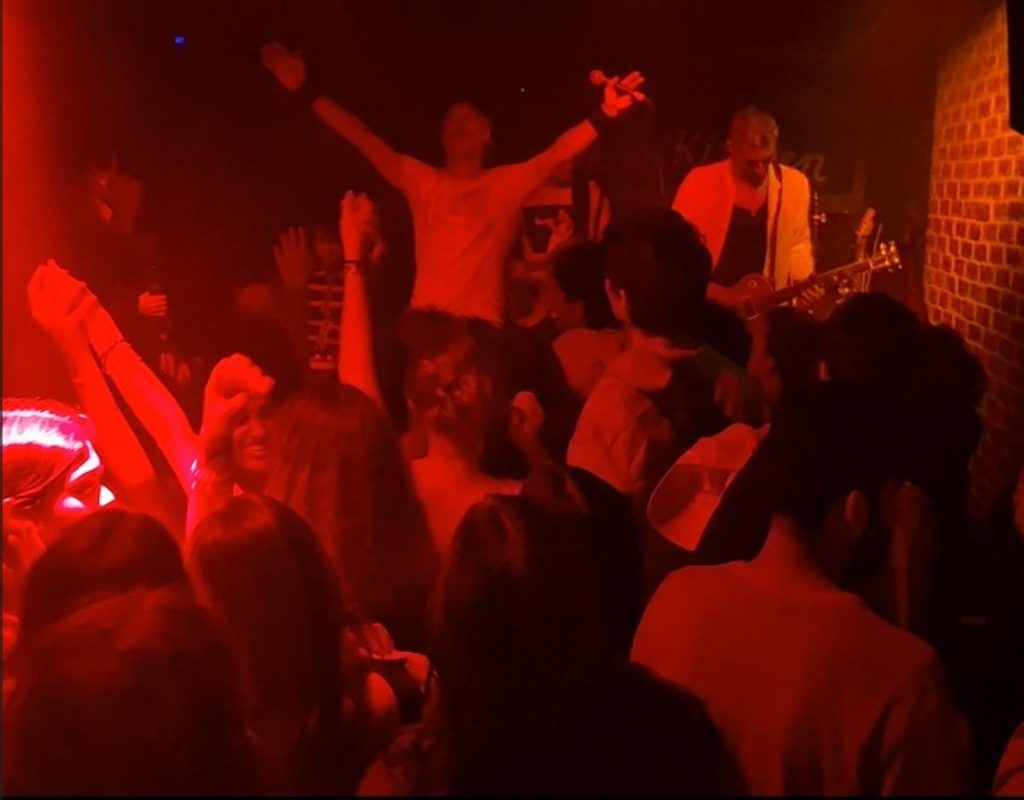
That is the honest point about Camden music: the bands you have heard of are not the only ones worth your evening. A lot of the best nights here come from a pub you had never heard of, a tribute act, or a band three years away from anyone knowing their name.
Camden venues worth buying a ticket for
KOKO is the one to see inside if you can. It opened in 1900 as the Camden Theatre, spent years as a BBC studio — The Goon Show was recorded in it — then became the Music Machine, then the Camden Palace, and is now KOKO again after a fire and a long restoration. It is a theatre, not a shed, and it feels like one.
The Electric Ballroom has been putting bands on since the 1930s and still does. The Jazz Cafe sits in a former Barclays bank and has been running since 1990 — far wider than jazz, and one of the best-sounding rooms in London. Camden Assembly, which most people still call the Barfly, is small, loud and cheap. And the Roundhouse — the old railway engine shed at Chalk Farm — is the biggest of them, and the only one where the building is as interesting as whoever is playing in it.
Where to check what is on in Camden tonight
Line-ups change weekly, and the small free gigs are never advertised anywhere you would think to look. Two listings pages are worth a minute before you go: camdentown.info’s music and clubbing page and this Camden nightlife guide. Between them you will find the ticketed shows and most of the free ones.
If you are coming in August, check the Camden Fringe as well — a whole month of small theatre, comedy and music in rooms above pubs, with most tickets under £12.
Camden in the evening: dinner, a drink, and after ten
18:00 — dinner in Camden, once the market stalls have shut
This is the thing nobody warns you about. The open-air market stalls start winding down from around six o’clock, so if you were planning to eat your evening meal out of a cardboard box by the canal you have mostly missed it. The covered food court is the exception — it keeps going until about eight, so there is still market food in the evening if you know where to stand. Everything else is a reason to treat the market as an afternoon thing.
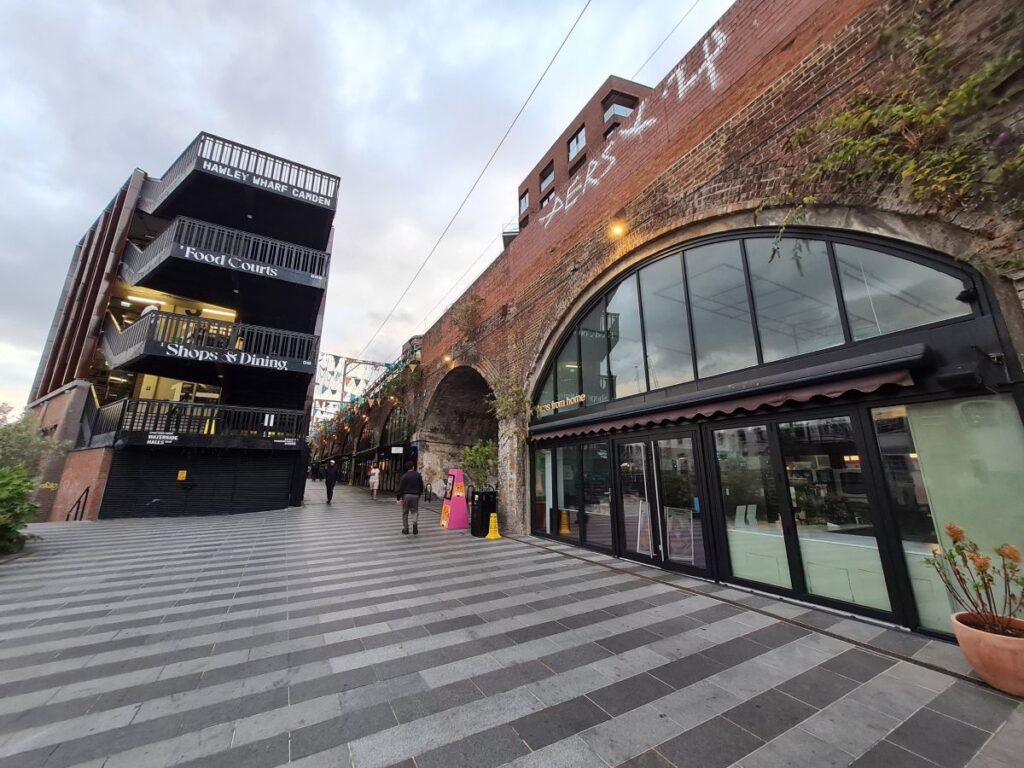
Dinner in Camden is therefore a sit-down job, and the good news is that you do not have to walk far. Head along Parkway and Inverness Street, just off the High Street, where the restaurants are — Indian, Italian, Japanese, Greek, and a couple of very good steak places, all within four or five minutes of the Tube. The Blues Kitchen does proper American food if you want to eat where the music is, and most of the pubs along the High Street serve until about nine.
And you will not struggle to find a table. Restaurant guides count well over three hundred places to eat in Camden Town and the streets around it, with dozens of pubs on top of that — so even on a busy Saturday night somebody in your group will find what they want, you just might not get your first choice of door. Camden is one of the few parts of London where turning up without a booking is still a reasonable plan.
A rough idea of cost: £15 to £25 a head for a main course in a decent Camden restaurant, less in the pubs, and considerably less if you simply eat early in the market at four o’clock and have a long drink afterwards instead. That last one is what we usually do.
20:00 — a drink in Camden before the music starts
The best Camden hour is the one just before the gigs. The Lock Tavern roof terrace is the obvious choice while it is still light, and it costs nothing to sit there beyond the price of a drink. The Hawley Arms fills up early and is worth it for the room rather than the ghost story. And if you want to know which pub is actually worth your money rather than which one is famous, Ian’s London Craft Beer, Compared has the prices and a one-line verdict for every Camden venue we went into.
After 22:00 — what is still open in Camden
The market closes long before the night does — most of it is shut by seven or eight — so after ten Camden becomes a music and drinking town only. KOKO and the Electric Ballroom run club nights after the live sets, the Blues Kitchen charges about £5 on the door after 10pm and nothing before it, and the pubs on the High Street keep going later than most of London.
Getting home is easy, which is part of why Camden works as a night out. The last Northern line trains leave around half past midnight, and on Friday and Saturday nights the Northern line runs all night, straight through Camden Town. Night buses run every night of the week regardless.
If you have two days in Camden
Camden in one day works, but two days changes the shape of it completely. You stop rushing the market, and you get the quiet half of the area — the parks, the canal, the hill — which is the half most visitors never see at all.
Day one — the loud day.
Camden High Street → Camden Market and the Stables → lunch in the market → Camden Lock and the canal boats → a beer at 3 Locks → Primrose Hill for sunset → dinner on Parkway → the Dublin Castle
Day two — the quiet day.
Regent’s Canal towpath → London Zoo or Regent’s Park → back along the towpath → the vintage arches at Stables Market with no hurry → Camden Town Brewery tour (booked ahead) → KOKO or the Jazz Cafe
When to come to Camden, and what is on through the year
Camden is open every day of the year and the markets run daily, roughly from ten in the morning until six in the evening, with the bars and restaurants going much later. But the day you pick changes the experience more than anything else in this post, so if you are doing Camden in one day, choose it carefully.
- Saturday and Sunday — the full Camden. Packed, loud, brilliant, and genuinely hard work with a pushchair or a wheelchair. Come early if you come at all.
- Weekdays — the same stalls, a third of the people. If you want to look at anything properly, or photograph it without forty strangers in the frame, come Tuesday to Thursday.
- August — the Camden Fringe takes over rooms above pubs for the whole month, with comedy, theatre and music, and most tickets under £12. It is the best-value thing in Camden and almost nobody plans for it.
- November and December — the market does a proper winter run with lights, mulled wine and fire pits along the canal, and it is one of the few London Christmas markets that was not invented for a photograph.
Getting to Camden, and getting home again
Camden Town station is on the Northern line in Zone 2, and it drops you straight onto the High Street, two minutes from the market. It is also one of the busiest small stations in London, and on busy Sunday afternoons it often goes exit-only — you can come out of it but not go in. If that happens, walk ten minutes to Mornington Crescent or Chalk Farm instead; both are on the same line and both are usually calm.
Step-free access, honestly. Camden Town, Mornington Crescent and Chalk Farm are all stair-only — no lifts, no ramps, and a great many steps at Camden Town. The one station that does work is Camden Road on the London Overground, which has lifts and full step-free access to all platforms, and sits about ten minutes’ walk from the market. If anyone in your group needs step-free travel, use Camden Road and ignore the Tube entirely.
Buses are the cheap way in. A single journey is £1.85 and the daily bus and tram cap is £5.55*, and the Hopper fare lets you change buses as many times as you like within an hour and still pay only once. A Tube journey into Camden on contactless will cost roughly £3 to £4 depending on the zone and the time of day. Several routes run along Camden High Street, so from most of central London a bus will get you there without a change.
*Bus and tram fares from 1 November 2026. Before that date they had been frozen at £1.75 with a £5.25 daily cap.
Walking in is the underrated option. From King’s Cross it is about 30 minutes along the Regent’s Canal towpath, flat the whole way, and you arrive at the back of the market instead of fighting your way up the High Street. It is the nicest approach to Camden there is.
So is Camden worth a whole day?
Camden in one day is absolutely worth doing — but not the day most people have. If you arrive at midday on a Saturday, walk the length of the High Street in a crowd, eat something out of a box and leave, you will go home thinking Camden is a tourist trap, and you will have a fair point.
The Camden that is worth a day is the one where you get there at ten, do the market before it fills, eat properly in the Stables, sit on a boat or the towpath while your legs recover, walk up Primrose Hill for a view that costs nothing, and come back down for a band in a pub room that holds eighty people. That day costs very little, and it is one of the best days in London.
And it is a day with the whole history of the place built into it — a canal dug for cargo, stables built for horses, arches built for trains, all of it now full of people eating noodles and buying records. Nobody designed Camden. It simply refused to be knocked down, and then it got interesting.
Before you go: five things worth knowing about Camden
- No canal boat stops at London Zoo, and no boat ticket includes zoo entry. Walk there (15 minutes) and buy the zoo ticket separately.
- The open-air market stalls start closing from about 6pm, but the covered food court runs until about 8pm. Treat the market as a lunch and afternoon thing, and keep the food court in reserve for an early evening.
- Camden Town station can go exit-only on busy Sunday afternoons. Mornington Crescent and Chalk Farm are the alternatives.
- Only Camden Road station is step-free. Camden Town, Mornington Crescent and Chalk Farm are all stair-only.
- The Camden Town Brewery tour must be booked in advance and runs on selected dates only — do not turn up hoping.
Camden addresses, websites and opening hours
Camden markets
- Camden Market (Camden Lock) — Camden Lock Place, London NW1 8AF — camdenmarket.com — open daily, roughly 10am–6pm, with the covered food court until about 8pm
- Camden Stables Market — Chalk Farm Road, London NW1 8AH — camdenmarket.com — open daily, roughly 10am–6pm
- Hawley Wharf Camden — off Castlehaven Road, Camden, London NW1 — shops and food daily, bars later
Camden canal boats
- London Waterbus Company — departs Camden Lock, Camden Market, London NW1 8AF — londonwaterbus.com — £17 adult / £14 child single, 45 minutes
- Jason’s Trip — opposite 60 Blomfield Road, Little Venice, London W9 2PF — jasons.co.uk — leaves Camden 11:15, 13:15 and 15:15 daily, plus 17:15 on summer weekends
- Jenny Wren, Walker’s Quay — 250 Camden High Street, London NW1 8QS — walkersquay.com — 90-minute return cruise, £21 adult / £12 child
Camden breweries and pubs
- 3 Locks Brewing Co — Hawley Wharf, Camden, London NW1 — brewery taproom on the canal, open daily
- Werewolf Brewing — Camden — small American-style brewery, check ahead for taproom hours
- Camden Town Brewery — 55–59 Wilkin Street Mews, London NW5 3NN — camdentownbrewery.com — taproom most days; 75-minute tours on selected dates, £25–£30, booking required
- The Dublin Castle — 94 Parkway, London NW1 7AN — thedublincastle.com — free front bar, ticketed back room most nights
- The Hawley Arms — 2 Castlehaven Road, London NW1 8QU — thehawleyarms.co.uk
- The Lock Tavern — 35 Chalk Farm Road, London NW1 8AJ — thelocktavern.com — roof terrace, free DJs
Camden music venues
- KOKO — 1A Camden High Street, London NW1 7JE — koko.uk.com
- Electric Ballroom — 184 Camden High Street, London NW1 8QP — electricballroom.co.uk
- The Jazz Cafe — 5 Parkway, London NW1 7PG — thejazzcafelondon.com
- Camden Assembly (the old Barfly) — 49 Chalk Farm Road, London NW1 8AN
- Roundhouse — Chalk Farm Road, London NW1 8EH — roundhouse.org.uk
- The Blues Kitchen Camden — 111–113 Camden High Street, London NW1 7JN — theblueskitchen.com — free entry before 10pm, about £5 after
Around Camden: parks, zoo and rides
- Primrose Hill — Regent’s Park Road, London NW1 — free, open daily, about 25 minutes’ walk from Camden Lock
- London Zoo — Outer Circle, Regent’s Park, London NW1 4RY — londonzoo.org — from about £27.70 adult and £19.40 child when booked ahead
- Babylon Park — Camden Market, Camden Lock Place, London NW1 8AF — babylonpark.com — indoor rides, roughly £25–£30 for 90 minutes unlimited
What is on in Camden this week
- camdentown.info — music and clubbing listings
- europenightlife.com — Camden nightlife guide
- camdenfringe.com — the Camden Fringe, every August
Prices and times were checked when this post went up in October 2026. Camden changes faster than most of London, so check the venue’s own page before you build a day around it.