Durham Cathedral and Castle: What to Know Before You Go
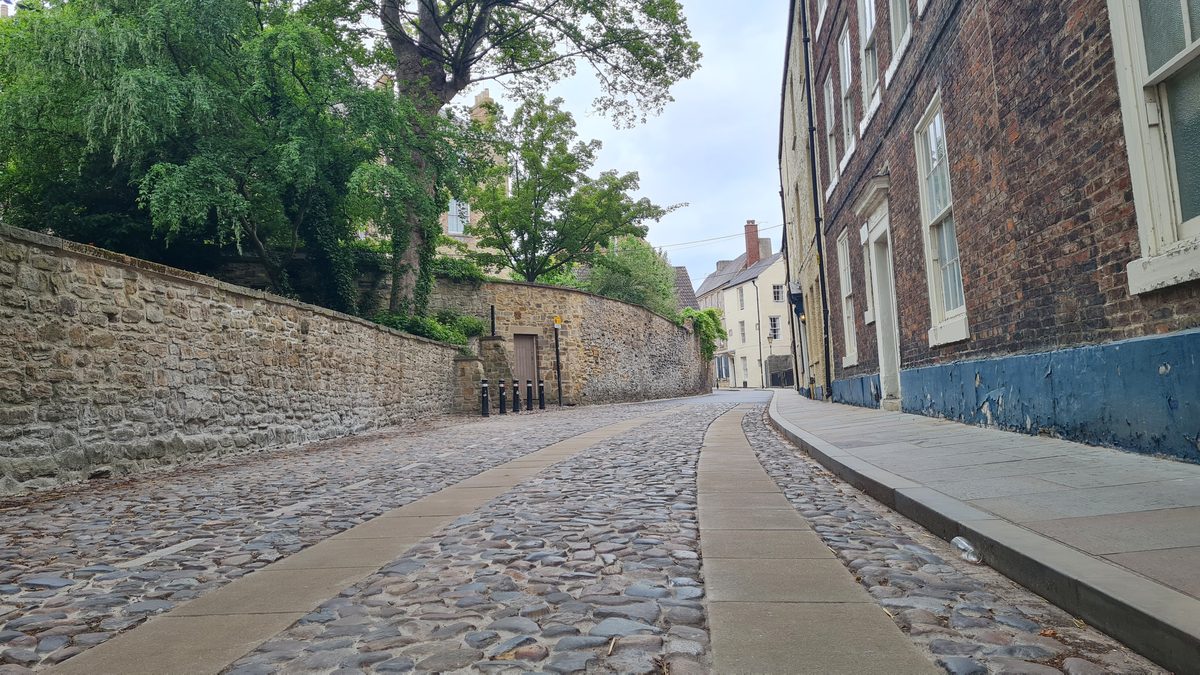
Let me tell you about walking in Durham. The historic centre is genuinely small — you could cross it in twenty minutes — but of all the places I have written about, this is the one where I would tell you most firmly to wear comfortable shoes.
Leave your heels at home
The streets are cobbled, and they go up and down constantly. The city is built on a meander of the River Wear, which wraps around the old centre on three sides, and on a set of hills that Durham has always claimed as seven. The name says it too: Durham comes from Dunholme, and holme is the island, dun is the hill. Hill island. Ian will tell you that is also where Hill Island Brewery got its name. That is the whole city in one word — a lump of rock in a loop of the river with a cathedral on top.
Local women appear to have a special skill I have never acquired: heading out on a Friday night in ten-centimetre heels and walking those cobbles as if they were a carpet. I have tried. I do not recommend it.
The smaller brother of York
I have always thought of Durham as York’s smaller brother. Not as rich, not as famous, not as loved by the coach parties — and with something more northern and more austere about it. It is one of the best historic cities in England and it does not make nearly enough noise about itself.
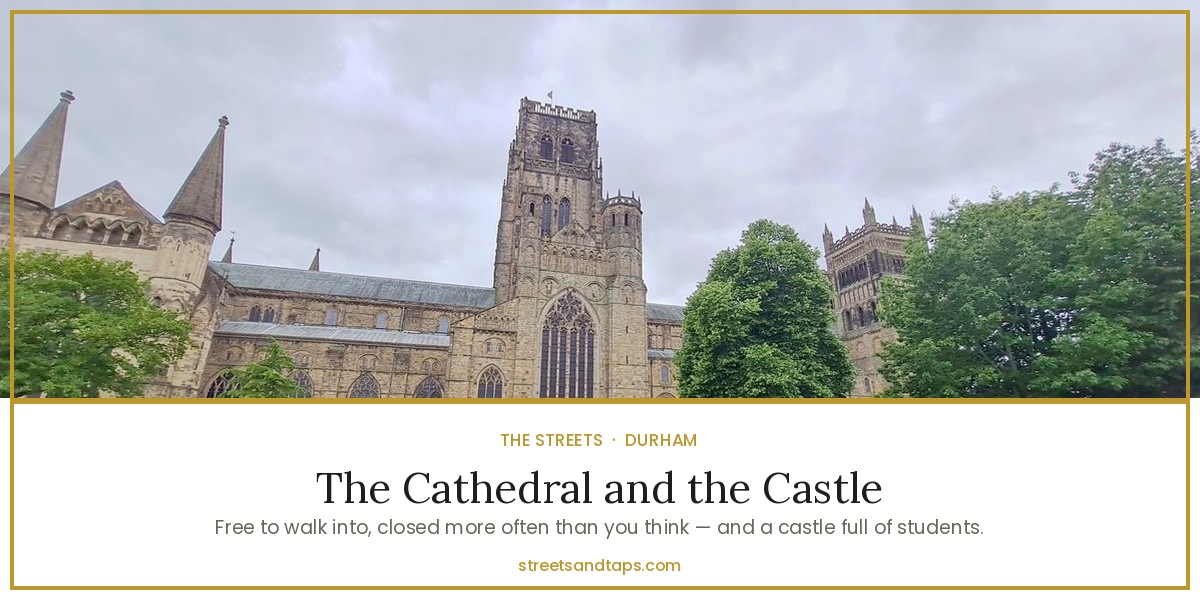
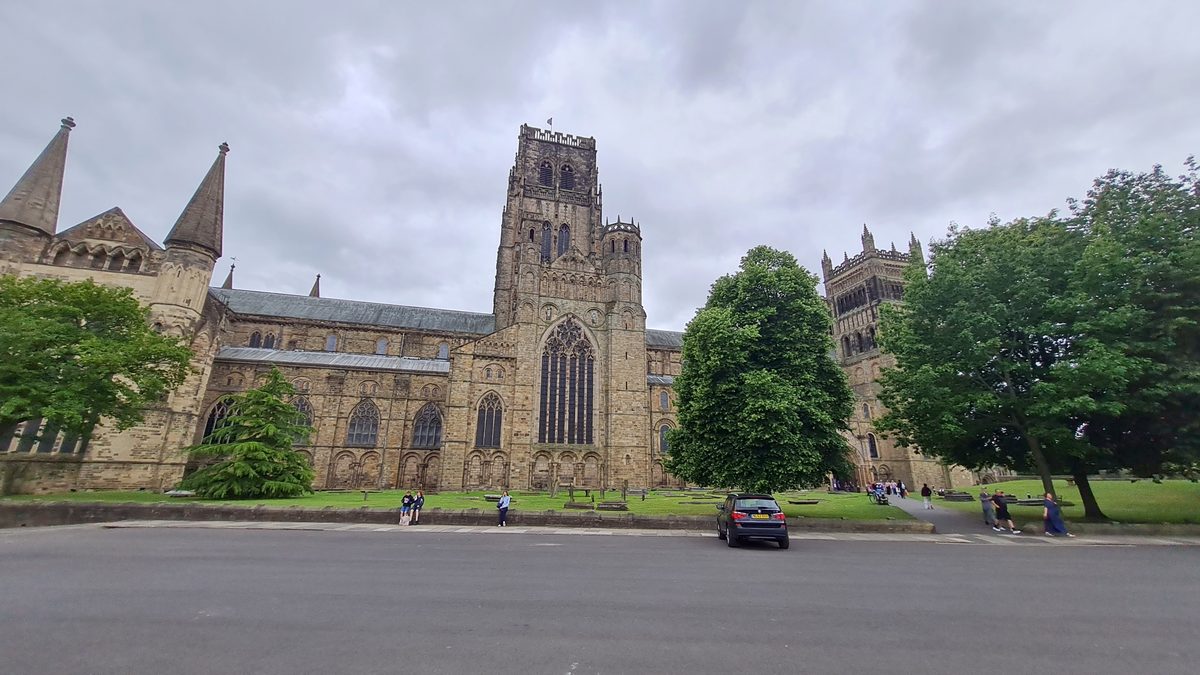
The cathedral and the castle together are a UNESCO World Heritage Site, which puts Durham in the same list as Stonehenge and the Tower of London. They face each other across Palace Green at the top of the hill, and almost everyone arrives knowing only the first of them.
The cathedral, which is free and still working
Durham Cathedral is enormous, almost a thousand years old, and still a working cathedral rather than a museum with services attached. Entry is free — there is a suggested donation of five pounds, which given what it costs to keep the roof on seems the least you can do.
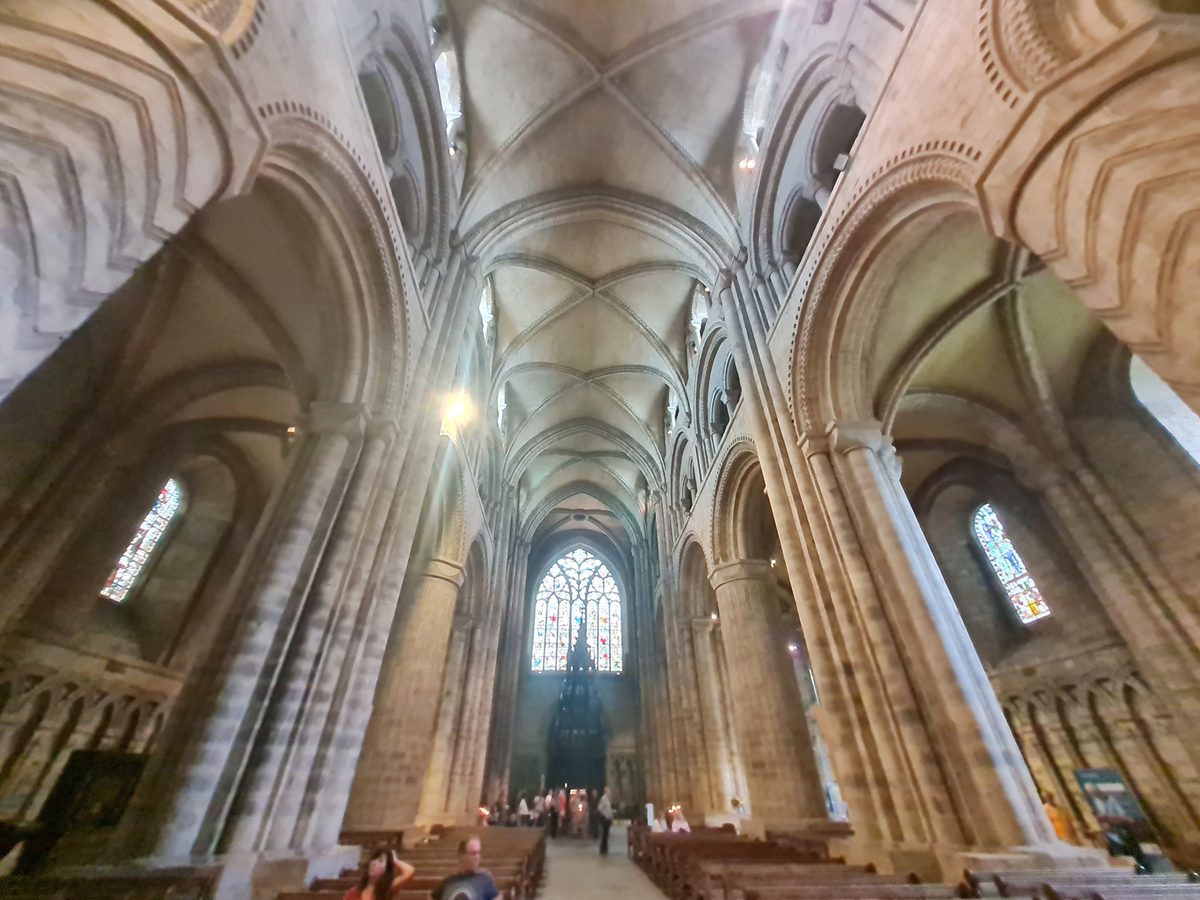
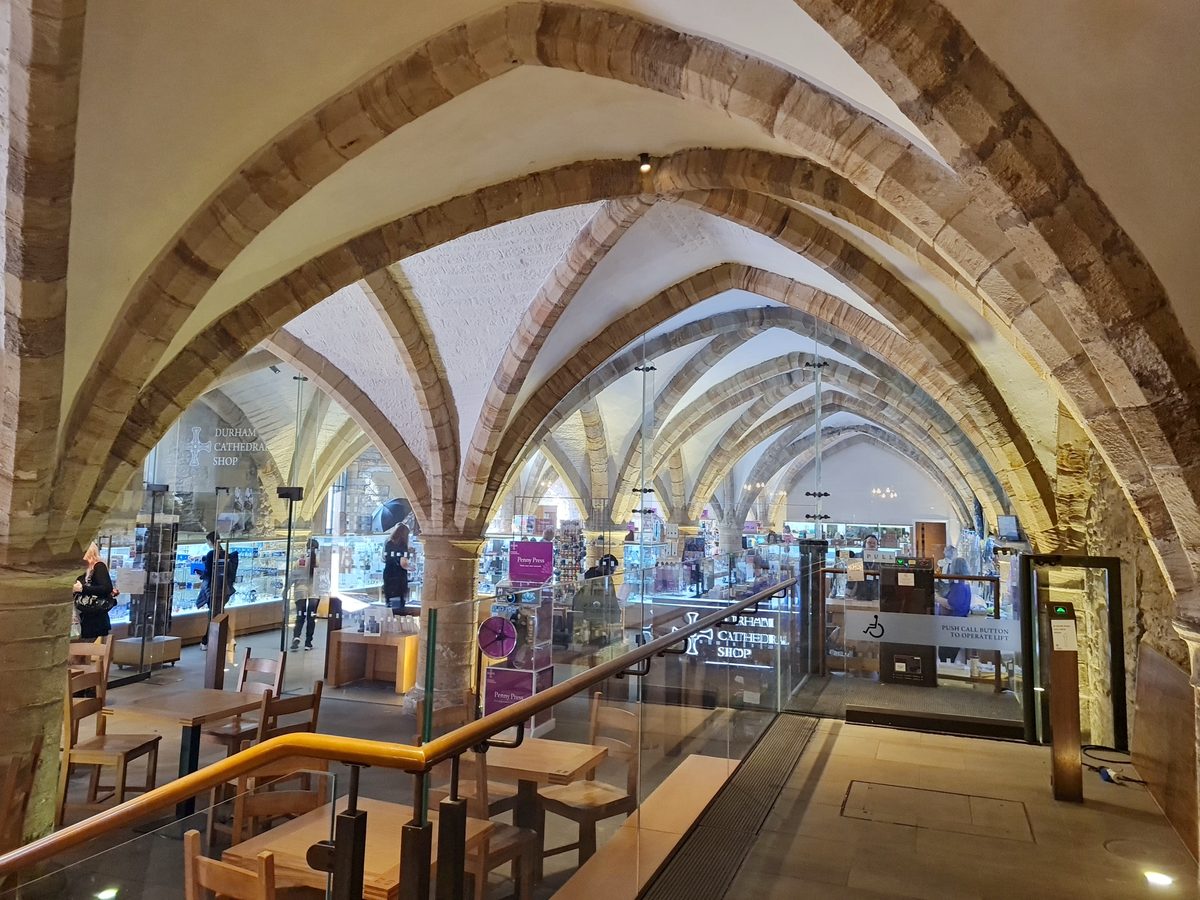
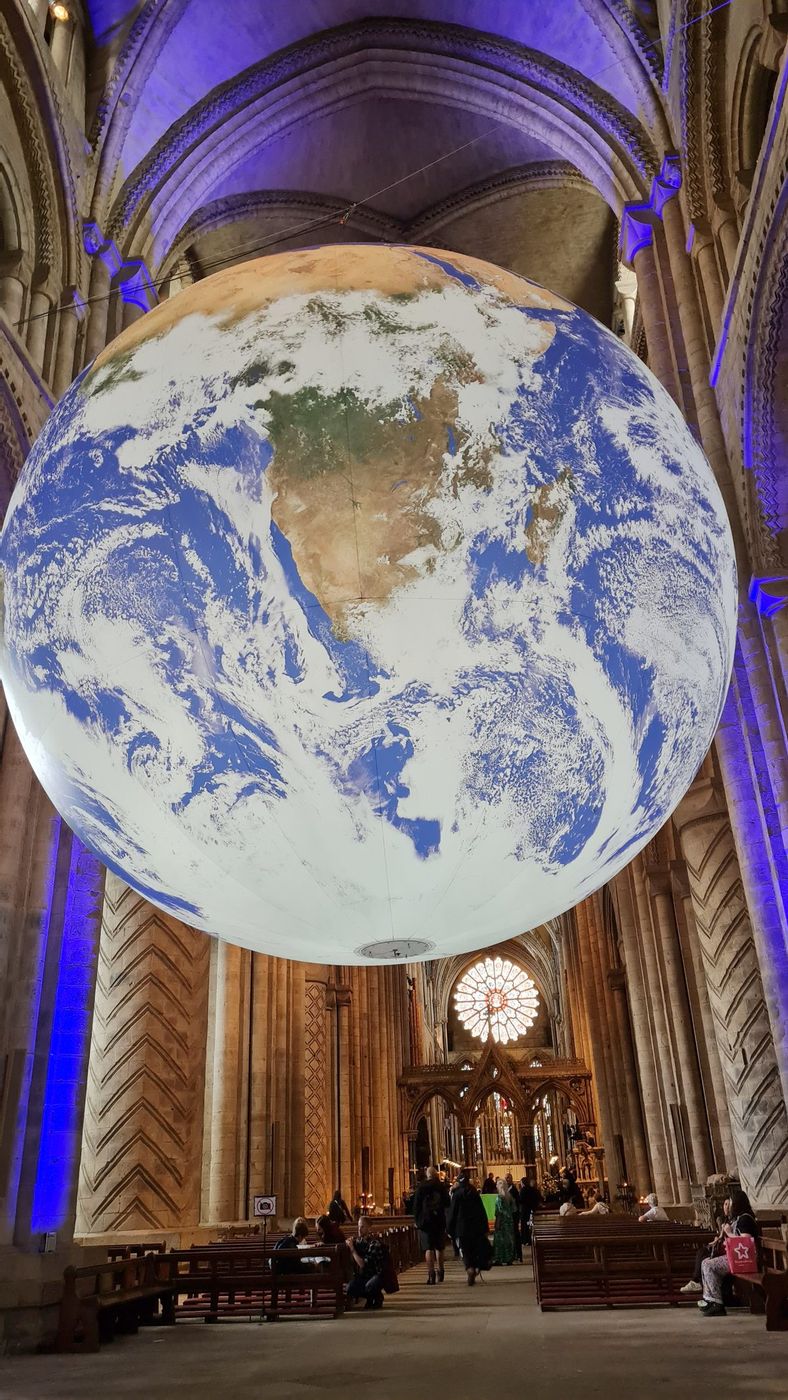
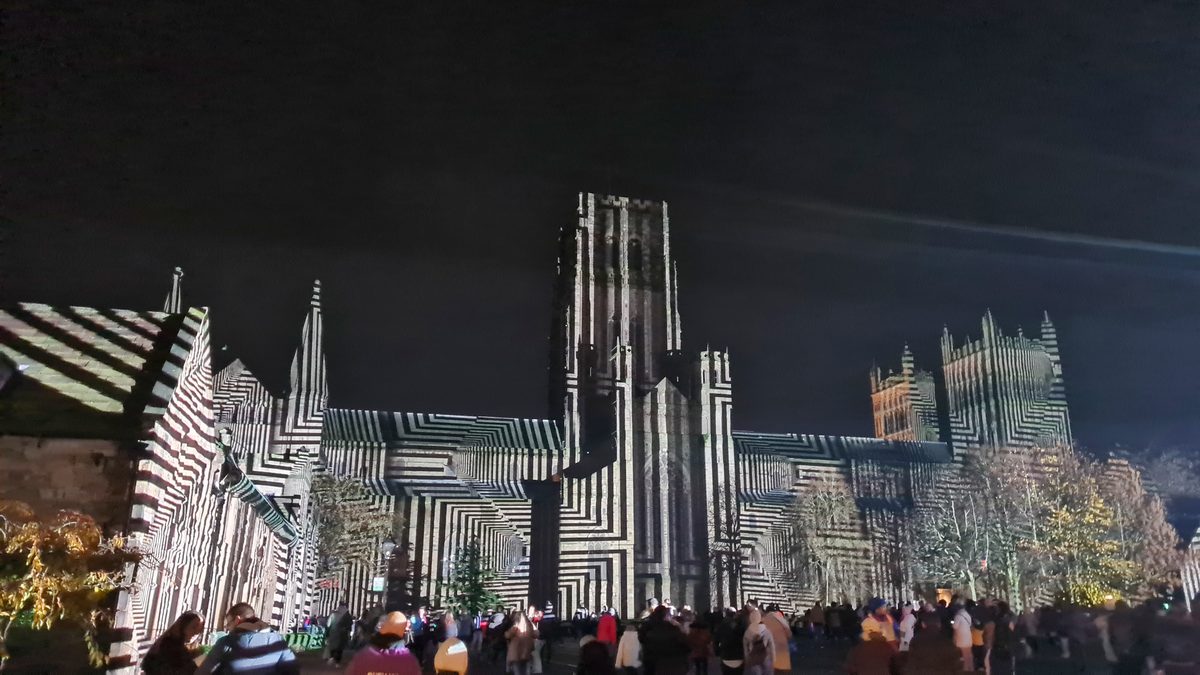
What surprised me is how much modern life goes on inside it. It hosts light installations, orchestras and bands, and there is a cafe in the Undercroft with the kind of vaulted stone ceiling that makes a cheese scone feel like an occasion. Durham also hosted Lumiere, the UK’s biggest light art festival, which took over the city every other autumn and turned the cathedral itself into a screen. Worth knowing before you plan around it: November 2025 was the final edition, after sixteen years and nine festivals. The council has said it may not be the end of light art in Durham, but for now there is nothing to book.
Check the calendar before you go — this matters
This is the one piece of practical advice I would give above all others, and it is the thing nobody tells you. Because it is a working cathedral, it is not simply open all day every day. Services, weddings, funerals, ordinations, graduations and school events all take priority over visitors, and when one is on, either part of the building or the whole of it is closed to the public.
It is usually mornings, but not always. Sometimes it is a couple of hours, sometimes half the day, and occasionally the whole day. Afternoons can go the same way if a concert or a show is being set up — a big installation can take a day to rig.
Normal visitor hours, when everything is open, are Monday to Saturday 9.30am–4.30pm and Sunday 12.30pm–3pm. Check the cathedral’s own What’s On calendar the day before you go. It lists services, events and planned disruption, and it will save you walking up that hill for nothing.
Events are ticketed separately
One thing that confuses people: the free entry and the events are two different things. If you want to go to a concert, a light installation or an evening event, you buy a ticket for it on the cathedral’s website, and that ticket price has nothing to do with the free daytime entry or the five-pound donation. Popular events sell out well in advance, so if there is something on while you are there, book before you travel rather than turning up and hoping.
The Harry Potter bit
Yes — several scenes were filmed here and the gift shop has never quite recovered. If you want to find them:
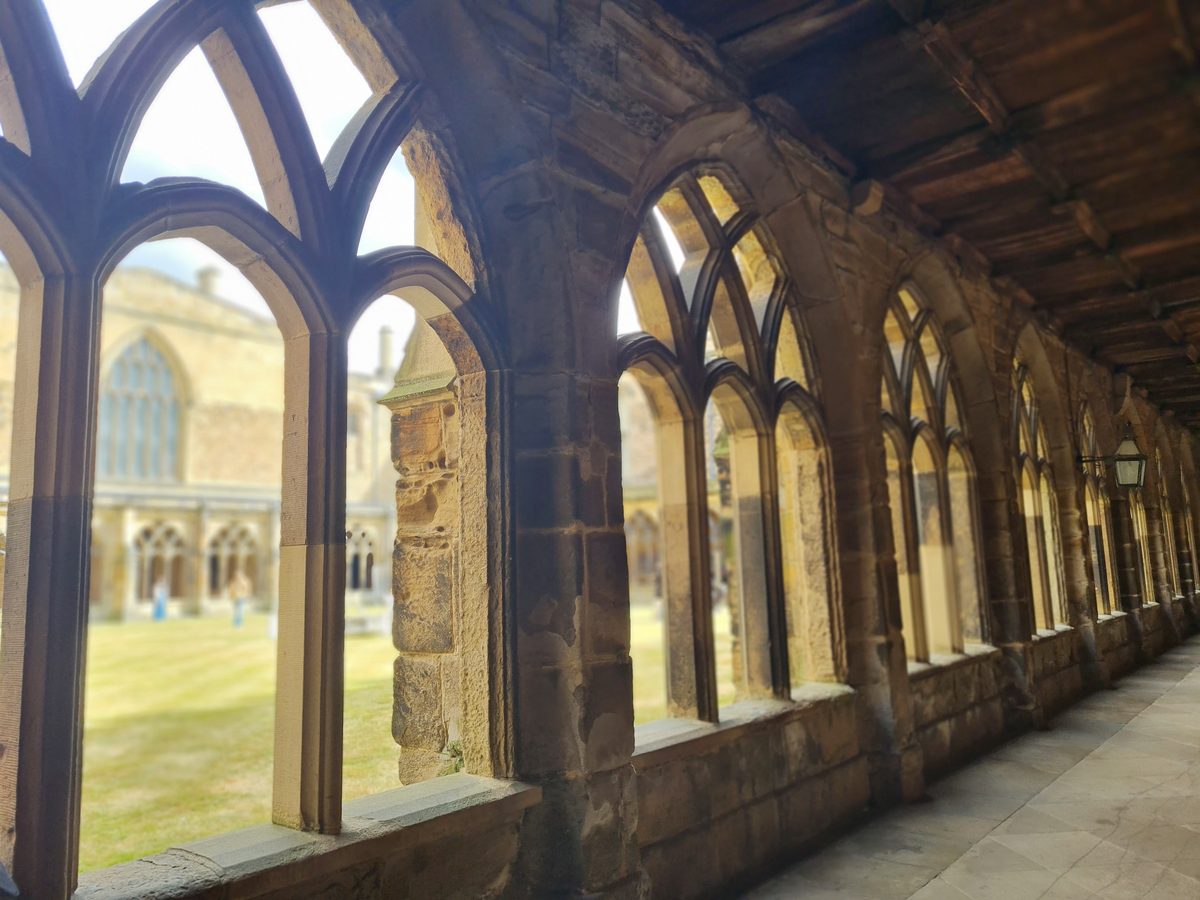
- The cloisters — Harry releases Hedwig into the snow, and in Chamber of Secrets this is where Ron’s slug curse backfires on him.
- The Chapter House — Professor McGonagall’s Transfiguration classroom in the first two films.
- The Triforium, the gallery above the nave — the Forbidden Corridor, where the three-headed dog is guarding the trapdoor.
A castle full of students
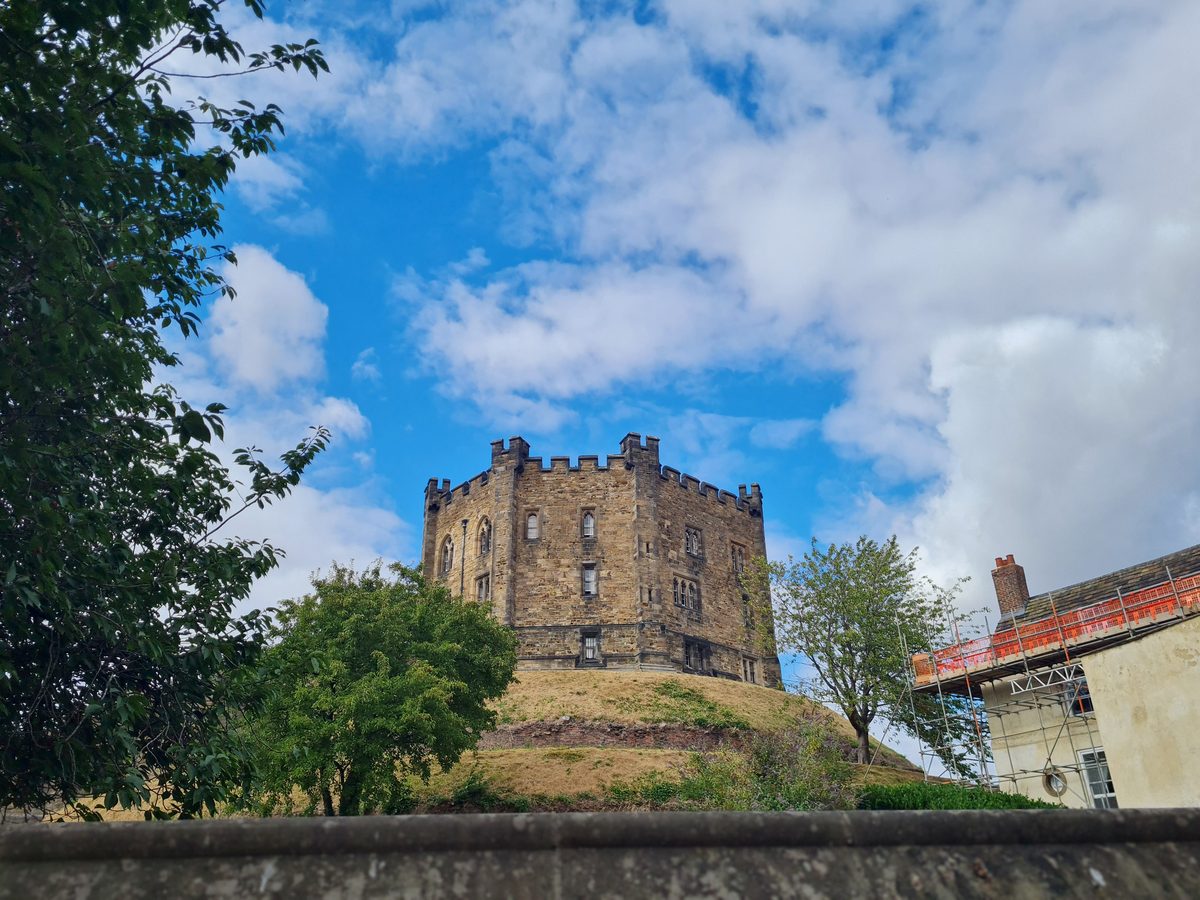
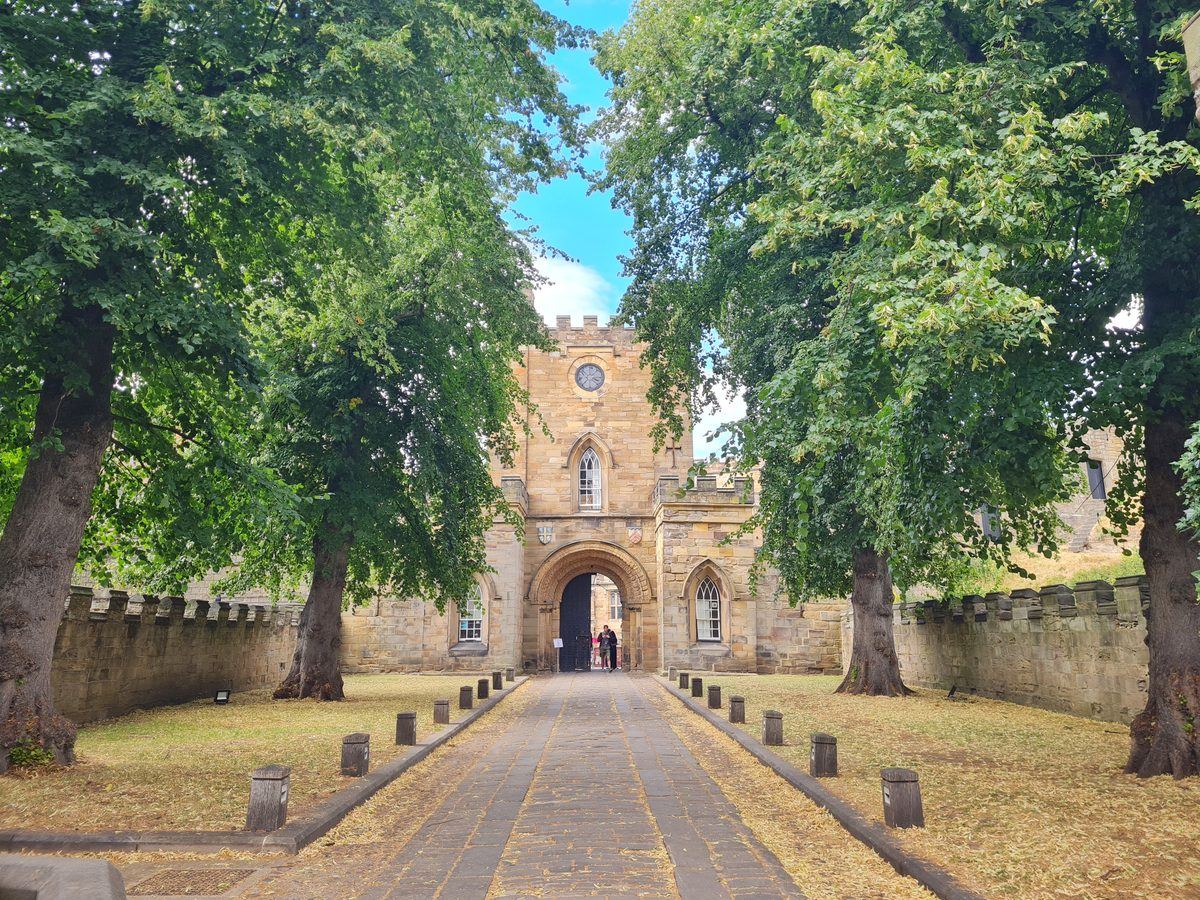
Durham Castle looks, from the outside, like a close relation of the one in York. The difference is what happens inside it. It belongs to Durham University — one of the oldest universities in England — and it is not a monument but a hall of residence. Students live there, eat in the Great Hall, and sit exams in rooms that are older than most countries.
The ballot — and yes, it really is like the film
Here is my favourite thing about Durham, and I promise I am not making it up. The castle is University College, and it has around a hundred rooms inside the castle walls — mostly in the Keep, but also on Garden Stairs, Hall Stairs, by the Fellows’ Garden and at Junction. Far more students want one of those rooms than there are rooms.
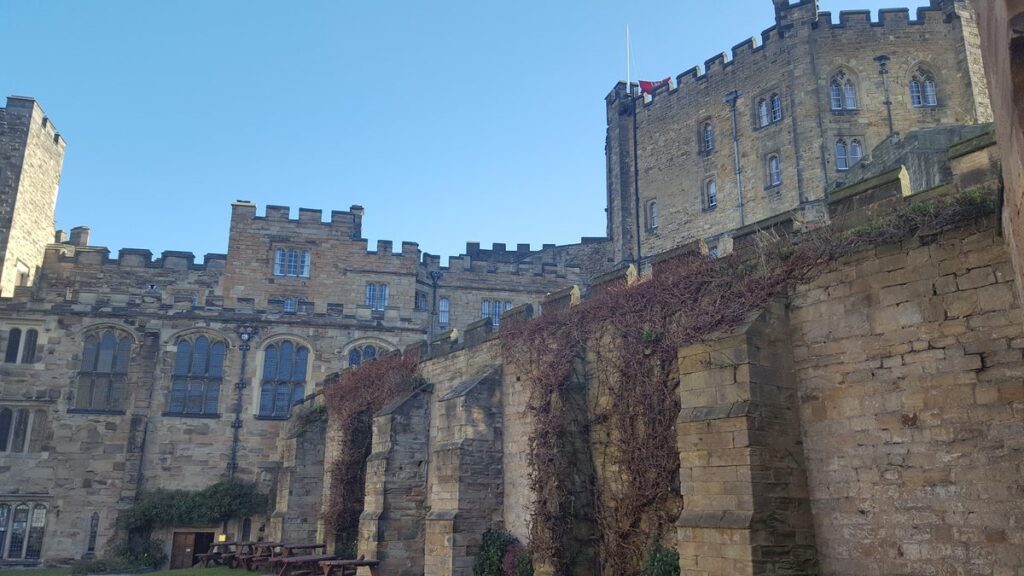
So every year they hold a ballot. Names go in, names come out, and the ones drawn get to spend a year living inside a Norman castle for the price of student accommodation. Most of the castle rooms go to final-year students; a few of the shared ones go to freshers. It is exactly the scene you are picturing from the films — except the hat does not talk, and the losers end up in a perfectly nice modern block down the hill.
Imagine being nineteen and finding out you live in a castle this year. I would never have got any work done.
Getting in — tours only, and they sell out
Because it is a working college, the only way inside is on a guided tour, and tours run around what the students are doing that week. They are not on every day, and closures can happen at short notice.
- Book online through the Durham University website — tour times for each month are usually only released the month before, so do not expect to book far ahead.
- You can also buy on the day, in person, at Palace Green Library right next to the castle entrance — first come, first served, and it often sells out.
- To check tours are running at all before you travel, ring 0191 334 2932, or email castle.tours@durham.ac.uk.
- In the holidays there are usually morning and afternoon slots; in term time it is often afternoons only.
Practical notes
- Wear flat shoes. I am saying it again because it is the single most useful thing in this post.
- Check the cathedral calendar the day before you go, and buy event tickets in advance on the cathedral website.
- Book the castle tour ahead — online through Durham University, or on the day at Palace Green Library if you are lucky.
- The centre is small but steep. Allow more time than the map suggests: half a kilometre in Durham is not half a kilometre on the flat, and it is worth knowing before you set off with a suitcase.
Parking — read this before you drive in
Durham is not a city to arrive in by car casually. The peninsula is a medieval street plan with a river round three sides, and the council has spent twenty years discouraging traffic from going up it. Here is the honest picture:
- There is some on-street parking on the streets before the bridges, on both sides of the river. There is not much of it, it fills early, and on a Saturday you can circle for a long time and find nothing.
- The two proper car parks are the ones to aim for. Prince Bishops Place, in the shopping centre right in the middle of town, has around 400 spaces and is the closest car park to the cathedral and castle. Walkergate, near the Gala Theatre, has around 500 spaces, is open 24 hours, and is about three minutes’ walk from the Market Place.
- The larger open area over towards the Hotel Indigo end, on the Elvet side of the river, is the other option people head for.
- Do not plan to drive up to the Market Place. Saddler Street and the Market Place sit inside a road-user charge zone — the first scheme of its kind in the UK, running since 2002. Vehicles pay a daily charge to pass through between 10am and 2am, enforced by camera, and the Market Place itself is loading only. Residents, businesses and other permit holders are exempt, which is why you will see some cars going through and assume you can follow them. You cannot, or rather you can, but it will cost you.
The short version: park once, on the outside, and walk. Everything in this post is within twenty minutes of everything else.
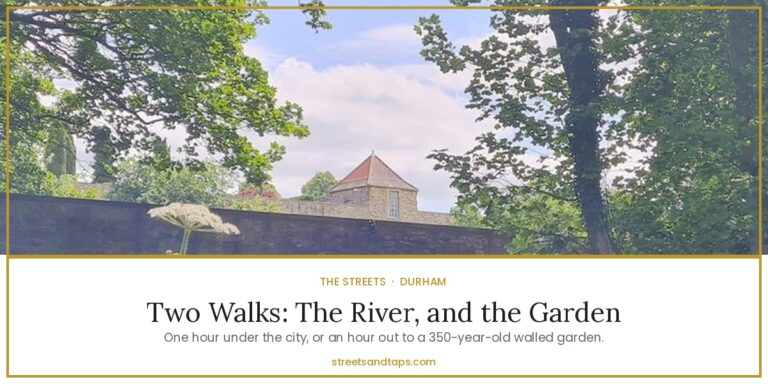
When you have finished with the cathedral and the castle, the best of Durham is ninety seconds downhill. Two walks along the river — an easy loop under the city, and a longer one out to a walled garden that has been there for three hundred and fifty years and that almost nobody visits.
Addresses
- Durham Cathedral — The College, Durham DH1 3EH. Free entry, £5 suggested donation. Visitor hours Mon–Sat 9.30am–4.30pm, Sun 12.30pm–3pm. durhamcathedral.co.uk
- Undercroft Cafe — inside the cathedral cloisters. durhamcathedral.co.uk
- Durham Castle — Palace Green, Durham DH1 3RW. Guided tours only. 0191 334 2932. durham.ac.uk
- Palace Green — between the cathedral and the castle, free to walk across.
- Prince Bishops Place car park — Durham DH1 3UJ, approx. 400 spaces. princebishopsplace.co.uk
- Walkergate car park — Walkergate, Durham DH1 1SQ, approx. 500 spaces, open 24 hours. walkergate-durham.co.uk
- Lumiere Durham — ran citywide every other autumn until its final edition in November 2025.
Next: down off the hill and into the old streets — the Market Place and its statues, Silver Street, Saddler Street, the vennels and the three bridges.
Doing the trail yourself? Subscribe to the newsletter and get the free one-page County Durham Brewery Trail — five breweries with opening windows, prices and honest verdicts — including the ones that are not for Ian. One email per trip, no spam.