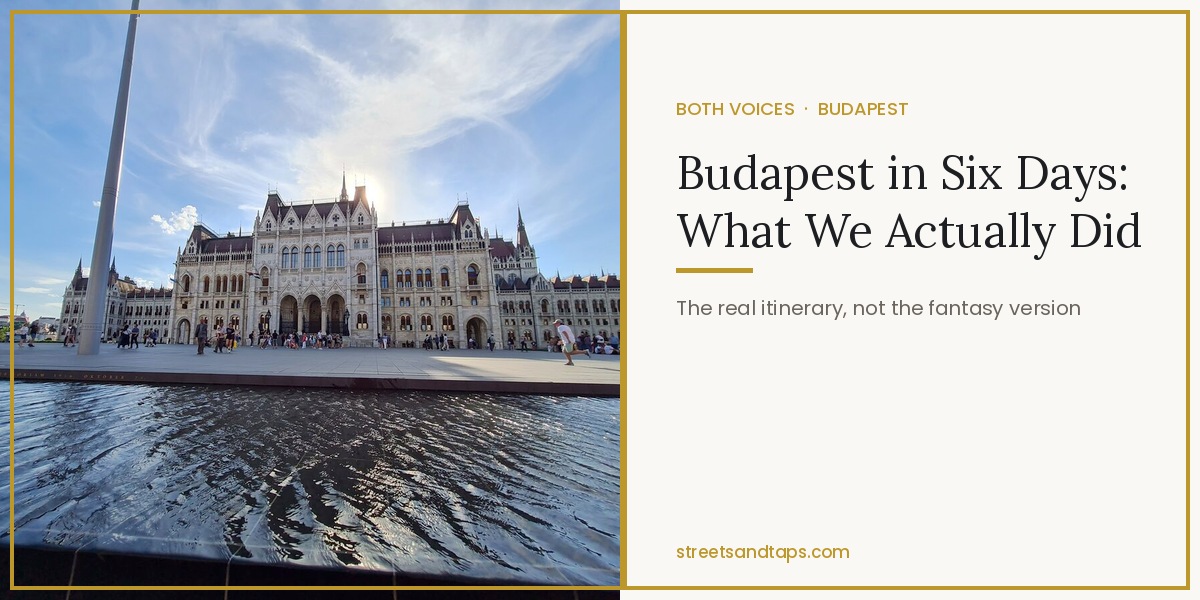
Budapest in Six Days — What We Actually Did
This is our real itinerary, not the fantasy version where you see nine landmarks a day and feel nothing but tired. Six days, four people, two thermal baths, one free concert, and a lot of walking — our biggest day was 7 miles and 6 hours on foot.
Before you book anything: Gellért Baths, the famous one from all the photos, is closed for renovation until 2028. We chose Palatinus and Rudas instead and have no regrets — both get a full post of their own.
On booking in general: we bought no tickets online and built each day around the weather — and it worked, because early June is not yet peak season. The turning point is mid-June, when Hungarian school holidays begin (19 June in 2026 — check the current year’s date): after that, these places run at full capacity and booking online starts to make sense. Before that, stay flexible and follow the sky.
The evening we arrived — hotel, dinner, and a local atmosphere
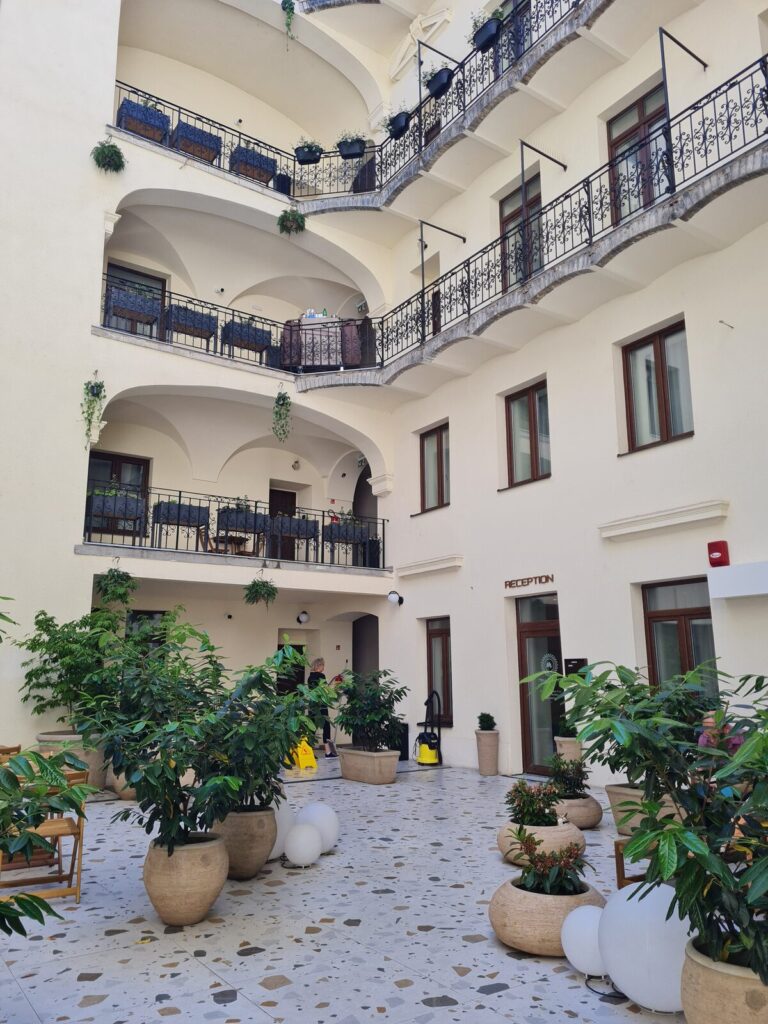
We stayed at Marbles Residence in Józsefváros — a historic area around the National Museum with stylish eateries and opulent 19th-century architecture. Brand new rooms with a microwave and kettle, metro nearby, affordable price and a very beautiful historic building. One minus for us: the mattress was really hard, but our daughters didn’t complain.
We dropped our bags and went out for dinner. The first thing Ian does always and everywhere is search Google Maps for “craft beer near me.” This is non-negotiable and non-avoidable — just sit back and relax. We went to Mixat, the restaurant with 32 taps. The street was full of locals enjoying traditional Hungarian music. We sat outside and enjoyed it too. The food was good, the beer and sweet wine were even better, the atmosphere was perfect.
Day 1 — The market, the river, and the first ruin bar
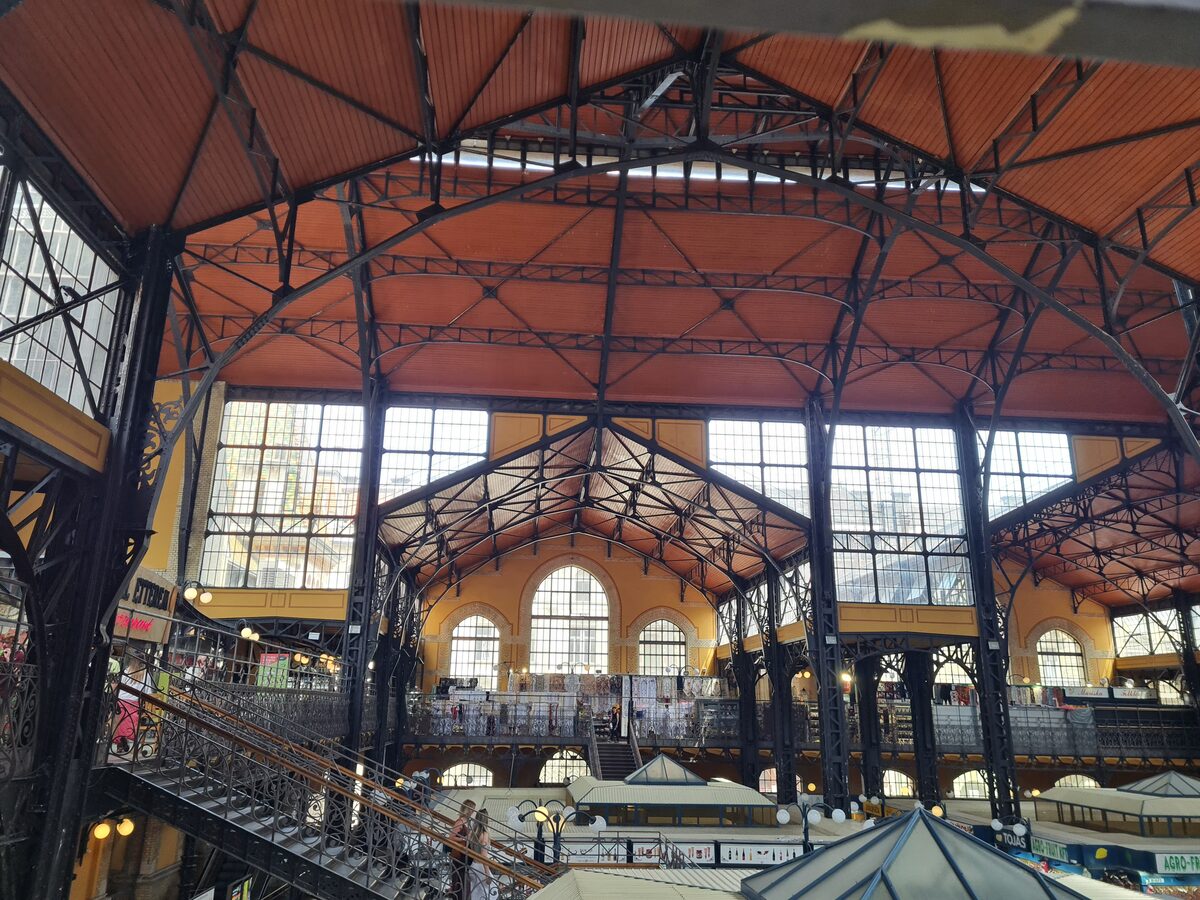
We started at the Central Market Hall (Nagyvásárcsarnok) — a working market with real energy: iron roof, colourful stalls, textures everywhere. We tried goulash and homemade sausage and bought paprika to take home.
How the market actually works, floor by floor:
Ground floor, end staircase: fermented vegetables — it smells amazing.
Ground floor, central staircase: fresh wild meat.
First floor, sides: where locals shop for fruit and meat.
First floor centre and second floor: the tourist zone. Prices reflect it.
One important tip: prices for the same item can differ 3–4 times between stalls. Walk the whole market first, note the prices, then go back to the best stall.
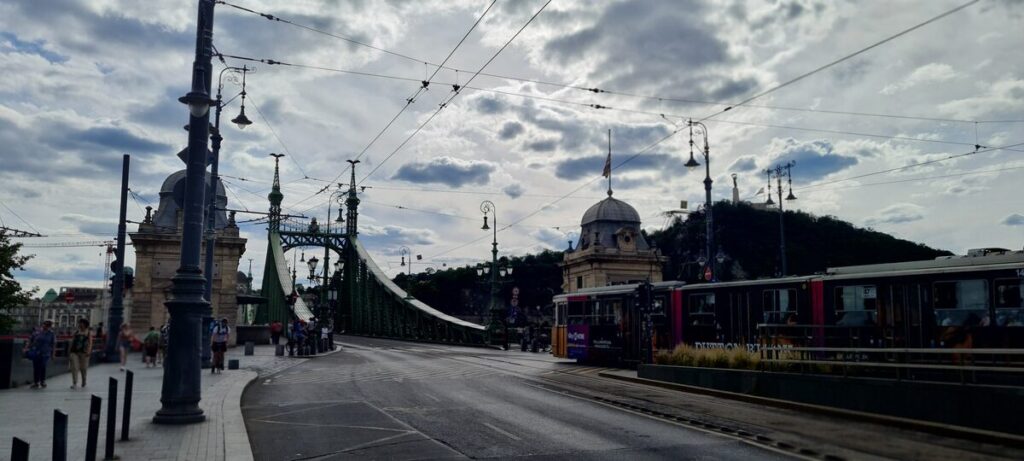
From the market we crossed Liberty Bridge and walked along the river to the Parliament — which looks best from the water side. Then into the Jewish Quarter, and we ended the evening at Szimpla Kert: a DJ, live rock music, drinks, and people smoking all sorts of things. Loud, alive, and worth seeing once at night. For the full craft beer picture, Ian’s guide to where Budapest actually drinks covers this one and the bars worth going back to.
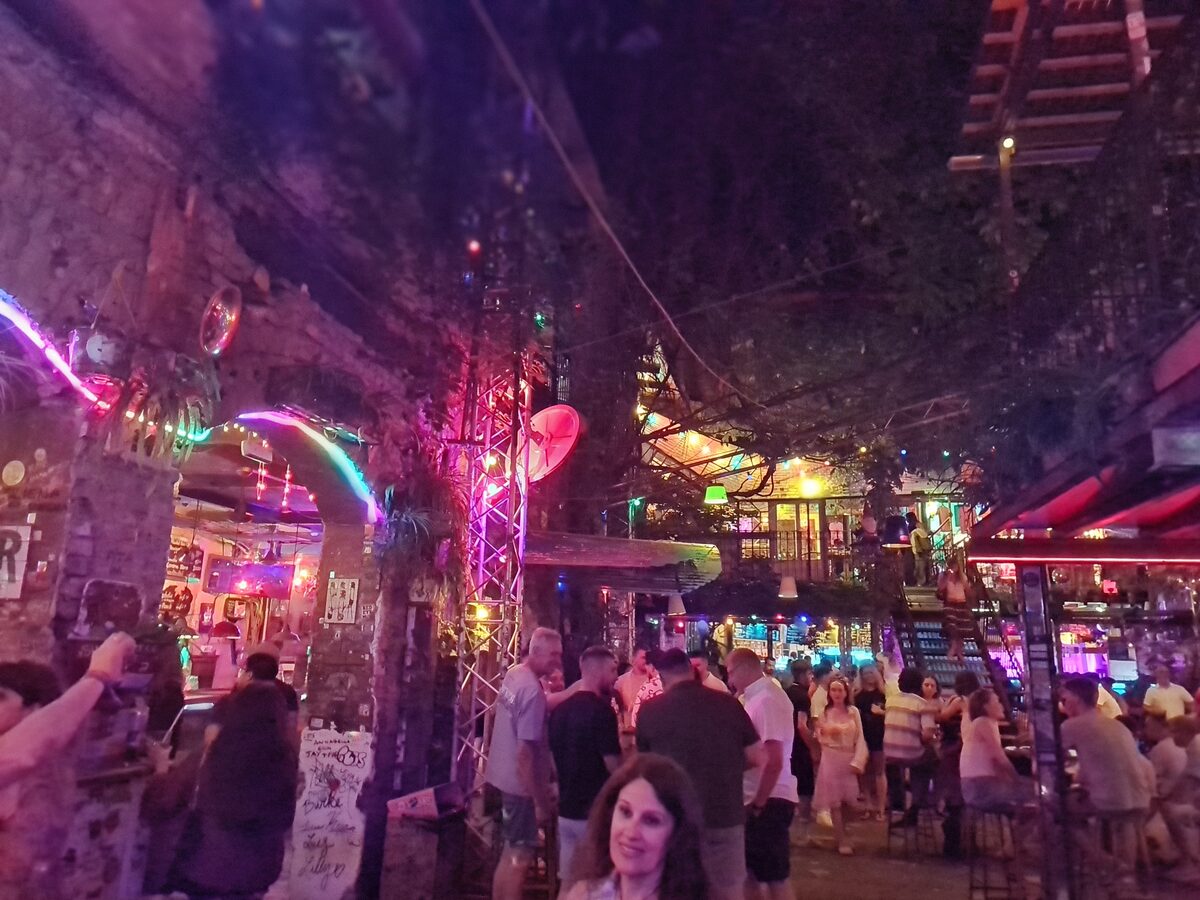
Day 2 — Street photos, Gozsdu Court, and the same ruin bar by day
A slower day on purpose. I spent the morning on street photography. We wandered through Gozsdu Court — a long passage of bars and cafés between buildings — interesting to look at, but a tourist trap for eating.
We went back to Szimpla Kert in daylight. Same address, completely different place: calm, full of green plants, water mist drifting from above. Go twice — daytime for the building, evening for the atmosphere.
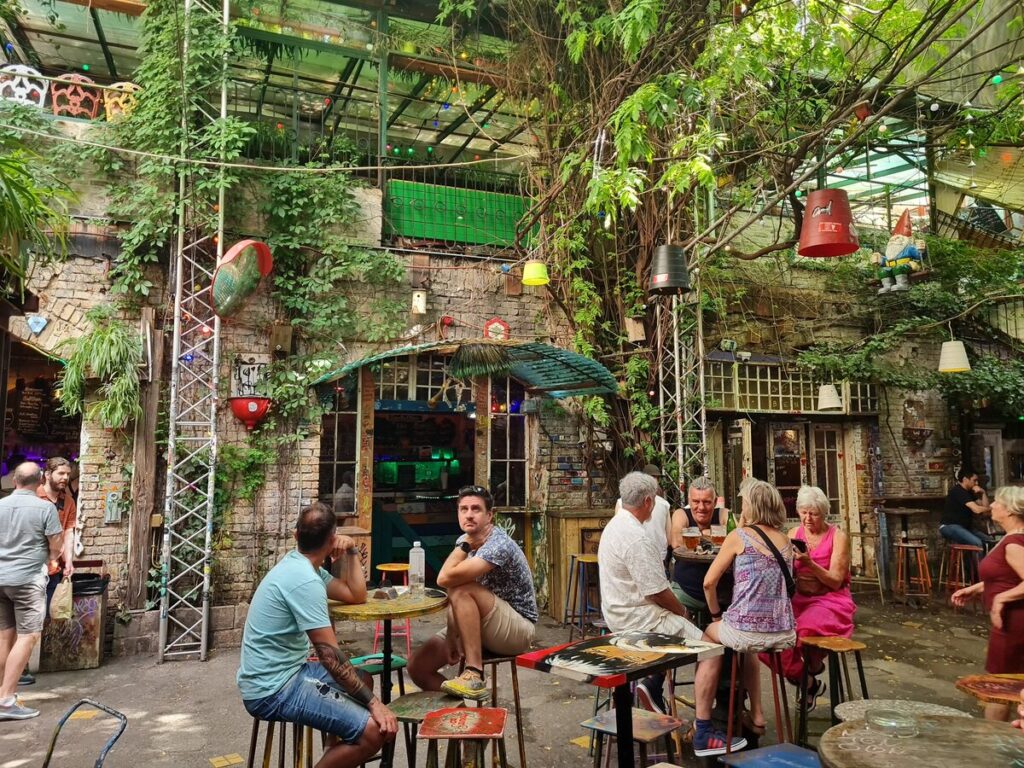
The evening ended at the Time Out Market — found by accident, returned on purpose. Full story in the Tokaji post.
Day 3 — Palatinus bath and Margaret Island
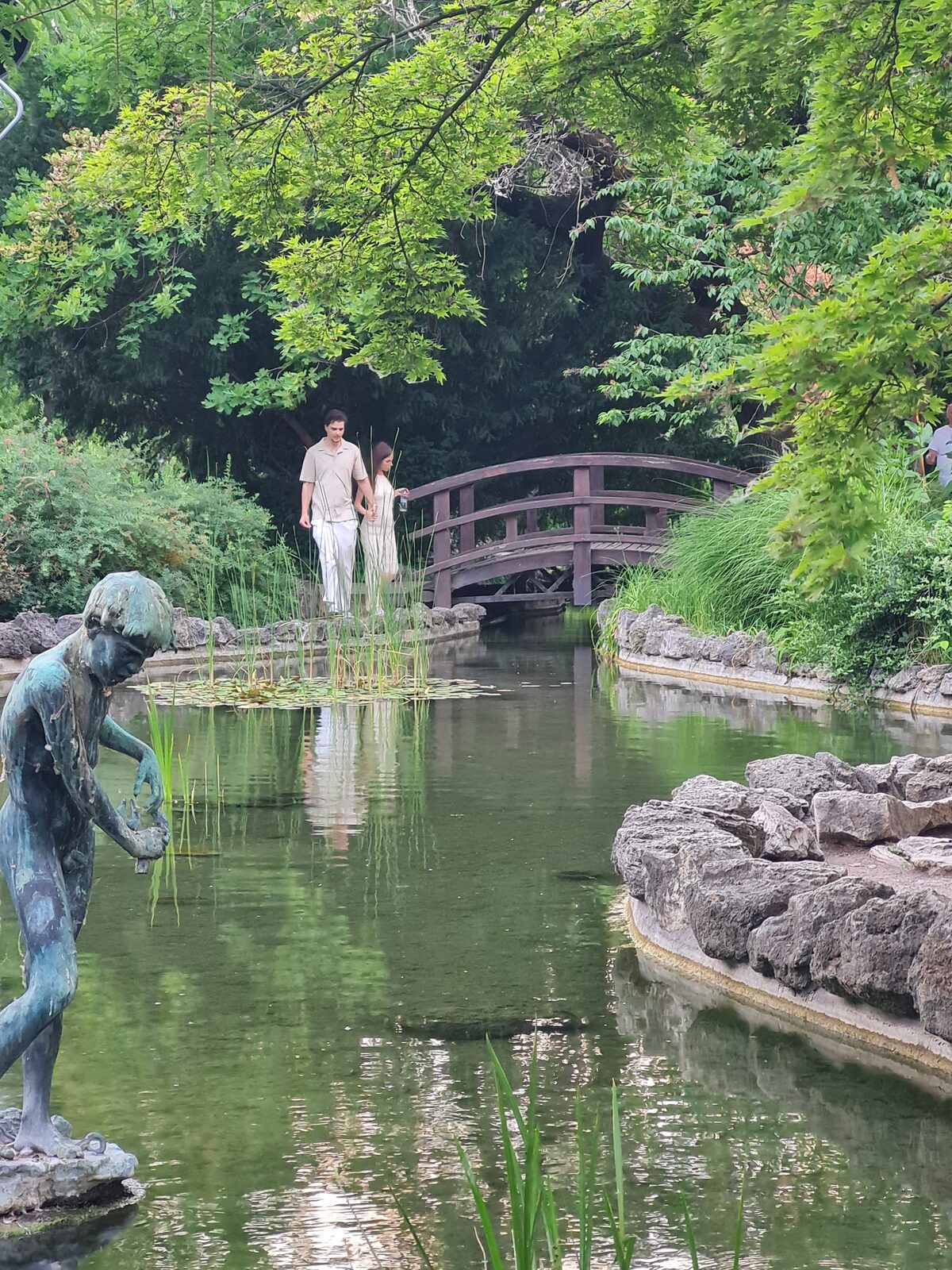
Thermal bath in the sunshine, then the monastery ruins, the ruined church at dusk, the Japanese Garden with its posing frogs — and the musical well near the north end, a small pavilion that plays melodies, with a lovely sunset over the water. Full story in the Margaret Island post.
Day 4 — The big day: 7 miles, 6 hours
We came back to the Central Market for lunch and stocked up on paprika — we’d all decided we like goulash enough to cook it regularly at home. Then coffee at Tamp & Pull, a small independent espresso bar near the market, and ice cream on the square opposite. My daughter’s favorite: the truffle ice cream (none of us tried the mushroom one).
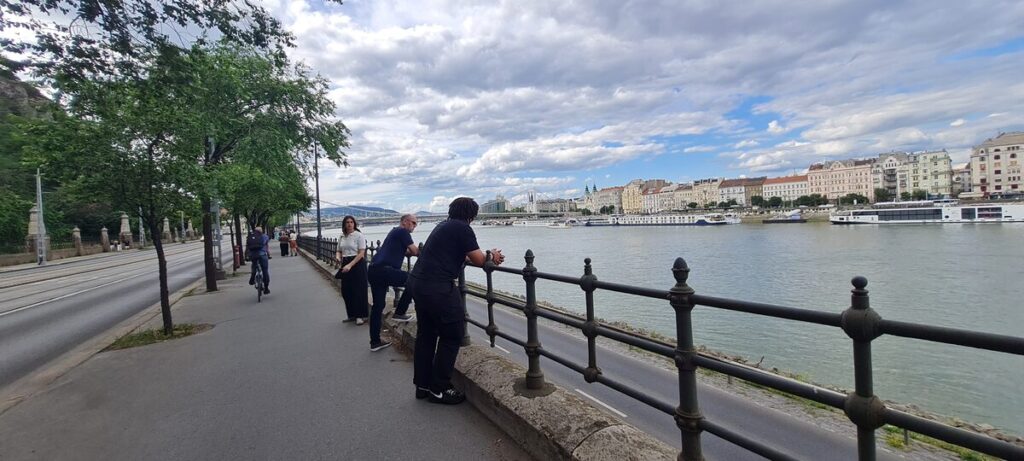
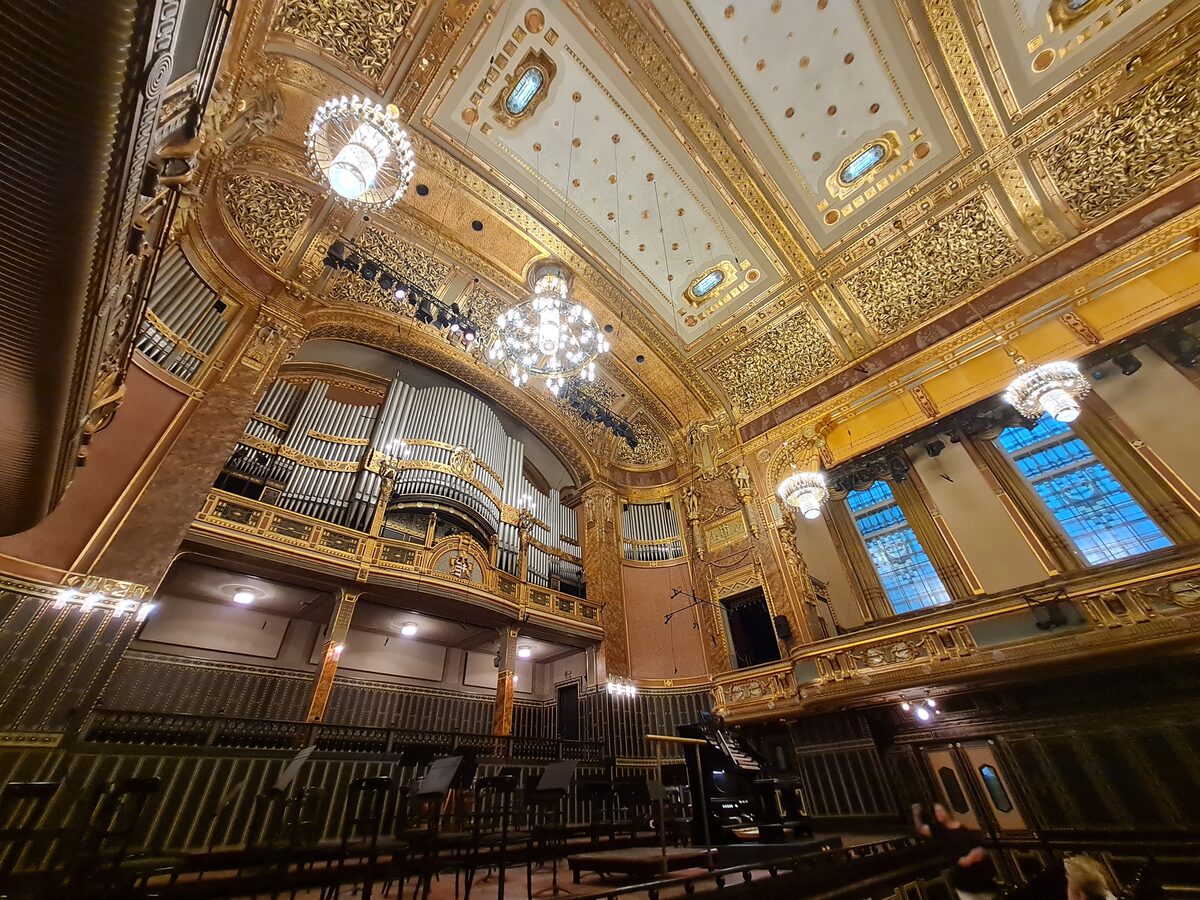
In the afternoon: the Franz Liszt Academy of Music. In June, graduating students give free diploma concerts — different instruments on different days: organ, violin, cello, vocalists. We caught an organ performance, and the interior surpasses many famous venues I’ve seen in the UK: ornate ceiling, elegant balconies, dramatic organ pipes, wonderful sound. Tickets are free but must be booked in advance on the academy’s website. Concerts run at 4pm or 6pm; tram 4 or 6 gets you there.
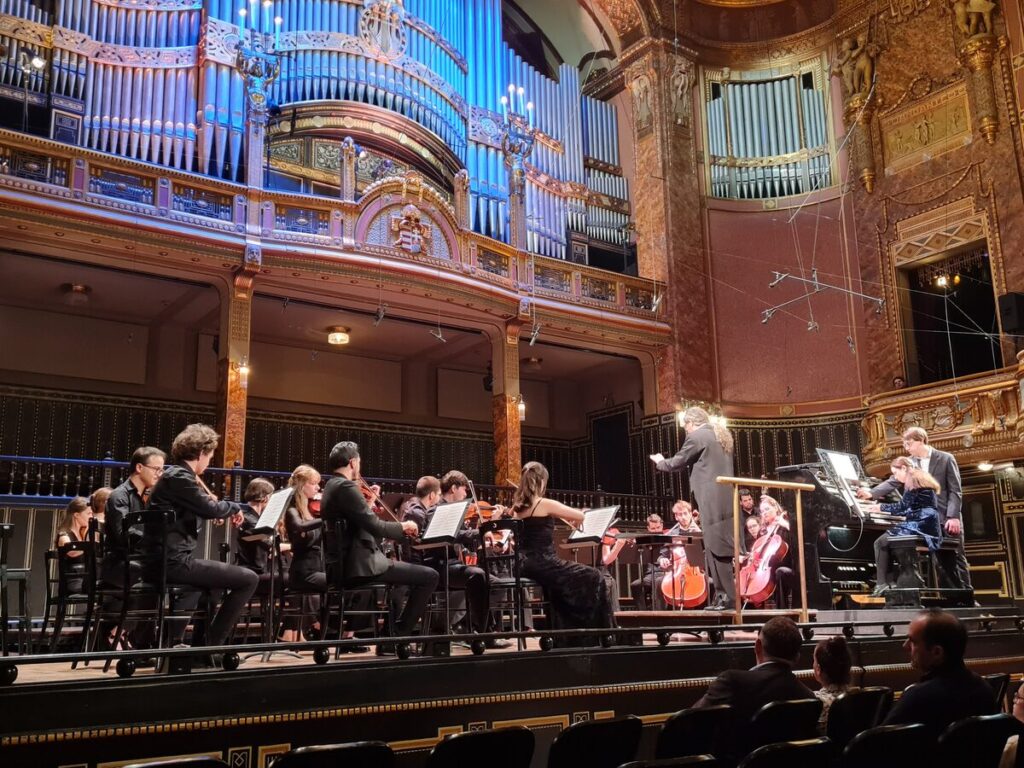
Full honesty: some of the students’ musical choices were not for me — one piece sounded like a horror film soundtrack. Ian was sleepy but managed to applaud on time. Still: one of the best free things we did in Budapest.
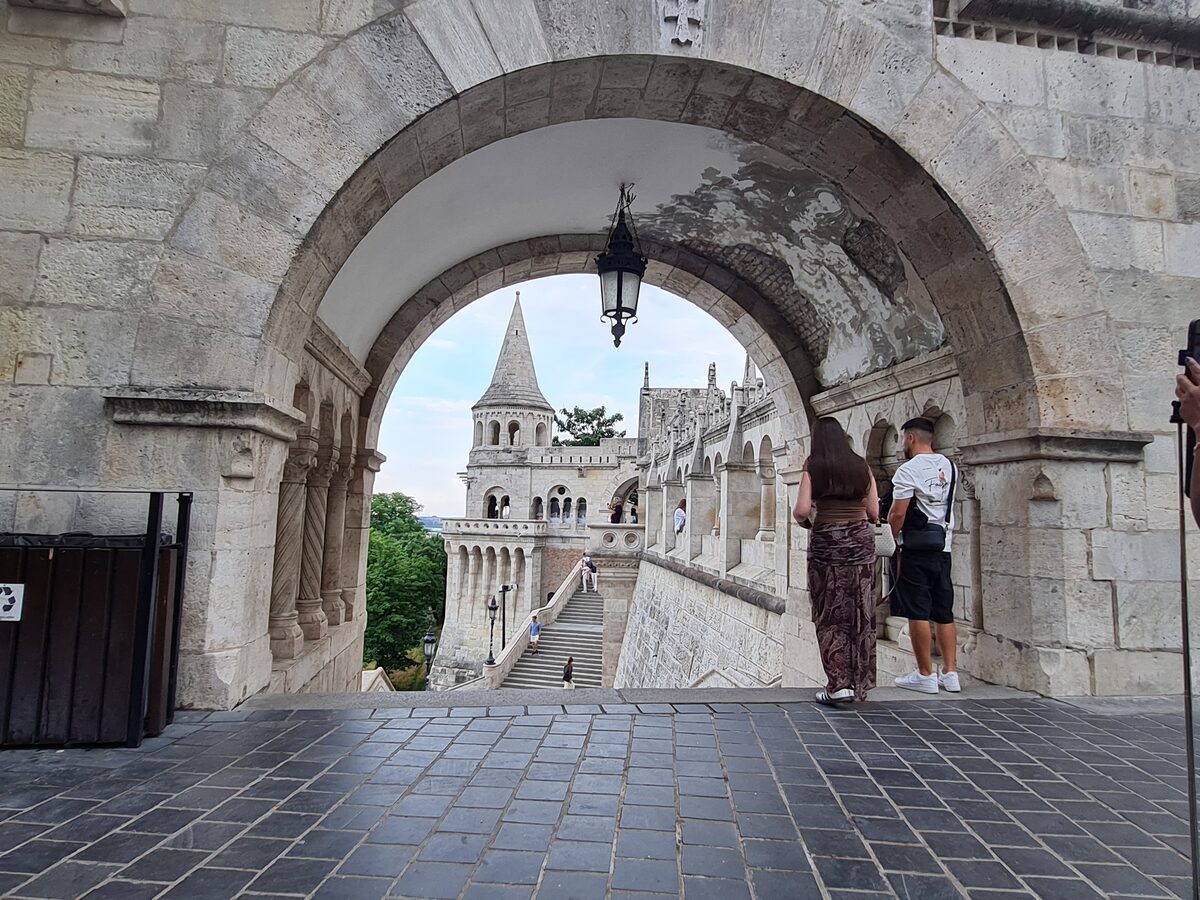
In the evening: bus to Fisherman’s Bastion. Yes, it was crowded. But most of the bastion is free to enter. We went up one of the towers, which becomes free after 9pm — that’s when the city lights came on below us. The view was so good that even Ian took a few photos. We finished past the Buda Castle façade, lit up at night. Worth every step of the 7 miles.
Day 5 — Rudas spa day
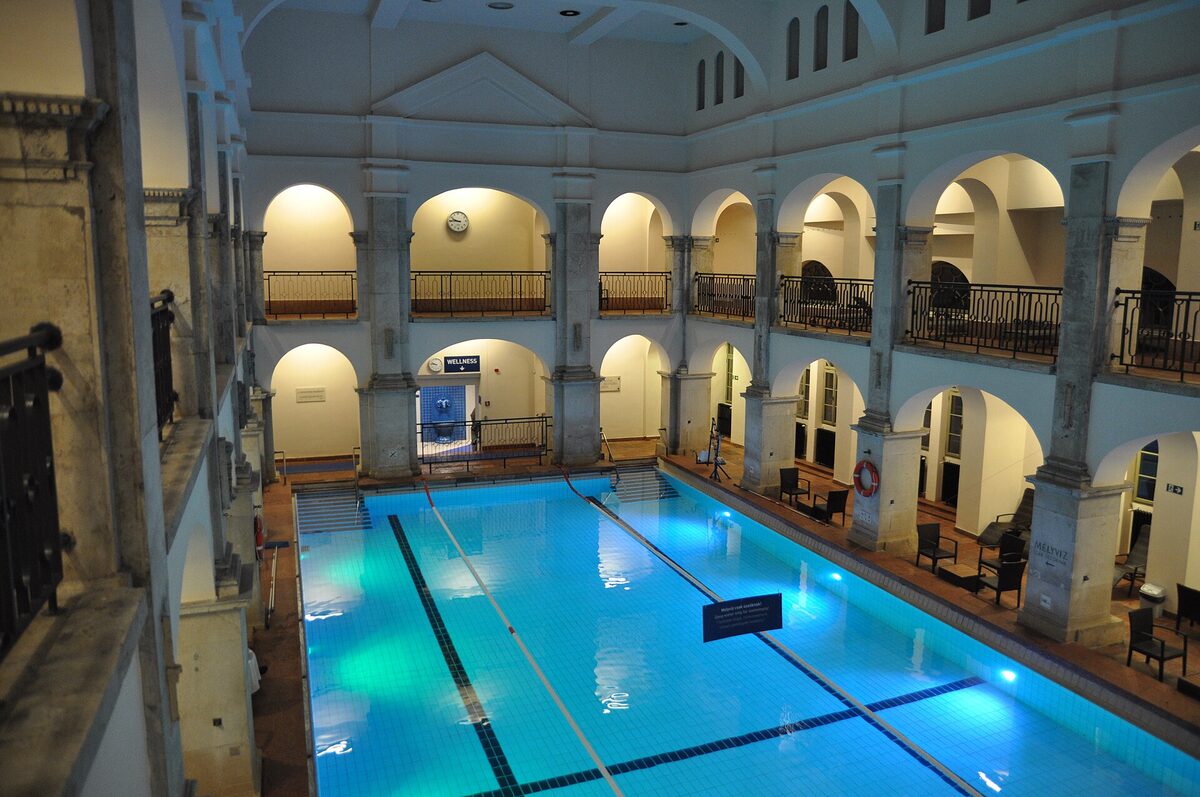
The cool, grey day. Saunas, plunge pools, the 500-year-old Turkish bath, and one stolen towel. Full story in the baths post. A planning note: we put both bath days midweek — tickets are cheaper than at the weekend. Worth arranging your week around it.
Day 6 — Aquapark
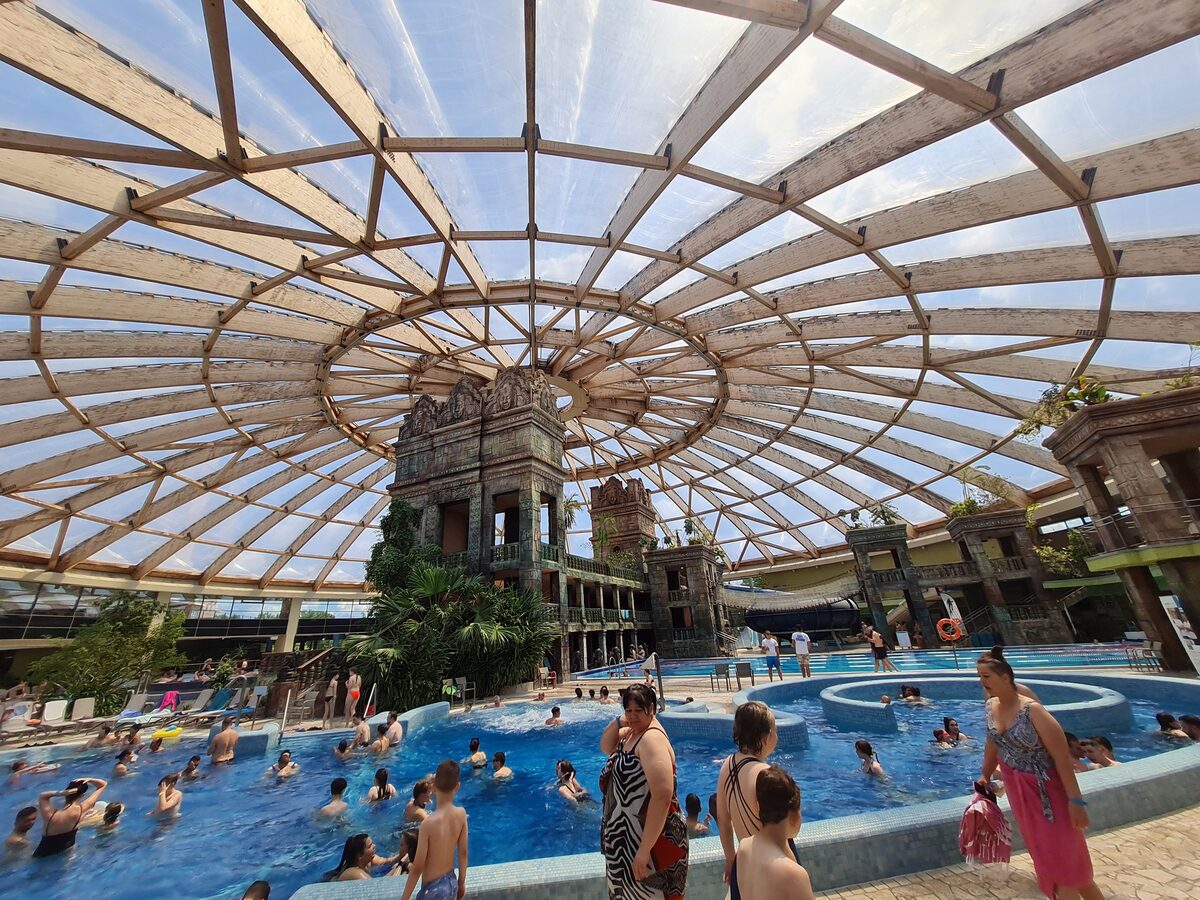
A Friday, cloudy and windy — which made it the perfect aquapark day, since the main part is indoors. We took a taxi (about half an hour). The park has several indoor pools, water slides at different levels of bravery, saunas, and cafés. It belongs to the Aquaworld Resort hotel.
One honest warning from June 2026: there was construction work on one side of the indoor dome, and the glue smell was awful — my eyes were itching and watering. The outdoor pool reconciled me with the situation, but if you’re going soon, it’s worth asking whether the works have finished.
One rule we kept every day
Wherever the day went, the evening ended the same way: a beer bar for Ian, a wine bar for me. Usually, we managed both.
The full beer report is in Ian’s guide to where Budapest actually drinks (and the complete taproom comparison); the wine report is in the Tokaji post.
Honest summary
Six days was comfortable for Budapest with baths included. Four would cover the sights but lose the slow days — and the slow days were the good ones.
Best free things: the diploma concert at the Liszt Academy, and the Fisherman’s Bastion tower after 9pm.
Money tips: bath tickets are cheaper midweek. Walk the whole market before buying anything.
Weather strategy: save one indoor day (Rudas, the aquapark, the market) for when the sky turns grey. It will.
What we’d do again tomorrow: the salt sauna at Rudas, a glass of Tokaji with a piano, goulash for lunch and dinner, and street music in the evening.
All addresses
Accommodation
Marbles Residence — Józsefváros
Baths
Palatinus Baths — Soó Rezső sétány 1, Margaret Island · palatinusstrand.hu
Rudas Thermal Bath — Döbrentei tér 9, 1013 · rudasfurdo.hu
Aquaworld Budapest — Íves út 16, 1044 · aquaworldresort.hu
Food & coffee
Central Market Hall — Vámház körút 1–3, 1093 · Mon–Fri 6am–6pm, Sat to 4pm
Tamp & Pull Espresso Bar — Czuczor utca 3, 1093
Time Out Market Budapest — Blaha Lujza tér 1, 1085
Wine & beer
Mixat — Krúdy utca 7, 1088 · mixatudvar.hu
VinoWonka — Corvin sétány 2, 1082
Cintányéros — Bókay János utca 52, 1083
Szimpla Kert — Kazinczy utca 14, 1075 · szimpla.hu
Culture & sights
Franz Liszt Academy of Music — Liszt Ferenc tér 8, 1061 · zeneakademia.hu
Fisherman’s Bastion — Szentháromság tér, 1014 · free; towers free after 9pm
Buda Castle — Szent György tér, 1014 · budavar.hu
Planning the same trip? Subscribe to the newsletter and get the free one-page Budapest Craft Beer Cheat Sheet — nine taprooms with prices, taster policies and clickable maps. One email per trip, no spam.