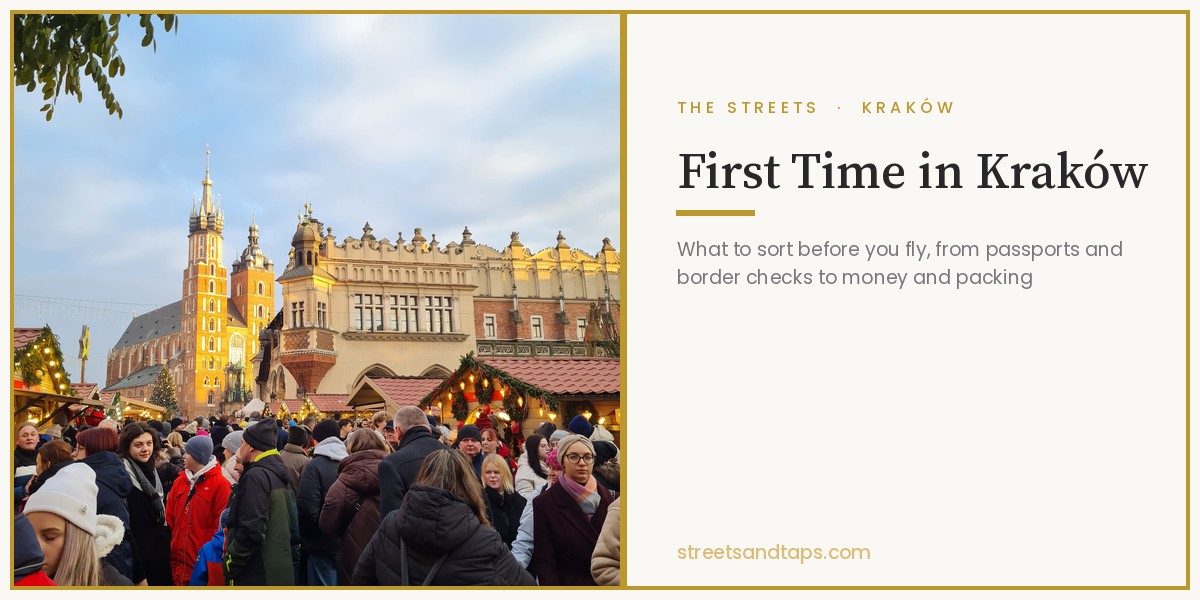
Going to Kraków for the First Time: What to Sort Before You Fly
What do you actually need to sort before a first trip to Kraków? Less than you might think, and almost all of it can be done from your sofa the week before.
Kraków is a beautiful medieval city with everything you want from a city break: towers, churches and museums, food and drink that make a trip on their own, and some of the darkest history of the 20th century within a day trip. Two days will give you a taste; a week will not run out. We have been twice, and this is everything we would tell a friend going for the first time.
Do you need a visa?
Not for a holiday if you hold a UK, EU, US, Canadian, Australian or New Zealand passport. Poland is in the Schengen area, and visitors from these countries can stay up to 90 days in any 180-day period across all Schengen countries together, so a week in Kraków after a fortnight in Spain counts as one trip of three weeks. If you hold another passport, or you live in one of these countries without being a citizen, check the official Schengen visa rules before you book.
One rule catches British travellers every year. Your passport must have been issued less than 10 years before the day you arrive, and it must still be valid for at least 3 months after the day you leave. A passport can look fine and still fail the first test, so check the issue date, not only the expiry date. The full rules are on the UK government’s Poland travel advice.
The new border checks: EES
Since October 2025 the EU has been replacing passport stamps with the Entry/Exit System, EES, and it has been fully running since April 2026. The first time you arrive in Poland, or anywhere else in the Schengen area, you register your fingerprints and a photo at the border. Children aged 11 and under give a photo only. It is free, there is nothing to do in advance, and your registration lasts three years.
What it does cost is time. Queues at some airports have been much longer since it started, so allow extra time after you land before you book a taxi or a train, and allow extra time again when you fly home, because your exit is recorded as well.

And the next one: ETIAS
One more thing is coming. ETIAS is an online travel authorisation, a little like the US ESTA, that UK, US, Canadian, Australian and New Zealand visitors will need before travelling to most of Europe. EU citizens will not. It is expected to start in the last months of 2026, with a grace period of about six months after it does.
When it starts it will cost €20 (about £17), free for under-18s and over-70s, and one approval will last three years or until your passport expires. Apply only on the official EU website. Copycat sites charging several times the price already exist.
Getting from the airport
Kraków Airport is at Balice, outside the city, with a direct train to Kraków Główny, the main station right beside the Old Town. The easiest way in is the SKA1 train from the station inside the airport: about 20 minutes to the main station, roughly every half hour, around 20 zł (about £4). Buses number 300 and 209 cost about 6 zł (about £1.20), and a taxi from about £17 to the centre if you book ahead, though some companies charge up to £40. Uber, Bolt and FREENOW all work in Kraków. We took a taxi on our second trip and it was easy. On the first, Ian was working in Warsaw, so we flew there and drove down in a hire car: not bad, but it took most of a day. Fly straight to Kraków if you can. Timetables: the SKA1 train is on the Koleje Małopolskie train timetables (in English), and buses 300, 209 and the night bus 902 are on the MPK Kraków timetables (in English too).
Money
- Poland uses the złoty (zł), not the euro.
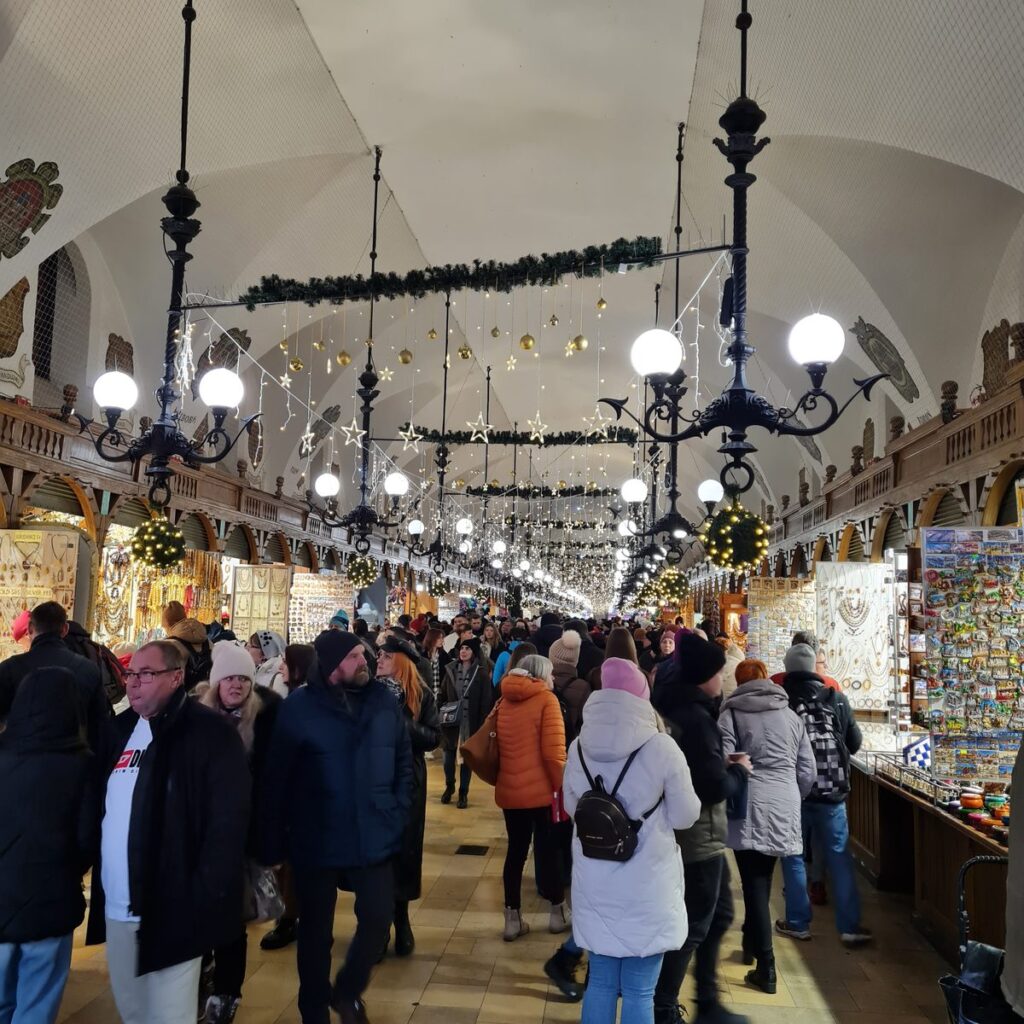
- Cards and phone payments are taken almost everywhere. We paid by card for almost everything, even at the Christmas market stalls. The one exception was the painting of the Main Square we bought from a local artist: he took cash only. So carry a little złoty for exactly that kind of thing.
- When a card machine or cash machine offers to charge you in pounds, choose złoty. The “pay in pounds” option uses the machine’s own exchange rate, which is rarely in your favour.
- Tipping in restaurants is usually around 10%. Check the bill first: some add a service charge.
Your phone, your plugs, your health
- Phone: UK networks have brought back charges for using your phone in the EU, and every network does it differently. Check your plan, or buy an add-on, before you go.
- Plugs: Poland uses European two-pin sockets (types C and E), so pack a travel adapter for your own chargers. A plug with several USB sockets saves carrying three.
- Health: carry a UK GHIC, the free card that replaced the EHIC, and still take travel insurance. The GHIC covers state treatment, not everything.
- Emergencies: 112, the same number across the EU.
- Time: Kraków is one hour ahead of the UK all year.
Packing your suitcase
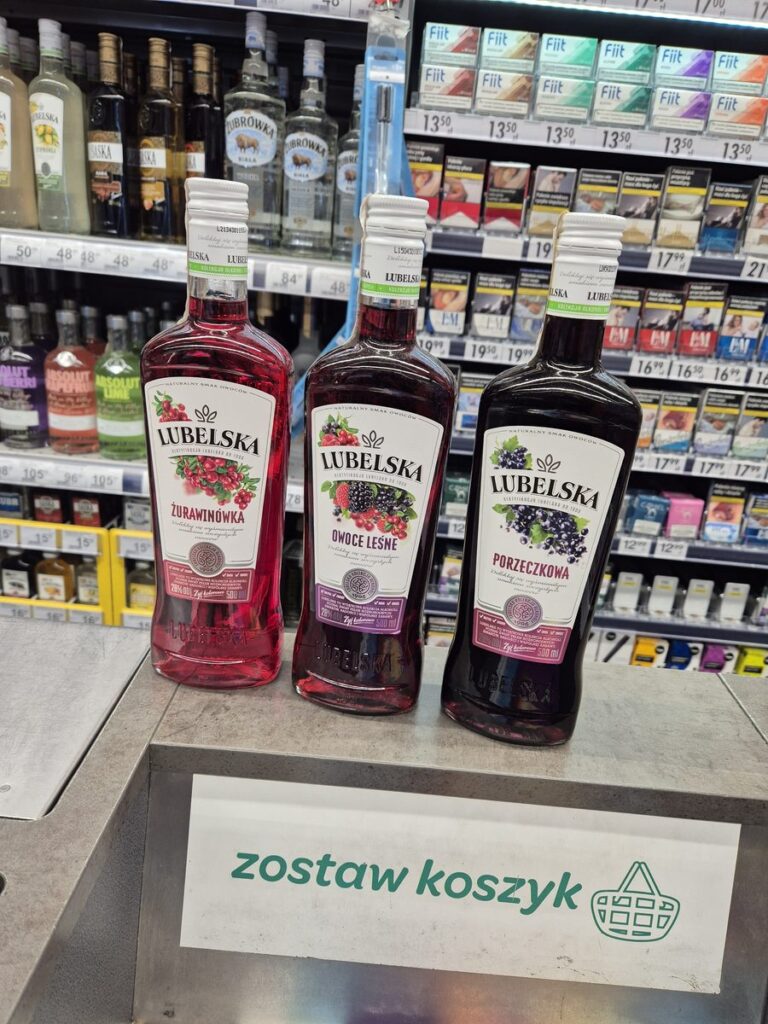
What to take depends on when you go. But one thing to know before you start: anything you forget, you can buy there. Well-known brands are in the supermarkets and chemists, alongside Polish brands at very reasonable prices. Look for Rossmann and Natura for toiletries, Biedronka for groceries, or any local shop. Most products have an English description on the label, so you do not need to guess what something is or use a translator.
We did exactly that: yogurt for my lunch, a blister plaster, and a bag of small presents — chocolates, local fruit liqueurs, warm socks. One thing we learned: the same item can cost very different amounts depending on where you buy it. Prices follow the location, not the brand. A shop in the busiest tourist streets can charge up to double what the same chain charges a few streets away, so for anything you are buying more than one of, walk a little further out.
If you need something from a pharmacy, look for any shop called Apteka. Everyday products are on the shelves, and in the town centre most pharmacists speak good English and will help with something more serious.
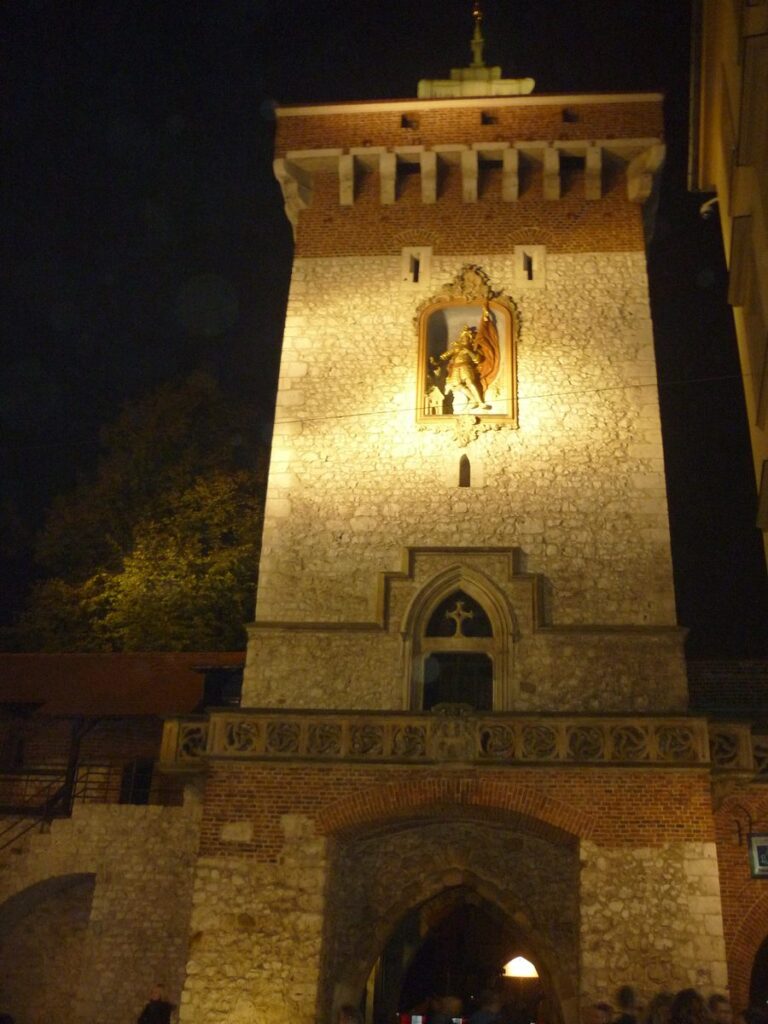
If you forgot clothes, there are small shops in town, or Galeria Krakowska, the big shopping centre next to the main station, a 7–8 minute walk from the Florian Gate.
For the clothes themselves, layers are always the answer. The weather can turn quickly, and you can be caught in the rain in any season.
- May to September: light clothes, plus a couple of long-sleeved tops for the evenings when it gets chilly, and something waterproof.
- October to April: a waterproof coat or jacket, warm layers, and from November, thermal tops and tights. Temperatures go well below zero in midwinter; it was -10C when we were there in December.
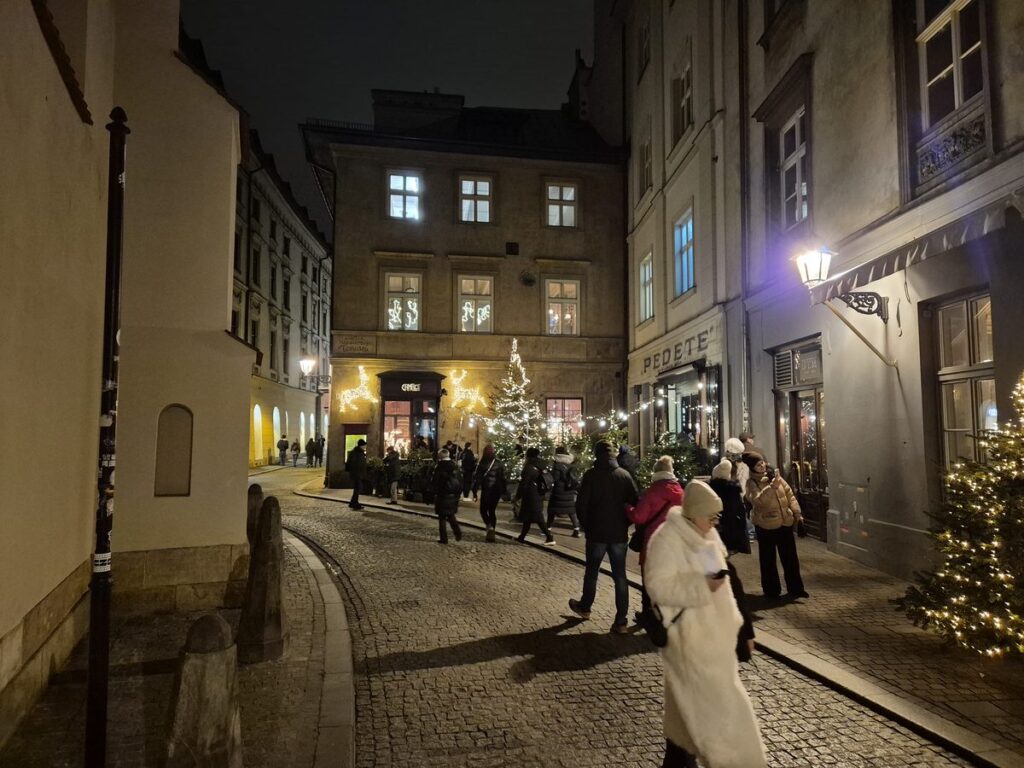
- Winter: warm socks, gloves, a scarf and a hat, and boots with thick soles, ideally with good grip. The Old Town is cobbles, and cobbles in December are icy.
We learned this one the hard way. Ian does not own winter boots or thick socks, so he did not pack any, and we ended up buying warm insoles for his shoes, thick socks and a pair of knitted gloves. Even if you are someone who never wears gloves or a hat at home, wear them in Kraków in winter. Most of the best things there happen standing still outside — in the queue for hot food, round the Christmas tree — and you will not enjoy any of them with cold hands and cold feet.
Shops on Sundays, and Christmas Eve
This one surprises almost everyone. Most shops and supermarkets in Poland are closed on most Sundays, by law. Small corner shops, petrol stations, bakeries and the pharmacy on duty are among the exceptions, and restaurants, bars and cafés are open as normal. If you arrive on a Saturday evening, buy what you need that night.
And if you are going for Christmas: since 2025, 24 December has been a public holiday in Poland, so expect most shops to be shut that day too. In December 2026 there are three trading Sundays, 6, 13 and 20 December, when supermarkets, shopping centres and other large shops open as normal. On the other Sundays the usual exceptions apply: pharmacies, petrol stations, bakeries, florists, small shops where the owner serves you, and shops at the train stations and the airport.
The Christmas market on the Main Market Square is not affected by any of this. It is open every day, Sundays included, so a Sunday is a good day to spend there.
Bringing food home
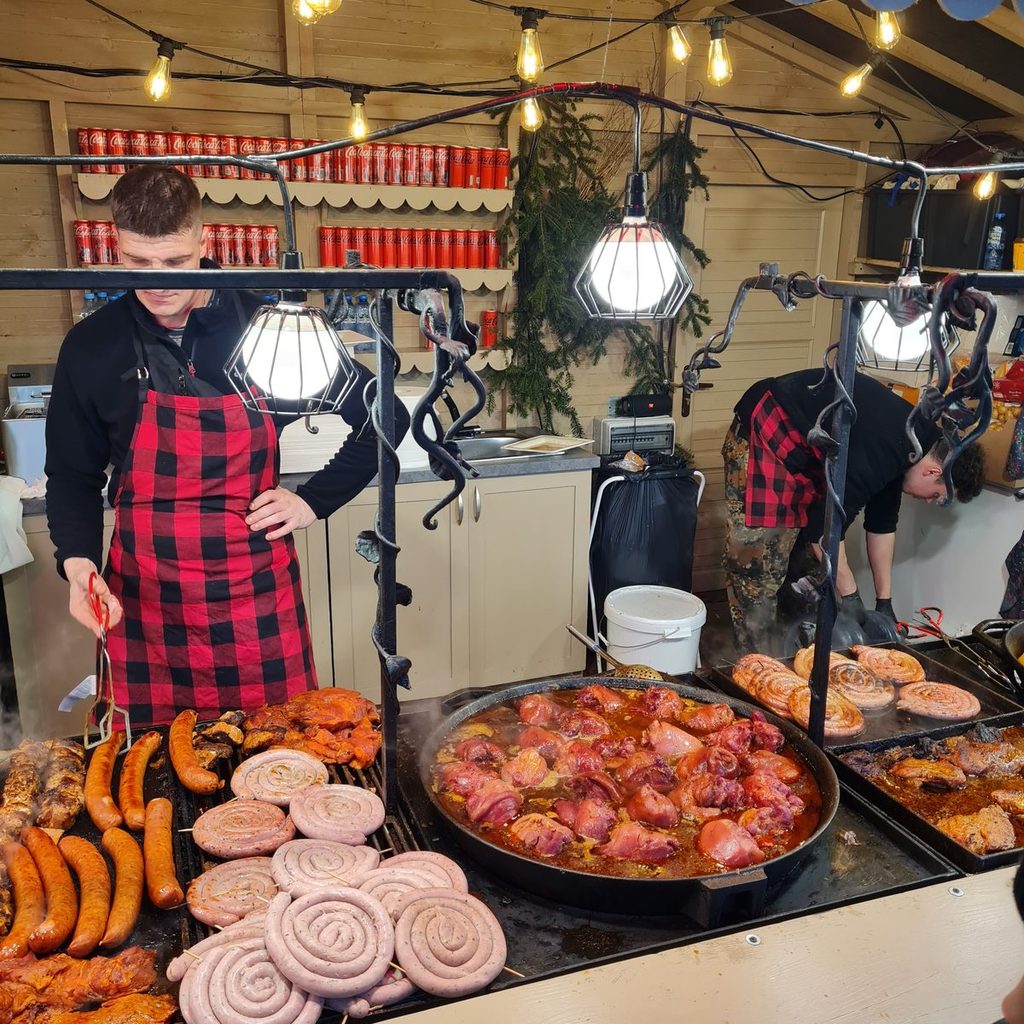
Since April 2025 you cannot bring meat or dairy products from the EU into Great Britain, not even vacuum-packed from a shop: no kiełbasa, ham or cheese in the suitcase. Chocolate, biscuits and sweets are fine, and bottles of fruit liqueur go in your hold luggage.
Five words of Polish
English is widely spoken in the centre, but a few words go a long way.
- Dzień dobry (jen DOB-ri) — good day, hello
- Dziękuję (jen-KOO-yeh) — thank you
- Proszę (PRO-sheh) — please, and also “here you are”
- Przepraszam (pshe-PRA-sham) — excuse me, sorry
- Na zdrowie (na ZDRO-vyeh) — cheers

Before you go: the checklist
- Passport issued less than 10 years ago, valid 3 months after you come home
- A little cash in złoty, for the stall or artist who takes nothing else
- ETIAS, if it has started by the time you travel — official site only
- Travel insurance, with a printed copy in your bag, and your GHIC
- Nothing made of meat or dairy in your case on the way home
- Phone plan checked for EU charges
- Travel adapter for two-pin sockets
- A card that does not charge for spending abroad, and the habit of choosing złoty
- Layers, waterproof, and in winter boots, thick socks, gloves and a hat — even if you never wear them at home
- Extra time at the airport, both ways

What to do when you get there
For the sights, our guide to 3 days in Kraków has what not to miss, and if you are going in December, our Kraków Christmas market post has the food, the prices and the dates.
Addresses
| Place | Address | Note |
|---|---|---|
| Kraków Airport | ul. kpt. M. Medweckiego 1, 32-083 Balice | SKA1 train to Kraków Główny, about 20 minutes |
| Kraków Główny (main station) | ul. Pawia 5a, Kraków | Beside the Old Town |
| Galeria Krakowska | ul. Pawia 5, Kraków | Shopping centre next to the main station |