3 Days in Kraków: What Not to Miss
Why do so many people who visit Kraków once end up going back? We have been twice, in November 2014 and for the Christmas market in December 2024, and Ian has been a few more times for work, once in summer. The answer, as far as we can tell, is that the Old Town is small enough to walk end to end in 20 minutes and full enough to keep you busy for days.
3 days is the sweet spot, and it is what most visitors choose: in Kraków’s own visitor survey, almost half of foreign visitors stay 2 or 3 nights. Here is how we would spend them. It is not every sight in the city. It is the ones we would send a friend to, in an order that saves your feet. If you have only 2 days, or a 4th to spare, the short versions are at the end.
One honest note before we start: we are outside people. We have never been inside St Mary’s or the rooms of Wawel Castle; we like walking the streets, looking up, and stopping for something hot. Where something inside is worth knowing about, we say so and tell you how to book it.
Before you start: how the Old Town fits together
Kraków’s Old Town is shaped like an egg, with Wawel Castle at the bottom and the Main Market Square in the middle. Around it runs the Planty, a ring of gardens about 4 km long. Why a park in a ring? Because that is where the medieval city walls used to be. In the early 1800s the walls were falling apart and the city pulled most of them down, then planted gardens along the line between 1822 and 1830. One stretch was saved, with the Florian Gate in it, which is why you can still walk through a medieval gate to get into the centre.
The old road the kings took, now called the Royal Route, runs straight through the egg: in through the Florian Gate, along Floriańska Street to the Main Square, down Grodzka and Kanonicza streets, and up the hill to Wawel. Days 1 and 2 simply follow it.
Day 1: The Florian Gate and the Main Square
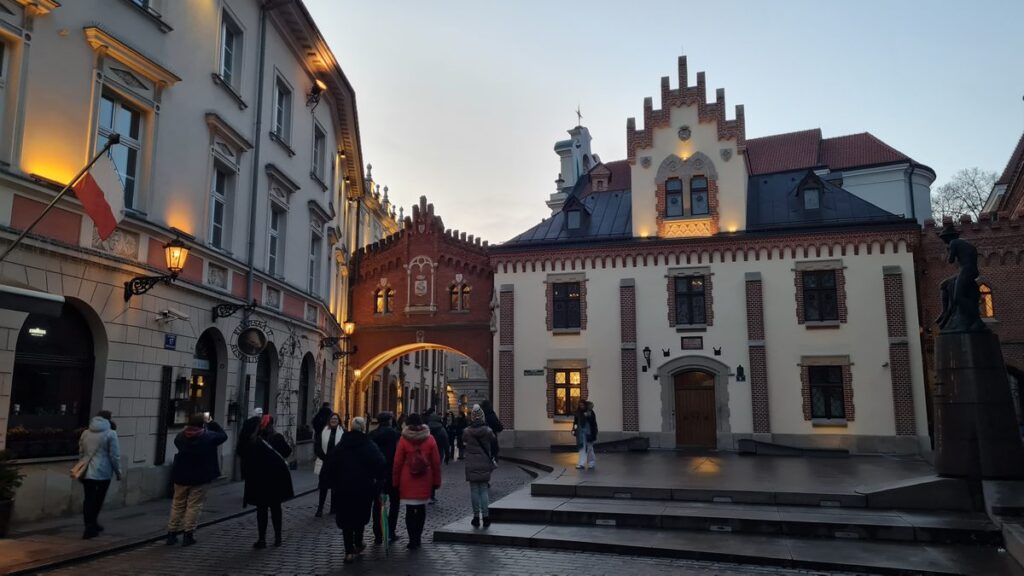
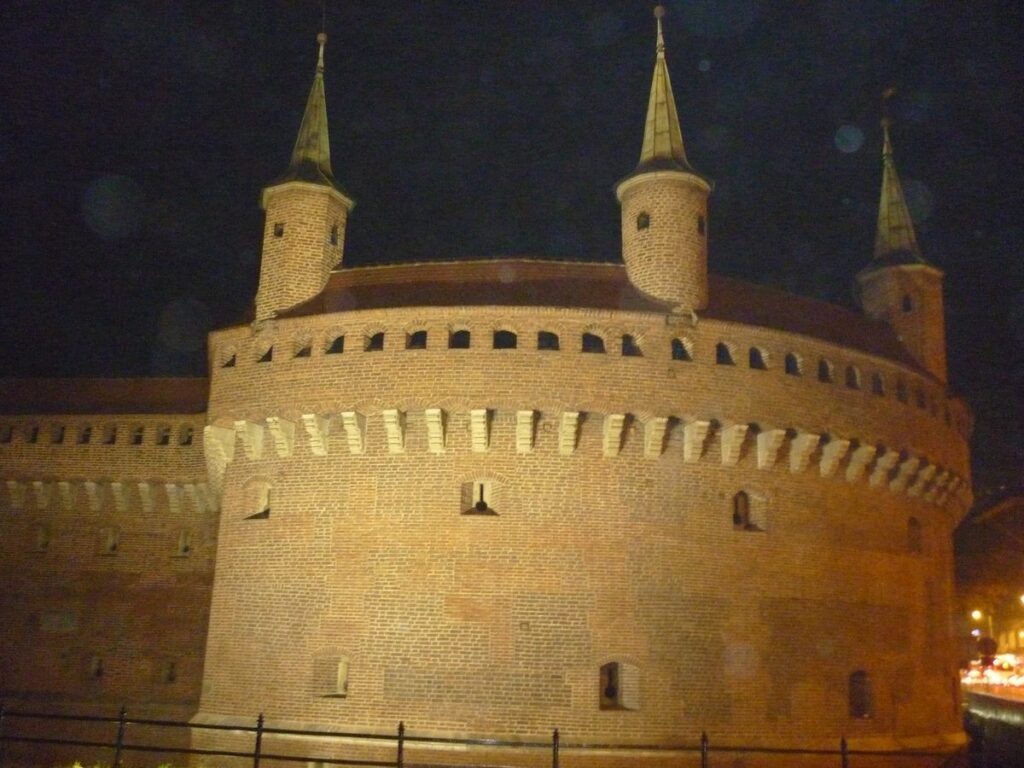
Start outside the walls, at the Barbican: a round brick fortress with turrets, built in 1499 to guard the gate behind it, and one of only a few of its kind still standing in Europe. Walk through the Florian Gate, which has stood since around 1300, and you are on Floriańska Street, the busiest street in town, heading straight for the square.
The Main Market Square, Rynek Główny, was laid out in 1257 and covers about 40,000 square metres, which is why it is so often called the largest medieval square in Europe. Three things to look for:
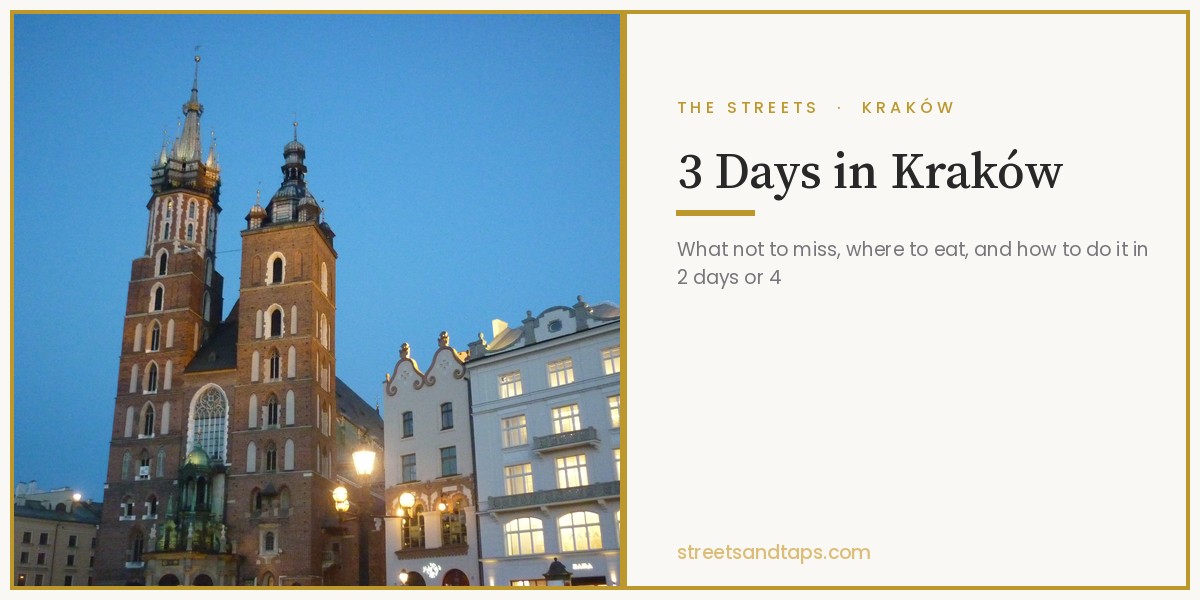
- St Mary’s Basilica, the brick church with two towers of different heights. Every hour, a trumpeter plays a short call, the hejnał, from a window in the taller tower, and it stops in the middle of a note. The story is that a medieval trumpeter was shot in the throat while sounding the alarm, and the tune has stopped at the same place ever since. If you do go in, the carved wooden altarpiece from 1477–1489 is the largest Gothic altarpiece in the world, opened every day at 11:50 (Sundays 14:10); visitors use the side door on Plac Mariacki.
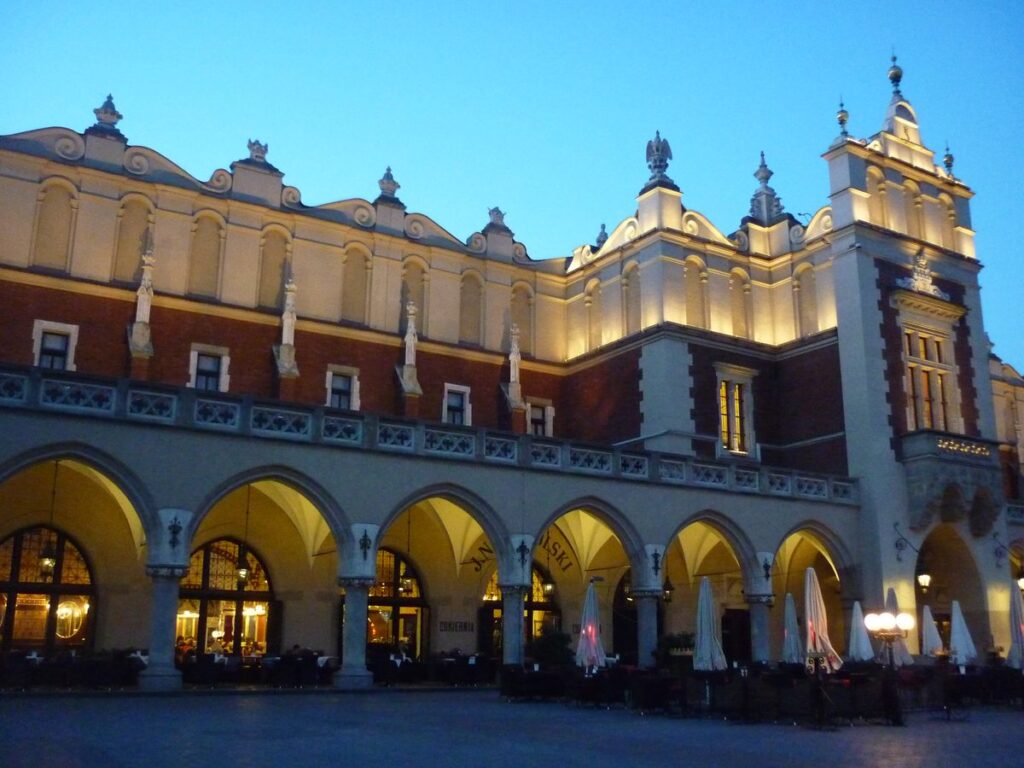
- The Cloth Hall (Sukiennice), the long building in the middle of the square. It was a covered market from the Middle Ages and was rebuilt in its Renaissance form in 1555. It still is a market: the hall inside sells amber, wood carving and lace all year.
- The Town Hall Tower, about 70 metres tall, the only part of the old town hall still standing.
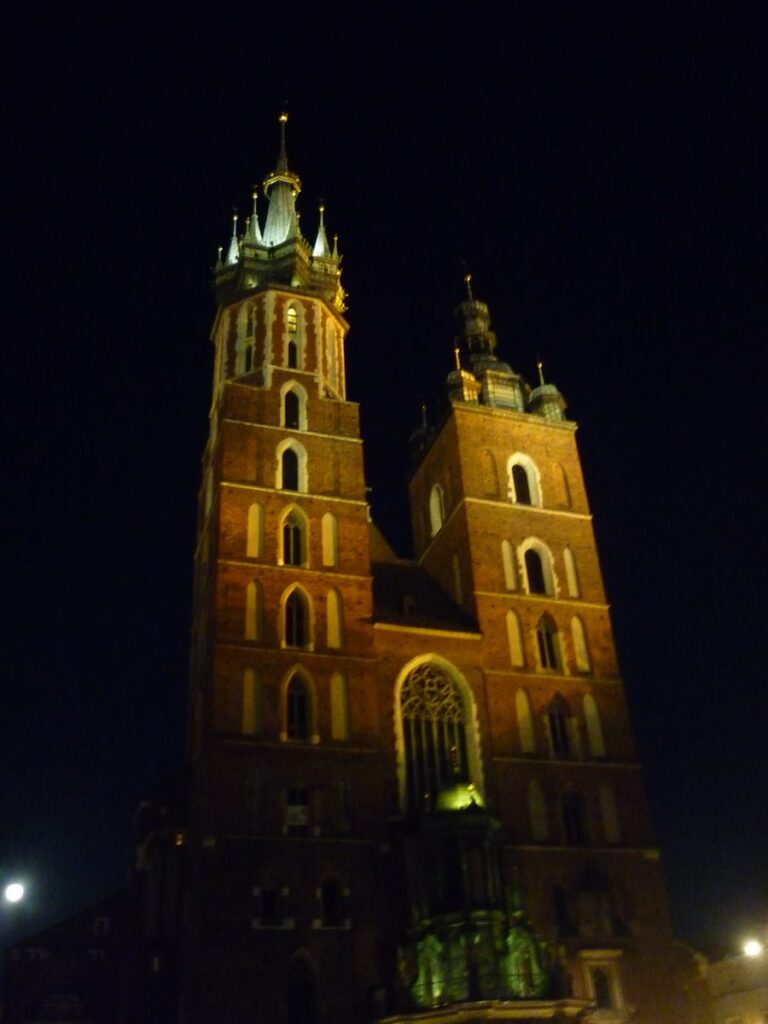
Finish the day by walking a stretch of the Planty in the late afternoon, then come back to the square once it is dark. It changes completely after dark.
Day 2: Grodzka, Kanonicza and Wawel Hill
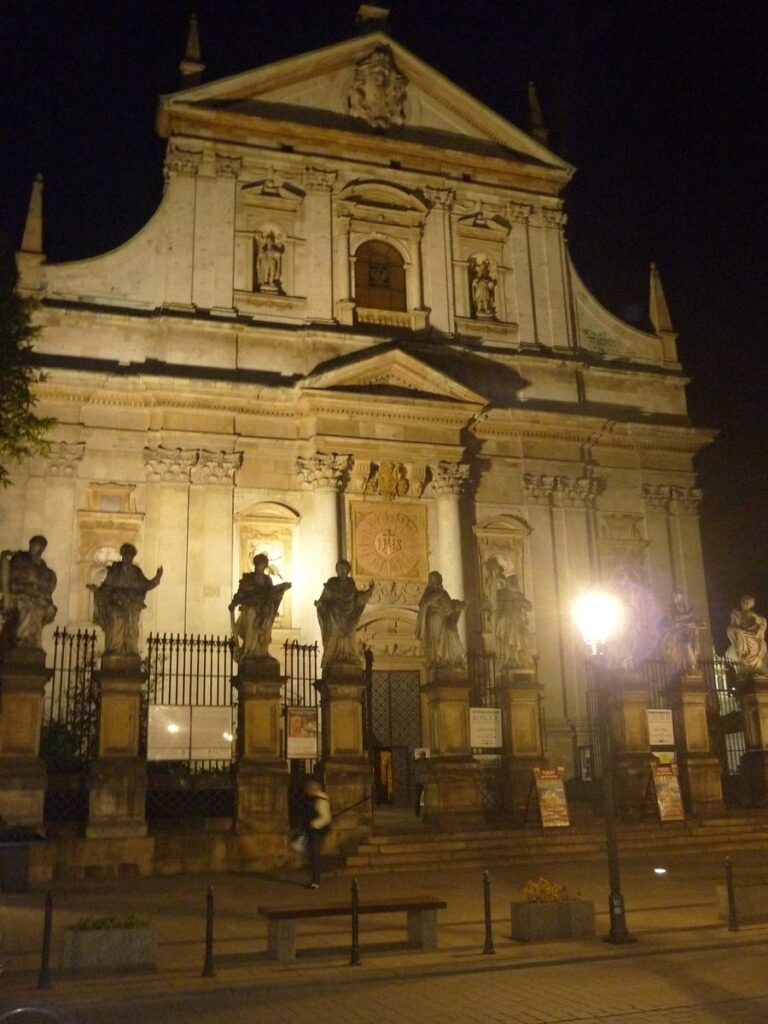
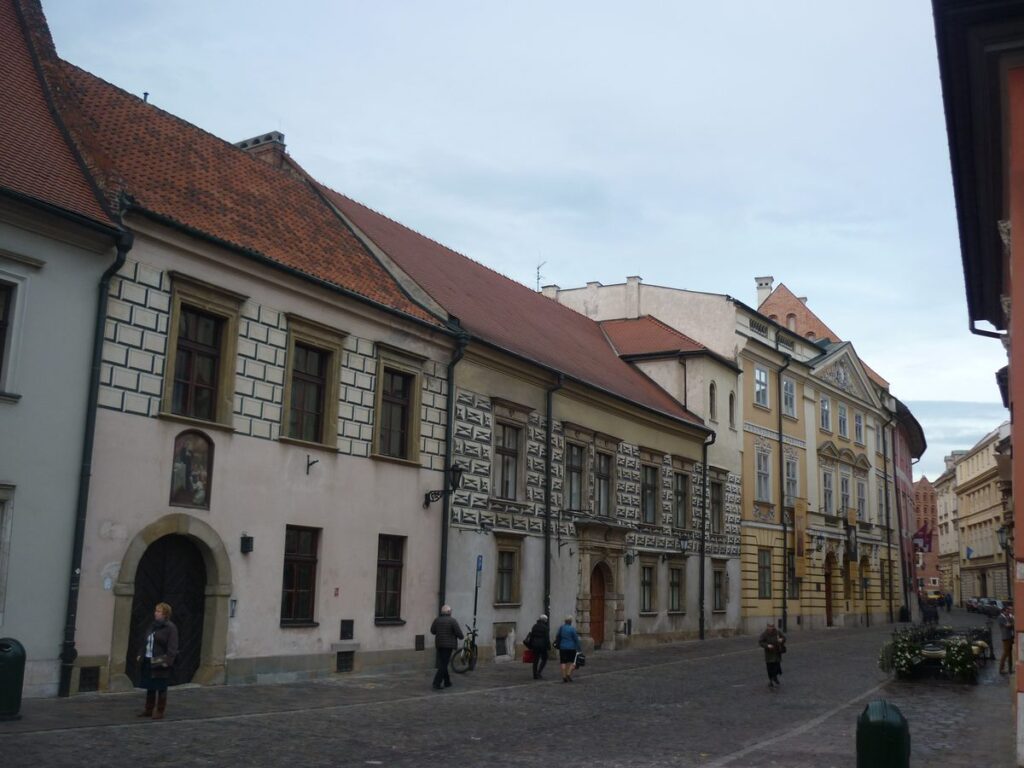
From the bottom corner of the square, Grodzka Street runs south towards the castle. Halfway down are two churches side by side: the white Baroque church of Saints Peter and Paul, with stone statues of the twelve apostles along its fence, and the much older Romanesque church of St Andrew. Turn off onto Kanonicza Street, the quietest and best-kept street in the Old Town, lined with old canons’ houses, and it brings you out at the foot of Wawel Hill.
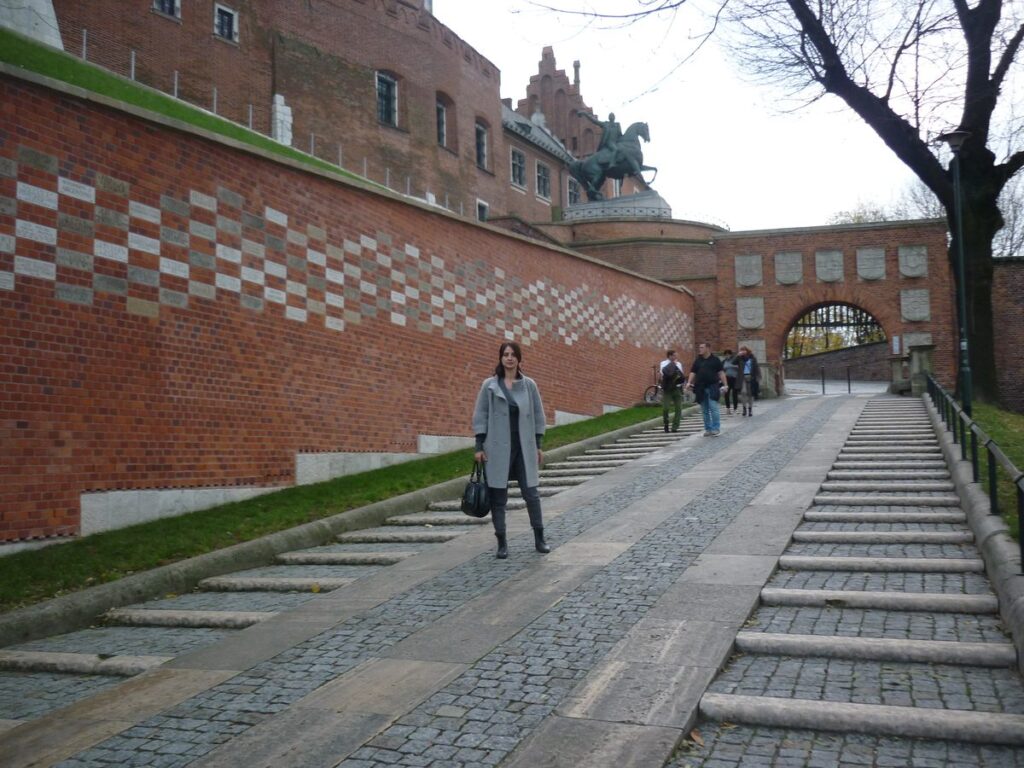
Wawel was the seat of Polish kings for five centuries, and they were crowned in its cathedral. The hill and the arcaded castle courtyard are free to walk around, and that is what we did. The exhibitions inside the castle need a timed ticket with a daily limit, so if you want to go in, book online up to a month ahead on the official Wawel site. The castle is open Tuesday to Sunday, 9:00 to 17:00.
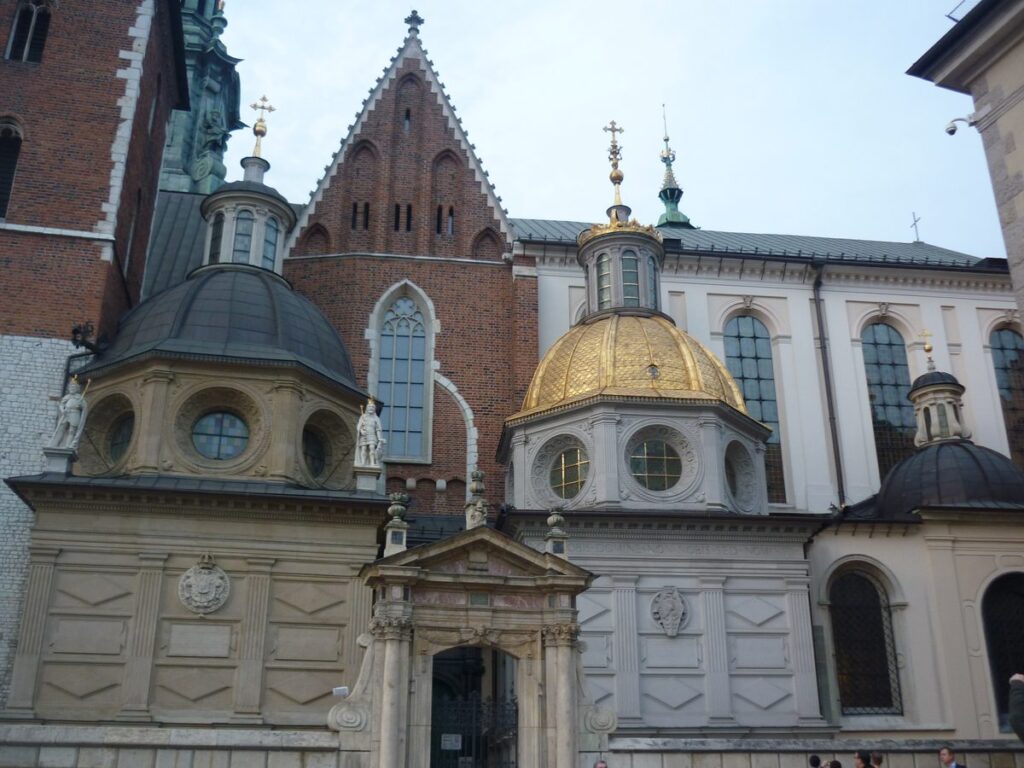
Look up at the cathedral and you will see a chapel with a gold dome among the towers. That is the Sigismund Chapel, built for King Sigismund I in the 1520s and 30s.
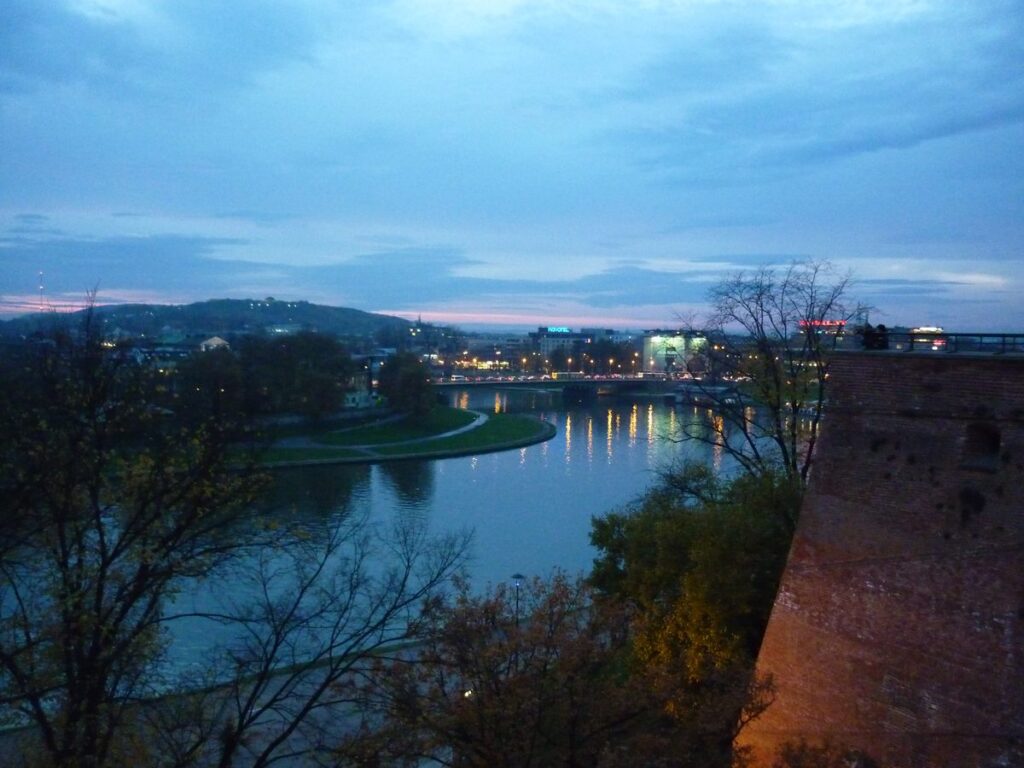
Then walk down the far side of the hill to the river and wait for the light to go. The view along the Vistula from below Wawel at dusk is one of our favourite photographs of the whole trip.
Day 3: Down the salt mine, then a slow afternoon
What do you do in Kraków on a day when you have seen the square and the castle? Go underground. The Wieliczka Salt Mine, on the edge of the city, was dug for salt for around seven hundred years, and the miners carved chapels, statues and whole halls out of the rock salt as they went. It was on UNESCO’s very first World Heritage list in 1978.
We went many years ago, long before this blog, and to be honest we do not remember it well enough to tell you much more. What did stay with us is that we could not take our own photographs inside, only buy the mine’s official ones, which is why there are none of ours here. Visits are by guided tour only, down several hundred wooden steps, and take a good part of a morning, so book a time before you go on the official salt mine site. The same train that runs from the airport to the main station carries on to Wieliczka.
Slow afternoon
Come back for a slow afternoon in the Old Town, which is when the small things happen. All over the Old Town there are little outdoor cabins with fresh bakery products, and shop doors or windows that open straight onto the street to sell all sorts of small treats, traditional local snacks and drinks. You point, you pay, you eat it walking. It is one part of the local culture anyone can join in with on the first afternoon.
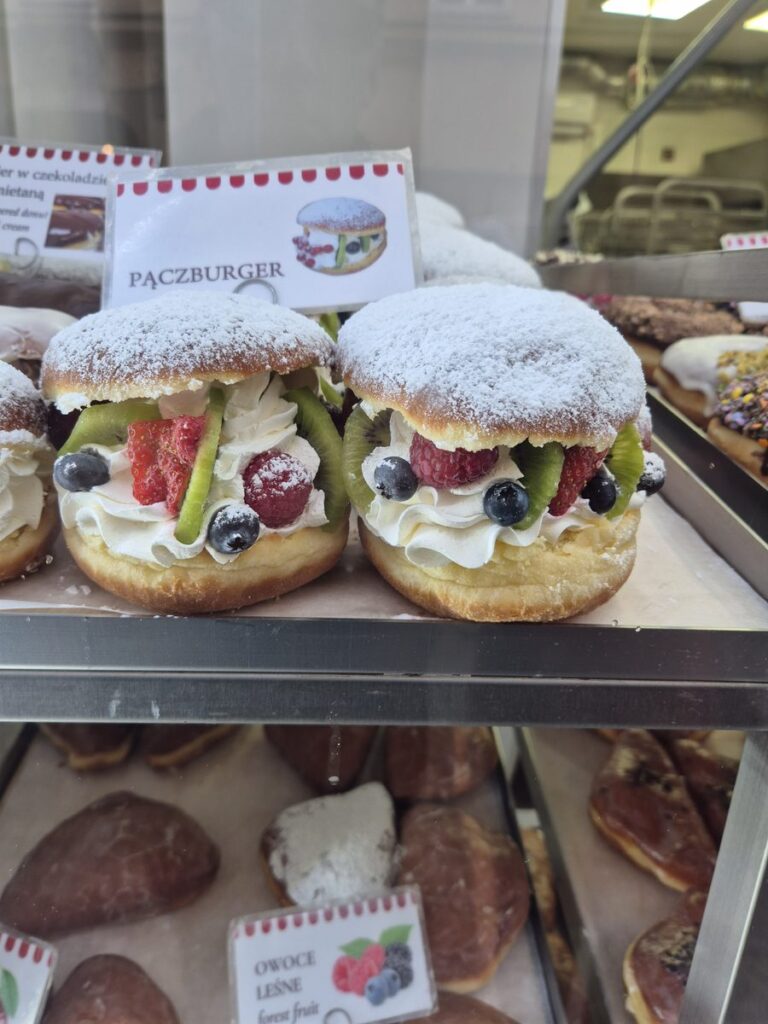
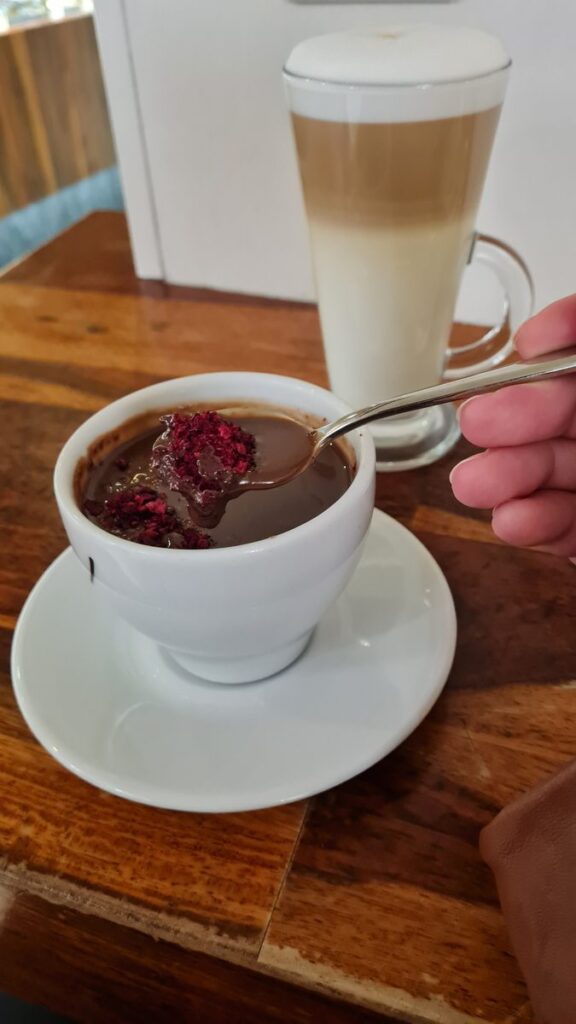
Then warm up at Karmello, a Polish chocolate maker with a shop and café in one, or at any of the other cafés around the Old Town. There are two Karmellos in the Old Town, but we only saw the chocolate taps, with chocolate pouring from taps behind the counter, in one of them. Whichever you find, the hot chocolate is the real thing.
Where to eat and drink
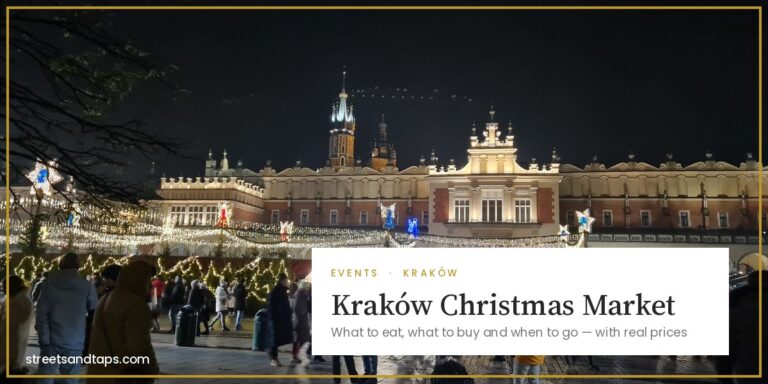
One thing we noticed in the Old Town: from about 4pm, many of the good restaurants fill up, with queues outside. We did not have the patience for that. Instead we ate at the market, or walked to restaurants just outside the Old Town, along the Planty or close to it, and most of the time we had no problem finding a table. In December, the Christmas market on the square is a dinner in itself.
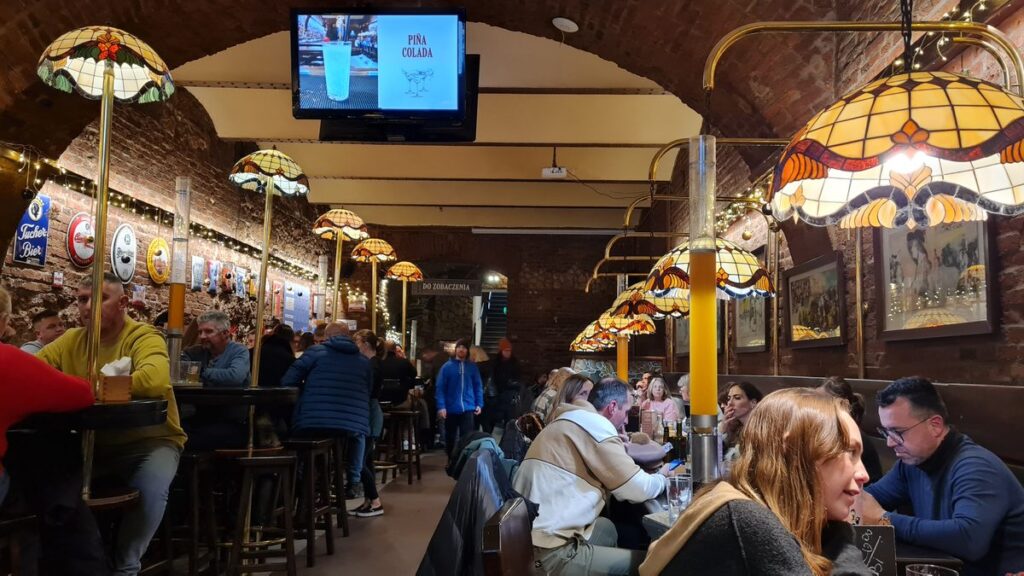
- CK Browar on Podwale, a brewpub in a vaulted cellar by the Planty, and Ian’s favourite: he went there every time he was in Kraków. It is a proper experience of good local beer, food and atmosphere. We had dinner there twice, and the pork knuckle was amazing. It is massive: we shared one portion and added an extra side of cabbage, and that was plenty for two. Ian’s Kraków post will cover the beer properly. If you are a beer drinker, or come with a few friends, order the beer in a tall glass tube with its own tap for the table.
- Pijana Wiśnia on Floriańska Street, a bar selling Ukrainian cherry wine under a ceiling of red glass bottles. In December I had the hot cherry wine every day.
- Karmello for coffee, hot chocolate and chocolate to take home.
- Polish food: pierogi, żurek (sour rye soup), kiełbasa and the rest. Our Christmas market post has the full list, if you are there in December.
Only 2 days?
Do Day 1 as it is, and on Day 2 walk the Royal Route down to Wawel in the morning, then spend the afternoon on the small things from Day 3: the bakery windows, Karmello, and a stretch of the Planty. Leave the salt mine for next time.
Got a 4th day?
Two very different options, and we have done neither yet, so this is what we would do next time rather than what we did. Kazimierz, the old Jewish quarter just south-east of Wawel, with Szeroka Street, its synagogues, and Plac Nowy with its round market hall and zapiekanka hatches. Or the Auschwitz-Birkenau Memorial and Museum, a long and serious day; entry is by timed reservation, so book well ahead on the official museum site.
Getting there and getting in
Fly straight to Kraków. On our first trip Ian was working in Warsaw, so we flew there and hired a car for the drive south. It was not bad, but it took most of a day and we did not stop anywhere on the way. Flying direct is easier.
- Train: the easiest way in. The station is in the airport, over the footbridge from arrivals and down the escalator, and only one line stops there: SKA1, towards Wieliczka. About 20 minutes to Kraków Główny, the main station beside the Old Town, roughly every half hour. Buy a ticket from the machine on the platform or on the train; around 20 zł (about £4) when we checked.
- Bus: lines 300 and 209 run from the airport into the city for a standard ticket of about 6 zł (about £1.20). Night bus 902 covers late arrivals.
- Coach: FlixBus runs from the airport to the MDA coach station by the main station, from about £4.
- Taxi: from about £17 to the centre if you book ahead, 25–30 minutes. Uber, Bolt and FREENOW all work in Kraków, and Bolt is often the cheapest of the apps. Use an app or the official rank, not a driver who approaches you. We took a taxi on our second trip and it was easy.
Practical bits
- Where to stay: the Old Town is compact, so anywhere just outside the old gates keeps everything within walking distance. We stayed at Hotel Indigo Kraków – Old Town on Filipa 18, a short walk from the Florian Gate.
- When to go: November is quieter, December has the Christmas market (and can drop to -10C), and Ian says summer is lovely.
- Money: Poland uses the złoty, not the euro. We paid by card almost everywhere, even at the market stalls; the one exception was a local artist who took cash only, so carry a little.
- Before you go: our first-time visitor guide (coming soon) covers documents, packing and what to sort before you fly.
Addresses
| Place | Address | Note |
|---|---|---|
| Barbican and Florian Gate | ul. Basztowa / ul. Floriańska | Free to walk through |
| St Mary’s Basilica | Plac Mariacki 5 (visitors’ side door) | Altar opens 11:50, Sun 14:10 |
| Cloth Hall (Sukiennice) | Rynek Główny 1/3 | Market hall all year |
| Wawel Royal Castle | Wawel 5 | Courtyard free; exhibitions Tue–Sun 9:00–17:00, timed tickets |
| Wieliczka Salt Mine | ul. Daniłowicza 10, Wieliczka | Guided tours, book ahead |
| Karmello | Two shops in the Old Town | Chocolate shop and café |
| CK Browar | ul. Podwale 6/7 | Brewpub; share the pork knuckle |
| Pijana Wiśnia | ul. Floriańska 36 | Ukrainian cherry wine |
| Hotel Indigo Kraków – Old Town | ul. Filipa 18 | Where we stayed in 2024 |